Story Highlights
- Michigan Democratic Senate nominee emphasizes need for decisive electoral victory to prevent challenges to election legitimacy
- Candidate expresses confidence in attracting former Trump voters through economic messaging on healthcare accessibility
- Election integrity concerns raised regarding potential denial of results if margins remain close
- Healthcare expansion and economic focus positioned as bridge-building strategy across voter demographics
What Happened
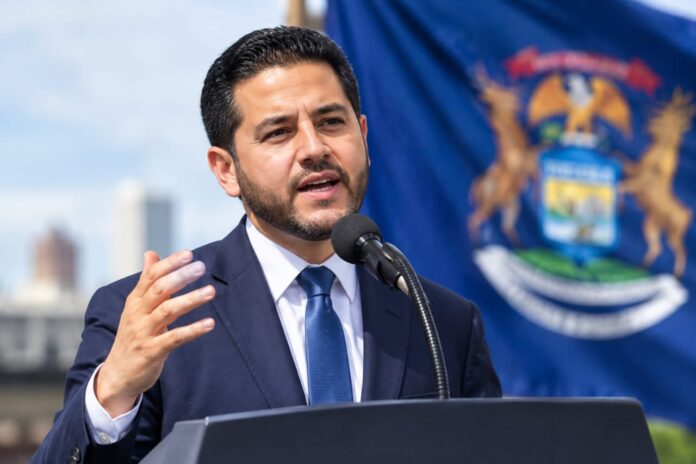
Michigan’s Democratic Senate nominee Abdul El-Sayed conveyed his perspective that fellow Democrats must achieve substantial electoral margins in upcoming midterm elections to ensure results remain unquestionable and resistant to challenges. During an appearance on a national news program, El-Sayed discussed concerns about potential election denial tactics, referencing historical parallels to 2020 and indicating apprehension about whether certain opponents would accept close election results.
The candidate, a former public health official, outlined his strategy for broadening his electoral coalition by emphasizing economic issues and healthcare accessibility. He expressed confidence that messaging focused on expanding healthcare coverage through policies like Medicare for All could resonate with voters who previously supported Republican candidates, including those who voted for the former president multiple times.
- El-Sayed’s appearance on Meet the Press, where he discussed election security and victory margins
- His Republican opponent, former Representative Mike Rogers, identified as having questioned 2020 election outcomes
- El-Sayed’s campaign strategy centered on healthcare expansion and economic populism to attract cross-party voters
- Previous 2020 election challenges in Michigan involving disputed fraud claims and attempted alternative elector schemes
Why It Matters
The candidate’s emphasis on achieving substantial victory margins reflects broader Democratic strategy concerns about election legitimacy and democratic institutional stability. His remarks highlight tensions surrounding election administration and result acceptance in a polarized political environment. The focus on decisive electoral victories as a safeguard against result contestation underscores how Democratic campaigns are factoring election denial concerns into their messaging and strategic planning.
El-Sayed’s dual approach—emphasizing both election security through large margins while simultaneously building an economic message designed to attract former Trump supporters—demonstrates the complex coalition-building challenges facing Democratic candidates in swing states. His confidence in converting previous Trump voters through healthcare and economic messaging suggests Democrats believe persuasion remains possible among certain voter segments, even in highly polarized circumstances. The strategy also reflects an attempt to address concerns among Jewish voters who may have reservations about the candidate based on his stated criticisms of Israeli policy, by emphasizing shared values on healthcare access, reproductive rights, and democratic governance.
- Election result legitimacy and resistance to contestation dependent on margin of victory
- Swing state Democratic candidates attempting to build broader coalitions through economic messaging
- Michigan’s significance as a battleground state with history of election administration scrutiny
- Coalition-building among traditionally Republican voters through healthcare and populist economic appeals
Political and Public Context
Michigan has emerged as a focal point in national election debates following the 2020 presidential election, when disputed fraud allegations led to legal challenges that were ultimately rejected by courts. The state also became relevant to discussions about alternative electors, with multiple individuals eventually charged in connection with efforts to submit competing elector slates. More recently, federal scrutiny of Michigan’s voter rolls has continued under new administrations, with demands for access to ballots and election documentation from Wayne County, the state’s largest Democratic stronghold.
The broader political context involves persistent disagreements about election integrity and result acceptance across partisan lines. Democratic messaging has increasingly incorporated warnings about election denial as a central campaign theme, particularly in competitive Senate races where narrow margins might otherwise lead to result contestation. The strategy reflects Democratic assessments that substantial victory margins provide both practical and symbolic protection against challenges to election legitimacy. Meanwhile, Republican candidates continue to face questions about their willingness to accept election outcomes, particularly in states where previous challenges occurred.
- Michigan’s 2020 election challenges and subsequent federal scrutiny of state election administration
- Alternative elector scheme with fifteen individuals charged, though cases later dismissed
- Democratic strategy emphasizing decisive margins as protection against result contestation
- Republican candidates in swing states navigating questions about election result acceptance
Michigan Democratic Senate candidate Abdul El-Sayed disavowed a 2012 opinion piece criticizing what he said were “failures” by President Obama during his first term.
Just after Obama won reelection, El-Sayed wrote that the outcome was “no victory.” https://t.co/YdaPU9sZDg
— The Washington Post (@washingtonpost) October 12, 2026
What Happens Next
The midterm elections will provide direct evidence about whether Democratic messaging about election integrity resonates with voters and whether the strategy of emphasizing large victory margins succeeds in preventing result contestation. The Michigan Senate race itself will serve as a test case for whether economic messaging focused on healthcare can successfully convert former Trump supporters in a swing state context. Polling data will likely track whether El-Sayed’s campaign successfully broadens its coalition or whether the race remains predominantly divided along existing partisan lines.
Post-election dynamics will depend significantly on actual results and margins. Should Democrats achieve substantial victories, the narrative around election integrity may shift, with decisive margins potentially tempering contestation efforts. Conversely, narrow Democratic victories could invite renewed scrutiny and challenges, particularly if Republican candidates maintain their current positioning on election acceptance questions. The outcome will also influence whether economic-focused messaging proves more persuasive than election integrity warnings in attracting cross-party voters, a finding that could reshape Democratic campaign strategies in future cycles.
- November midterm elections providing test case for Democratic margin-based election security strategy
- Michigan Senate race demonstrating whether economic messaging attracts former Republican voters
- Post-election result acceptance and potential contestation based on actual victory margins
- Future Democratic campaign strategy adjustments based on effectiveness of current messaging approaches