Story Highlights
- President Trump canceled weekend rallies in Kansas and Iowa, pivoting to tele-rally format to expand reach
- The White House cited strategy to maximize voter outreach opportunities across the country
- Trump plans more than 20 tele-rallies by Election Day as part of broader campaign blitz
- GOP confidence in candidate performance in competitive races supported the shift in approach
What Happened
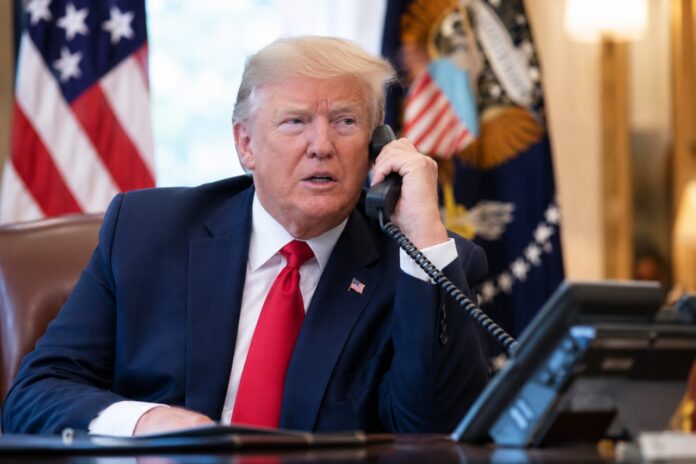
President Trump announced Thursday that he was canceling scheduled in-person rallies in Kansas and Iowa this weekend, instead opting to conduct tele-rallies to reach voters across a wider geographic area. The cancellations marked a strategic pivot in his approach to supporting Republican candidates in competitive races during what the president characterized as an intensive campaign period.
The original rallies were positioned as part of an ambitious nationwide campaign tour designed to visit 35 locations and boost Republican turnout ahead of elections. The Dubuque, Iowa event was slated for Saturday in the contested 2nd Congressional District, while Kansas rallies were intended to support Senator Roger Marshall in his competitive race against Democrat Adam Hamilton.
- Kansas and Iowa rallies canceled Thursday in favor of tele-rally format
- Original plan called for 35-location nationwide campaign tour
- White House planning more than 20 tele-rallies by Election Day
- President still scheduled to campaign in Daytona Beach, Florida on Friday for Rep. Randy Fine and Sen. Ashley Moody
Why It Matters
The shift to tele-rallies represents a significant tactical adjustment in how the president maximizes campaign effectiveness while managing the demands of an aggressive schedule. Rather than limiting outreach to single-location events, the tele-rally format allows Trump to address multiple audiences simultaneously across different regions, potentially reaching far more voters than traditional in-person events could accommodate. This approach demonstrates adaptive campaign strategy that prioritizes efficiency without sacrificing impact.
The White House officially framed the cancellations as an effort to maximize opportunities for the president to communicate with voters nationwide. Political operatives in Iowa acknowledged that while tele-rallies offer meaningful support, in-person events carry particular value for mobilizing turnout. Some GOP operatives noted that Iowa’s competitive landscape remains favorable despite the change in format. The decision reflects confidence in Republican candidate positioning in multiple states, suggesting the party’s assessment that certain races are progressing favorably enough to permit tactical flexibility.
- Tele-rally format enables simultaneous outreach to multiple geographic markets
- Strategy allows president to maintain demanding campaign schedule while maximizing reach
- GOP operatives confirm candidate viability supports tactical adjustments
- White House messaging emphasizes voter contact expansion as primary rationale
Political and Public Context
Trump has campaigned extensively over the past month, conducting 25 rallies and establishing a reputation for high-energy, personal engagement with Republican voters. He has consistently emphasized his belief in rally impact on polling and candidate performance, framing his personal appearances as valuable assets to GOP electoral prospects. However, the intensive schedule prompted acknowledgment that such demands on his voice and stamina require strategic management.
The Kansas race represents a traditionally Republican state where demographic and policy shifts have introduced genuine competitive pressure. High costs connected to geopolitical conflicts have affected voter priorities in the state, shifting a historically safe Republican seat into toss-up territory. Iowa similarly presents multiple competitive congressional races where turnout mobilization remains critical, though GOP operatives indicated baseline confidence in party positioning across most contests. The decision to deploy tele-rallies rather than cancel appearances altogether demonstrates commitment to supporting candidates while adapting to operational realities.
- Trump has conducted 25 rallies in past month as part of midterm campaign blitz
- President has emphasized direct correlation between rally attendance and GOP electoral performance
- Kansas Senate race involves traditional Republican seat facing unexpected competitive pressure
- Iowa presents multiple contested congressional races where turnout remains significant factor
“President Trump will continue connecting directly with Americans nationwide through more than 20 tele-rallies before Election Day. These events give him the opportunity to highlight his accomplishments and expand his reach across the country,” a White House official said. pic.twitter.com/3peNv9i7XU
— The Washington Times (@WashTimes) October 30, 2026
What Happens Next
The White House intends to execute more than 20 tele-rallies before Election Day, utilizing the format to maintain consistent campaign messaging and voter contact across numerous states simultaneously. This represents a substantial commitment to the digital rally approach and suggests the administration views tele-rallies as a permanently viable component of campaign strategy rather than merely a temporary substitute. The ongoing Florida event on Friday for Representative Fine and Senator Moody in solidly Republican territory indicates the president will continue selective in-person appearances in strategically important locations.
The success or challenges of the tele-rally approach will likely inform campaign tactics in future election cycles and during any subsequent political efforts. Operatives and analysts will monitor whether the format successfully mobilizes turnout comparable to traditional rallies and whether voter engagement metrics justify the strategic shift. The president’s campaign calendar shows no announced events for Monday, suggesting continued tactical planning adjustments as the election period progresses.
- More than 20 tele-rallies scheduled before Election Day
- In-person appearances to continue in strategically selected high-impact locations
- Campaign effectiveness data from tele-rallies will inform future tactical decisions
- No Monday events currently scheduled; ongoing strategic planning underway