

Story Highlights
- Iowa Governor Kim Reynolds endorsed Republican gubernatorial candidate Zach Lahn following a debate performance, describing him as the clear winner in his matchup against Democrat Rob Sand
- Lahn emphasized conservative positions on cultural issues including education, abortion policy, and transgender athletes in sports
- Sand focused his campaign messaging on vetoing what he characterized as culture war legislation and directing legislative time toward issues affecting all Iowans
- Nonpartisan election forecasters project Sand maintains a 70 percent likelihood of winning the gubernatorial race despite Reynolds’ endorsement
What Happened
Iowa’s retiring governor delivered a public endorsement of the Republican gubernatorial candidate following the final debate between the two major party nominees. The debate took place in Cedar Rapids on Tuesday, hosted by KCRG television and The Gazette newspaper. This represented the third debate between the candidates held during October, with previous matchups occurring on October 6 and October 14.
During the debate, the candidates presented sharply contrasting visions for Iowa’s future governance. Lahn articulated his commitment to preserving what he described as Iowa’s cultural values, with particular emphasis on education policy, abortion restrictions, and policies regarding transgender participation in athletics. Sand, conversely, pledged to block legislation he views as advancing cultural conflicts, arguing instead for directing all legislative effort toward issues affecting the full population of Iowa residents.
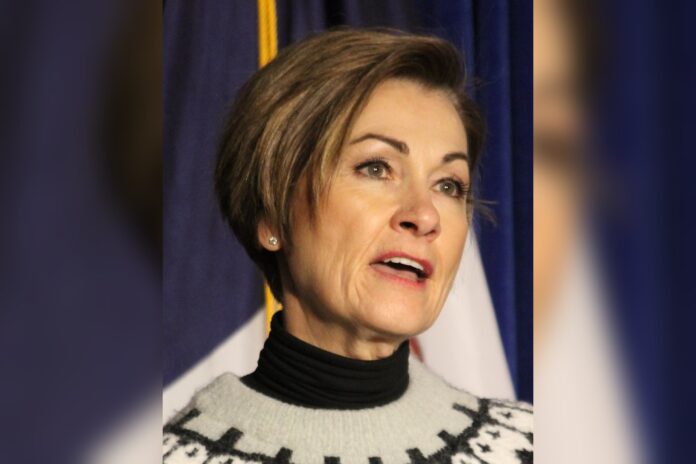
Reynolds, who is not seeking reelection, used the social media platform X to announce her support for Lahn. She highlighted his willingness to advocate for vulnerable Iowans and contrasted his positions with Sand’s approach to governance.
- Final gubernatorial debate held Tuesday in Cedar Rapids, hosted by KCRG and The Gazette
- Lahn emphasized conservative stances on education, abortion policy, and transgender athlete participation
- Sand pledged to veto culture war legislation and prioritize issues affecting all Iowa residents
- Reynolds endorsed Lahn through social media post on the X platform
Why It Matters
This endorsement from the outgoing governor represents a significant political moment in Iowa’s 2024 gubernatorial race. Reynolds maintained substantial influence within Iowa Republican circles throughout her tenure, and her explicit backing provides Lahn with elevated visibility and credibility among conservative voters heading into the final stages of the campaign. The timing of her endorsement immediately following a public debate appearance amplifies its impact, as it directly responds to Lahn’s debate performance rather than offering general support.
The contrast between the candidates’ campaign priorities reflects deeper philosophical divides within Iowa politics. Lahn’s emphasis on cultural and social issues versus Sand’s focus on universal legislative priorities demonstrates fundamentally different approaches to governance and resource allocation. Reynolds’ characterization of Lahn as standing up for vulnerable populations frames the debate within a specific ideological narrative about which candidate better serves Iowa’s interests.
Despite this high-profile endorsement from the governor, the actual electoral mathematics present a different picture. Independent forecasters measuring voter sentiment and historical voting patterns indicate Sand retains a substantial advantage heading into election day, suggesting Reynolds’ endorsement, while symbolically important within conservative circles, may not alter the fundamental trajectory of the race.
- Reynolds’ endorsement provides credibility and visibility boost to Lahn within conservative voter networks in final campaign weeks
- Candidates’ debate positions reveal fundamental disagreements about legislative priorities and governance philosophy
- Gap between political endorsements and voter preference data highlights complexity of modern electoral dynamics
- Endorsement timing immediately after debate aims to reinforce Lahn’s perceived debate performance among voting public
Political and Public Context
Iowa’s gubernatorial race occurs within a broader national pattern of Republican and Democratic campaigns emphasizing different issue sets. Cultural and social policy debates have gained prominence in numerous state-level races across the country, with education, abortion policy, and transgender-related legislation emerging as flashpoint issues that motivate particular voter constituencies. Iowa represents one of several states where these topics have become central to gubernatorial campaigns.
The candidates previously sparred during earlier debates on multiple fronts, including disagreements about their respective family backgrounds, cultural policy questions, and Lahn’s documented opposition to COVID-19 vaccination measures. The candidates did find common ground on property tax policy, both suggesting that local jurisdictions should retain greater authority over tax decisions affecting their communities.
Reynolds has served as Iowa’s governor and represents the outgoing Republican executive leadership in the state. Her choice to endorse a Republican successor aligns with typical patterns of party leadership transitions, though her explicit characterization of the debate outcome and her specific framing of the issues represent particular editorial choices about which candidate better represents her vision for Iowa’s future.
- Cultural and social policy debates have become prominent in state-level races nationwide, not unique to Iowa
- Earlier debates involved disputes over family backgrounds, COVID-19 vaccination positions, and property tax authority distribution
- Both candidates expressed agreement on devolving property tax decisions to local jurisdictions
- Reynolds represents outgoing Republican gubernatorial leadership seeking to influence succession within her party
Kim Reynolds says Lahn was ‘clear winner’ of gubernatorial debatehttps://t.co/jAZj15GA86
— The Hill (@thehill) October 28, 2026
What Happens Next
The gubernatorial race moves into its final phase following this debate and Reynolds’ endorsement. Campaigns typically intensify their outreach efforts in the weeks immediately preceding election day, with television advertising, digital campaigns, and direct voter contact accelerating. Lahn’s campaign will likely leverage Reynolds’ endorsement in its messaging to conservative voters, while Sand’s campaign will continue emphasizing its alternative vision centered on universal rather than cultural legislative priorities.
Election day will provide the definitive measure of voter preferences, with independent forecasters currently projecting Sand maintains the advantage based on available polling data and historical patterns. However, final weeks of campaigning can produce shifts in voter sentiment, and the actual outcome will depend on turnout patterns, late-breaking developments, and voter persuasion efforts by both campaigns.
Media coverage of the race will likely continue analyzing the relative impact of Reynolds’ endorsement against Sand’s apparent structural advantages in the forecast data. The contrast between political endorsements from establishment Republican figures and actual voter preference projections represents a notable feature of this particular race.
- Both campaigns will intensify voter contact and advertising efforts during final weeks before election day
- Sand’s campaign expected to counter Reynolds’ endorsement with messaging about legislative priorities for all Iowans
- Election outcomes will test whether governor’s endorsement shifts underlying voter preferences in Lahn’s favor
- Final weeks may reveal whether polling forecasts accurately predict actual voter behavior in gubernatorial matchup


