Story Highlights
- President Trump engaged in a heated confrontation with a Reuters reporter following his decision to cancel a Kansas rally appearance
- The exchange occurred as the president departed Air Force One and took questions from assembled media
- The president’s remarks reflected growing tension with press coverage during the midterm election cycle
- The incident underscores the adversarial dynamic between the White House and certain media outlets
What Happened
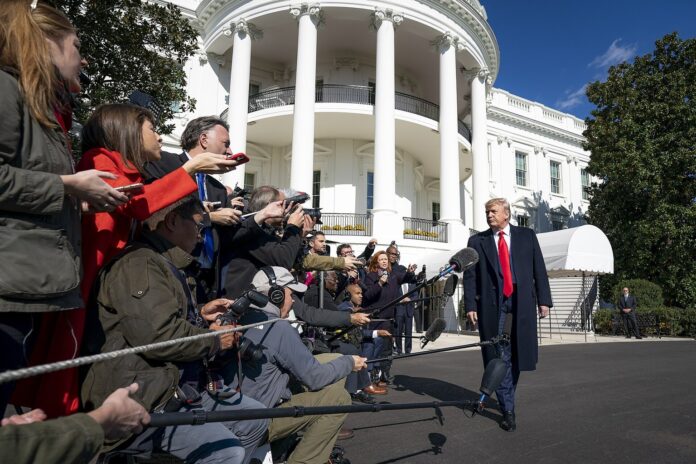
President Trump engaged in a sharp exchange with Reuters reporter Jacob Bogage on Thursday after stepping off Air Force One. The reporter inquired whether the president’s decision to cancel his scheduled Kansas rally related to travel fatigue. The president responded with criticism, characterizing the question itself as inappropriate and going on to comment on the reporter’s physical appearance and overall demeanor.
The confrontation escalated as the president defended his decision not to proceed to Kansas, noting instead his intention to travel to Florida the following day. He stated that his cancellation reflected a personal choice rather than any health concern, emphasizing that he felt in perfect condition despite weeks of campaign activity. The president also criticized the news organization the reporter represented, characterizing Reuters as problematic.
- Kansas rally cancellation prompted reporter inquiry on Thursday afternoon
- Reporter Jacob Bogage of Reuters asked about possible health or fatigue concerns
- President responded with criticism of reporter’s appearance and the news organization
- President emphasized planned Florida appearance and stated he felt perfectly healthy
Why It Matters
The interaction reflects an increasingly contentious relationship between the Trump administration and segments of the national media as the political calendar intensifies. Such confrontations carry significance because they illustrate the tenor of executive-press relations during a critical electoral period. The president’s willingness to challenge reporters directly and publicly demonstrates his approach to managing narratives around his schedule and health, messaging that holds particular importance during campaign season when public perception of presidential vigor matters substantially.
The incident also underscores how campaign pressures can shape communication dynamics at the highest levels. When reporters press questions about presidential movements or apparent changes in scheduled appearances, the administration’s response often becomes part of the broader political story. The public nature of this exchange means it reaches voters through both direct coverage and secondary commentary, influencing how citizens perceive both the president’s engagement with the press and his overall fitness for office.
- Demonstrates escalating media-White House tensions ahead of midterm elections
- Shapes public perception of presidential health and vigor during campaign period
- Illustrates administration’s direct approach to challenging press narratives
- Affects broader coverage of presidential activities and decision-making
Political and Public Context
The encounter between the president and the Reuters reporter occurs within a broader pattern of contentious interactions between the Trump administration and members of the press corps. Earlier in the same month, the president had engaged in a similar confrontation with a reporter from The Independent during an Oval Office press briefing, using comparable language and tone. These incidents suggest a consistent approach to managing press interactions during periods of elevated political activity.
The Kansas rally cancellation itself represented a notable change to the president’s campaign schedule, with the event having been previously announced as an opportunity to promote Senator Roger Marshall in his reelection bid. The decision to redirect focus toward Florida instead reflects strategic choices about where presidential appearances would prove most valuable during the midterm campaign push. Reporter questions about such schedule changes are standard journalistic practice, though the president’s response illustrates his particular sensitivity to inquiries that might be interpreted as questioning his physical condition or energy levels.
- Similar exchange occurred with Independent reporter at earlier Oval Office briefing
- Pattern reflects administration’s consistent approach to adversarial press interactions
- Kansas event cancellation shifted focus to Florida campaign appearance
- Midterm election cycle intensifies scrutiny of presidential schedule and health
Furious Trump labelled a Reuters journalist ‘sick', 'out of shape' and 'disgusting’ after he was questioned about his health. pic.twitter.com/bK9hiVKqSN
— The Independent (@Independent) October 30, 2026
What Happens Next
The trajectory of executive-press relations will likely remain contentious through the remainder of the campaign season. Presidential appearances and media availabilities typically increase in frequency as election day approaches, creating additional opportunities for similar confrontations. The manner in which both the White House and media outlets navigate these interactions will continue shaping the broader political narrative and public discourse surrounding the administration.
The Florida campaign stop that the president mentioned represents the immediate next step in his schedule, offering another occasion for press engagement and potential questioning about campaign strategy and decision-making. How the administration manages these future interactions and whether it adjusts its approach to press availability remains an open question. The midterm elections themselves loom as the ultimate test of how effectively the president’s messaging and public engagement have resonated with voters across different regions and demographic groups.
- Florida campaign appearance scheduled as alternative to Kansas event
- Additional press availabilities expected during intensified midterm campaign period
- Administration’s press management strategy will continue shaping political narratives
- Midterm election results will reflect cumulative impact of campaign messaging and public engagement