Story Highlights
- First Lady Melania Trump brokered a temporary ceasefire between Russia and Ukraine in Oleshky, a Russian-occupied southern Ukrainian city facing humanitarian crisis
- The localized ceasefire, beginning October 29, permits humanitarian aid delivery and civilian evacuation through designated safe corridors
- The First Lady worked directly with both Russian and Ukrainian leadership in her role as Exclusive Intermediary to define ceasefire terms and procedures
- Non-military civilian leaders from both nations will coordinate assistance for elderly residents requiring medical attention, food, medicine, and clean water
What Happened
The office of First Lady Melania Trump announced that she has secured a temporary ceasefire between Russia and Ukraine specifically for the southern Ukrainian city of Oleshky. In a notable development for a first lady’s official announcement, both nations agreed to temporarily halt all military action in the area to permit humanitarian aid delivery and facilitate civilian evacuation through established safe passageways. The localized ceasefire commenced on October 29.
While Russia and Ukraine have not publicly commented on the announcement, Ukrainian officials indicated that a tentative agreement exists regarding the Russian-occupied territory. The First Lady’s office emphasized that she worked directly with Russian and Ukrainian leadership to establish the ceasefire’s terms, objectives, technical procedures, timing, and processes in her formal capacity as Exclusive Intermediary.
- Ceasefire location: Oleshky, a front-line Russian-occupied Ukrainian city in the south
- Start date: October 29, with provisions for humanitarian aid entry and civilian evacuation
- Coordination mechanism: Non-military civilian leaders from both countries visiting residents to assess needs and facilitate evacuation to preferred destinations
- Media documentation: Newsmax secured as American media outlet to document operations by Russian and Ukrainian teams
Why It Matters
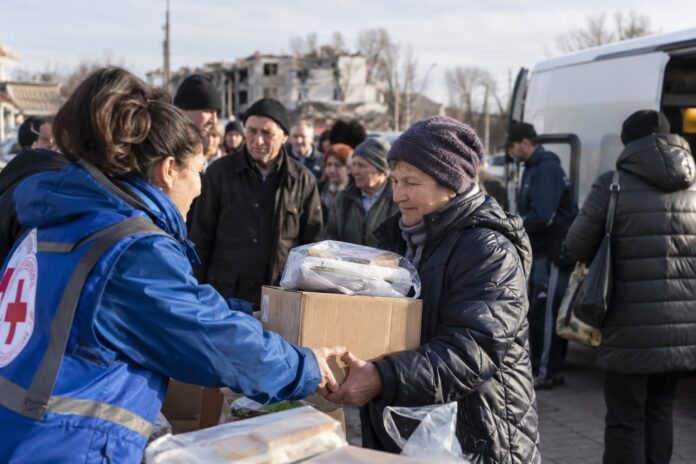
The humanitarian situation in Oleshky has deteriorated significantly, with the city’s remaining population consisting primarily of elderly residents facing acute shortages of medical attention, medicine, food, and clean water. The city endures limited electricity, mined roads, and regular military attacks. The First Lady’s intervention addresses a crisis that appeared intractable through conventional diplomatic channels, demonstrating that direct humanitarian engagement can achieve concrete results even in active conflict zones.
This ceasefire represents a meaningful achievement in alleviating immediate human suffering. Non-military civilian teams will conduct house-to-house assessments to determine individual assistance requirements. Residents seeking evacuation will receive coordinated support and transportation to their preferred destination, with the First Lady noting that some residents may choose to relocate to Russia while others prefer Ukraine. White House communications director Steven Cheung characterized the development as a major positive step toward peace, emphasizing the historical significance of the First Lady’s humanitarian work.
- Immediate relief: Elderly and vulnerable residents gain access to medical supplies, food, and clean water during humanitarian operations
- Evacuation pathway: Civilians can safely leave a conflict zone facing regular military attacks and infrastructure collapse
- Diplomatic precedent: Demonstrates that humanitarian intermediation can succeed where broader peace negotiations remain stalled
- Expansion potential: Model established in Oleshky could inform future humanitarian efforts in other conflict-affected areas
Political and Public Context
The First Lady’s diplomatic achievement occurs within a complex geopolitical environment. Although President Trump has indicated his commitment to resolving the Russia-Ukraine conflict and expressed frustration with certain aspects of the situation, comprehensive peace negotiations have proven elusive. The localized ceasefire in Oleshky demonstrates that humanitarian objectives can advance independent of broader peace agreements, creating spaces for relief operations amid ongoing conflict.
The First Lady has already demonstrated significant commitment to humanitarian efforts related to the Ukraine crisis, having facilitated reunification of 34 children with their families following forced removal by Russian forces. Her formal role as Exclusive Intermediary reflects an institutional commitment to humanitarian diplomacy. The Vatican’s Pope Leo recently expressed deep concern about Oleshky’s grave humanitarian situation following communication with Russian President Vladimir Putin, indicating that international attention on the city’s crisis had been building across multiple diplomatic channels prior to the First Lady’s intervention.
- First Lady’s prior humanitarian work: Facilitated reunification of 34 children separated from families during the conflict
- Vatican involvement: Pope Leo communicated concerns about Oleshky’s humanitarian crisis to Russian President Putin
- Administration approach: Demonstrates multi-track diplomacy combining high-level political engagement with targeted humanitarian initiatives
- International precedent: Shows first ladies can exercise substantive diplomatic roles in addressing humanitarian crises during active conflicts
First lady Melania Trump announced on Friday that she had secured a localized "temporary" ceasefire between Russia and Ukraine in the Ukrainian city of Oleshky, which will begin Oct. 29. https://t.co/87CZE1ycoG
— ABC News (@ABC) October 23, 2026
What Happens Next
The temporary ceasefire framework established through the First Lady’s diplomacy will commence with non-military civilian leaders from both Russia and Ukraine conducting coordinated visits to Oleshky residents. These teams will assess individual humanitarian needs and arrange medical attention, food provision, and water distribution. Residents expressing desire to evacuate will receive organized transportation support to their chosen destinations, whether within Russian-controlled territory or Ukrainian-held areas.
The inclusion of Newsmax as an American media organization to document the ceasefire’s implementation introduces transparency and international visibility to the humanitarian operations. The success of this localized ceasefire may establish a template for addressing humanitarian crises in other contested areas. Further developments will likely depend on whether both nations sustain compliance with the ceasefire terms and whether expanded negotiations build upon this humanitarian foundation. The First Lady’s role suggests continued engagement with ongoing relief efforts in Oleshky and potentially other humanitarian challenges emerging from the conflict.
- Implementation phase: Non-military teams begin house-to-house humanitarian assessments starting October 29
- Evacuation operations: Coordinated transportation begins for residents choosing relocation to preferred destinations
- Media documentation: Newsmax covers the humanitarian operations to provide international transparency
- Potential expansion: Success in Oleshky may inform humanitarian approaches to other conflict-affected cities and regions