Story Highlights
- Tennessee Republican Senator Marsha Blackburn released an AI-generated video depicting her as rapper Kendrick Lamar during Super Bowl LIX halftime performance
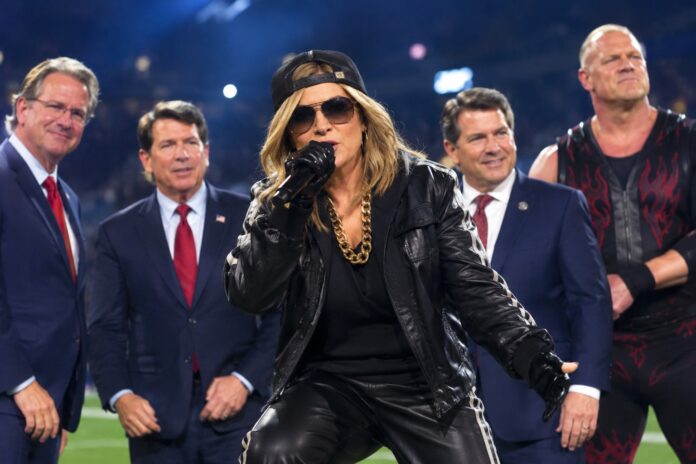
- The video features Blackburn on a football field with other Republican officials and WWE wrestler Kane, set to Lamar’s song Not Like Us
- Social media users criticized the video as AI slop, while her Democratic gubernatorial opponent called for its removal
- The incident raises questions about AI use in political campaigns despite Blackburn’s previous advocacy for protections against unauthorized deepfakes
What Happened
Tennessee Republican Senator Marsha Blackburn released an artificial intelligence-generated video on social media platform X that depicted her resembling rapper Kendrick Lamar during his 2025 Super Bowl LIX halftime show performance. The video showed Blackburn positioned on a football field singing into a microphone while Lamar’s song Not Like Us played in the background. The production featured Republican colleagues including Representative Tim Burchett of Tennessee, Senator Bill Hagerty of Tennessee, state Senator Brent Taylor, and WWE professional wrestler Kane, whose real name is Glenn Thomas Jacobs and who previously served as mayor of Knox County, Tennessee until September of the previous year.
Blackburn, who is running for governor, posted the video to X with a caption indicating readiness for upcoming events. The post generated significant negative reaction from social media users, with commenters expressing disapproval of the AI-generated content and urging removal of the video. Blackburn’s Democratic gubernatorial opponent, Jerri Green, responded by calling for the discontinuation of AI use to support campaign efforts.
- Video released on X showing Blackburn as Kendrick Lamar during Super Bowl LIX halftime show
- Supporting cast included Republican officials and WWE wrestler Kane
- Social media users criticized the content as AI slop
- Democratic opponent Jerri Green called for video removal
Why It Matters
The incident highlights growing tensions surrounding the deployment of artificial intelligence technology in political campaigns and the broader culture war surrounding AI-generated content. The backlash demonstrates public skepticism about political figures utilizing AI to create unauthorized representations of celebrities and public figures, particularly when such technology can potentially violate intellectual property rights and misrepresent artists without their consent or knowledge. This controversy underscores the gap between policy advocacy and practical application, as Blackburn has been a vocal proponent of legislative measures to protect individuals from unauthorized AI-generated deepfakes.
The reaction also reflects broader concerns among voters and political observers about the authenticity and transparency of campaign messaging. The use of AI-generated content in a gubernatorial campaign signals a shifting landscape in political communication, where emerging technologies are being deployed for promotional purposes before regulatory frameworks have been fully established. This development raises questions about campaign ethics, voter manipulation, and the responsibility of political candidates to maintain public trust through transparent communication strategies.
- Demonstrates public concerns about unauthorized AI representations of celebrities and public figures
- Reveals disconnect between Blackburn’s AI protection advocacy and actual campaign practices
- Raises questions about authenticity and transparency in political messaging
- Reflects broader national debate about AI regulation and ethical deployment
Political and Public Context
Blackburn has previously advocated for strong protections against AI-generated deepfakes without authorization. In May 2025, she co-sponsored the No Fakes Act alongside Senators Amy Klobuchar of Minnesota, Thom Tillis of North Carolina, and Chris Coons of Delaware. The legislation was designed to protect the voice and visual likenesses of individuals and creators from unauthorized use through artificial intelligence technology. During a Senate Judiciary Committee hearing on intellectual property matters in November 2024, Blackburn emphasized the importance of providing legal protections for creators whose voices and works might be copied without permission.
The broader context includes rapper Kendrick Lamar’s own use of deepfake technology in previous artistic ventures. In 2022, Lamar employed deepfake technology for the music video accompanying his song The Heart Part 5 from his album Mr. Morale and the Big Steppers, in which he morphed into multiple public figures including O.J. Simpson, Ye (formerly known as Kanye West), actor Jussie Smollett, actor Will Smith, late Lakers star Kobe Bryant, and late Los Angeles rapper Nipsey Hussle. This artistic precedent demonstrates that deepfake and AI technology has already been adopted by entertainment figures, though typically with clear creative intent and artistic messaging.
- Blackburn co-sponsored No Fakes Act with bipartisan co-sponsors to protect individuals from unauthorized deepfakes
- Legislation forwarded to Senate Judiciary Committee in May 2025
- Kendrick Lamar previously used deepfake technology in 2022 music video for artistic purposes
- Growing national debate about balancing creative freedom with intellectual property protections
What Happens Next
The video controversy may prompt discussion about whether Blackburn’s campaign will maintain or remove the AI-generated content from social media platforms. Questions remain about potential responses from Kendrick Lamar or his representatives, though neither has publicly commented on the video as of current reporting. The incident could influence the trajectory of legislative efforts surrounding AI regulation and deepfake protections, potentially accelerating or complicating the passage of protective measures like the No Fakes Act that Blackburn has championed.
The gubernatorial campaign in Tennessee may face renewed scrutiny regarding campaign strategy and the use of emerging technologies in political messaging. This controversy could influence how other political candidates approach AI-generated content in their campaigns and whether voters and media will continue to demand transparency and authenticity in political communications. The situation also raises questions about how existing intellectual property laws and emerging AI regulations will be applied to political campaigns and whether campaign activities will receive different treatment under proposed legislation.
- Uncertain whether Blackburn will maintain or remove the AI-generated video
- Potential for formal response from Kendrick Lamar or his representatives
- Possible acceleration of No Fakes Act legislative process in response to incident
- Questions about how AI regulation will apply to political campaign activities