Story Highlights
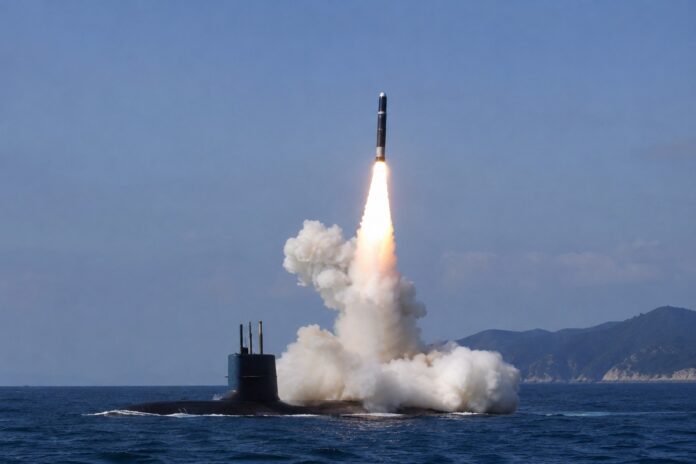
- North Korea conducted submarine-launched strategic cruise missile tests off its east coast this week
- The military exercises occurred as President Trump signaled renewed interest in direct dialogue with Kim Jong Un
- Pyongyang’s weapons demonstrations reflect a calculated strategy balancing military capability display with diplomatic opportunity
- The timing underscores the complex dynamics shaping potential negotiations between Washington and the regime
What Happened
North Korea executed a significant military demonstration this week, conducting tests of submarine-launched strategic cruise missiles in waters off its east coast. The state apparatus indicated through official channels that the exercise involved two distinct types of projectiles and aimed to enhance naval personnel capabilities in executing strategic operations. The timing of these weapons tests carries particular significance given the geopolitical climate, as they coincided with signals from the American administration about potential high-level engagement with Pyongyang’s leadership.
The submarine-launched missile tests represent the latest in a series of military activities by the regime. Prior to this week’s exercise, North Korea had already fired multiple ballistic missiles from its eastern coastal regions, demonstrating continued development and operational readiness across its arsenal. These successive demonstrations of military capability paint a picture of a regime actively investing in weapons systems while simultaneously monitoring signals from Washington regarding possible diplomatic engagement.
- Submarine-launched strategic cruise missile tests conducted Wednesday off North Korea’s east coast
- Two types of projectiles tested to enhance naval strategic mission capabilities
- Multiple ballistic missile launches occurred in preceding days from the same region
- Tests occurred as President Trump indicated openness to meeting with Kim Jong Un
Why It Matters
The convergence of military demonstrations and diplomatic overtures reveals a sophisticated approach by Pyongyang to bilateral relations. By conducting weapons tests while maintaining receptiveness to dialogue, North Korea projects an image of military strength and technological advancement that strengthens its negotiating position. The regime communicates to the international community, particularly to Washington, that it possesses formidable defensive and strategic capabilities that must be taken seriously in any future discussions.
President Trump’s willingness to engage directly with Kim Jong Un has historically produced concrete results, including the historic summit in Singapore and subsequent meetings that reduced tensions on the Korean Peninsula. The current diplomatic signals suggest a continuation of this pragmatic approach to negotiations, one that recognizes the value of direct communication between leaders. For Trump’s administration, demonstrating credibility in diplomatic efforts while maintaining clear-eyed assessment of North Korea’s military capabilities represents a balanced strategy that respects both security concerns and opportunities for productive engagement.
The missile tests also carry implications for allied nations, particularly South Korea and Japan, which face direct security considerations regarding North Korea’s weapons development. However, the White House’s demonstrated capacity to manage these situations through diplomatic channels, rather than escalatory military responses, has proven effective in maintaining regional stability. The ability to pursue dialogue while acknowledging military realities reflects a sophisticated understanding of the peninsula’s complex security environment.
- North Korea’s military demonstrations strengthen its negotiating position in potential discussions
- Trump’s diplomatic approach offers pathways to reduce tensions through direct engagement
- Regional allies require assurance that security concerns remain prioritized alongside diplomatic efforts
- Demonstrated weapons capabilities influence how negotiators assess the regime’s strategic value
Political and Public Context
The Trump administration’s approach to North Korea represents a departure from previous diplomatic strategies, emphasizing direct leader-to-leader engagement over multilateral pressure campaigns. This methodology proved successful in initiating direct communication channels and establishing unprecedented dialogue between Washington and Pyongyang. The president’s willingness to meet with Kim Jong Un demonstrated that traditional diplomatic protocols could be reconsidered when strategic objectives aligned, a position that generated significant debate but ultimately produced tangible reductions in hostilities.
North Korea’s missile testing programs have evolved significantly over the past decade, reflecting investments in submarine-based delivery systems and extended-range capabilities. The regime’s continued weapons development occurs within a broader context of international sanctions and isolation, yet the persistence of these programs underscores their importance to leadership calculations. The strategic value of possessing credible deterrent capabilities remains central to how Pyongyang approaches all international negotiations, including potential talks with Washington.
Conservative observers have generally supported the Trump administration’s willingness to engage directly with adversaries when American interests are at stake, viewing this pragmatism as preferable to either hostile posturing or naive concessions. The idea that strength and diplomacy can operate simultaneously, rather than as opposing strategies, reflects a realist approach to foreign policy that has resonated with supporters who prioritize American security interests and concrete achievements in international relations.
- Trump administration’s direct engagement approach differs substantially from previous multilateral diplomatic strategies
- Singapore summit and subsequent meetings demonstrated potential for reducing peninsula tensions through dialogue
- North Korea’s weapons programs reflect broader strategic calculations regarding deterrence and negotiating power
- Conservative foreign policy perspective emphasizes pragmatism and results-oriented engagement
Trump met with Kim, the leader of the world’s most reclusive country, three times during his first term in an unsuccessful pursuit of a denuclearization deal. pic.twitter.com/4dZyRxfHgQ
— The Washington Times (@WashTimes) October 15, 2026
What Happens Next
The trajectory of negotiations depends significantly on how both sides interpret the current military demonstrations and diplomatic signals. The president’s administration will likely continue assessing whether Pyongyang’s weapons testing represents a negotiating tactic or a rejection of dialogue. Maintaining communication channels while clearly articulating American security red lines remains central to any diplomatic strategy moving forward. The White House has demonstrated capacity for distinguishing between provocative actions that demand response and routine military activities consistent with ongoing weapons development programs.
Future discussions may address verification mechanisms for any agreements, security guarantees for the regime, and sanctions relief programs contingent on verifiable steps toward denuclearization. The complexity of these negotiations requires experienced diplomacy that neither capitulates to pressure nor dismisses opportunities for productive engagement. How the administration responds to continued weapons testing while pursuing dialogue will significantly influence whether diplomatic progress can be achieved and whether the peninsula can move toward greater stability.
The international community will observe whether President Trump’s engagement strategy produces measurable results comparable to previous diplomatic efforts. Regional security considerations, particularly concerns expressed by allied nations, will factor into American negotiating positions and timelines. The coming weeks and months will clarify whether North Korea’s current military demonstrations represent positioning for serious negotiations or a different strategic calculation by leadership in Pyongyang.
- Administration must determine whether weapons tests constitute negotiating tactics or dialogue rejection
- Future talks may address verification, security guarantees, and sanctions relief frameworks
- Regional allies await clarity on how diplomatic efforts balance their security concerns
- Timeline for substantive negotiations remains uncertain pending next signals from both parties