Story Highlights
- The president made direct public overtures to Pennsylvania Senator John Fetterman to switch to the Republican party, citing alignment concerns with Democratic leadership
- Fetterman has previously rejected party switch suggestions despite recent public statements praising Republican colleagues and distancing himself from progressive policies
- A potential party switch could significantly impact Senate control ahead of midterm elections where Democrats need four seats to regain majority
- The senator has split with Democrats on immigration and Israel policy, fueling ongoing speculation about his political future
What Happened
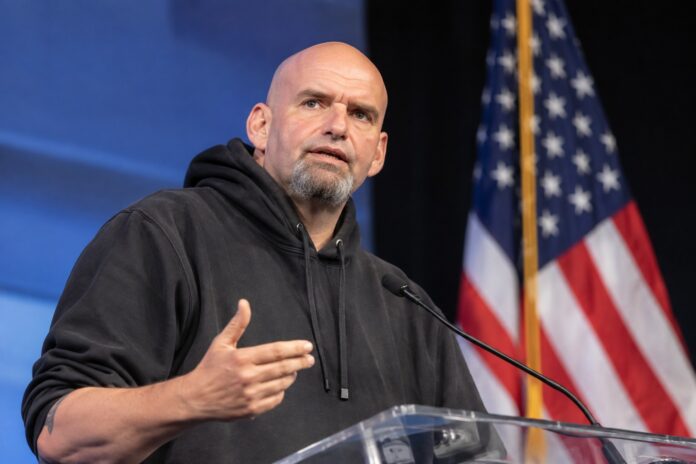
During remarks at Joint Base Andrews on Saturday upon returning from a Tennessee rally, the president expressed his desire to see the Pennsylvania Democrat join Republican ranks. The White House official indicated that Fetterman would perform better as a Republican, framing the comments as encouragement for party realignment. This represents among the most explicit recruitment efforts the administration has made toward the sitting Democratic senator.
Fetterman’s team did not immediately provide a response to inquiries about the overture. However, the senator has a documented history of public statements that blur partisan lines. Earlier in September, he recorded a video for the Republican midterm convention praising fellow Pennsylvania Senator Dave McCormick. During that same month at the Texas Tribune festival in Austin, he appeared to reference himself as a lifelong Republican during casual remarks, though supporters later characterized the language as inadvertent.
- President Trump made the appeal at Joint Base Andrews on Saturday following a campaign rally
- The president asserted that Fetterman’s policy positions align more closely with Republican principles than Democratic ones
- Fetterman previously published commentary in the Washington Post stating he would remain a Democrat despite ideological differences with party leadership
- The senator has publicly praised Republican Senate colleague Dave McCormick in recent months
Why It Matters
Senate control hangs in the balance as midterm elections approach, making each senator’s allegiance strategically significant. Democrats currently face the challenge of securing four additional seats to achieve a 51-seat majority and reclaim Senate leadership. Any defection from their ranks would substantially diminish their already difficult path to power, while conversely bolstering Republican strength in a chamber where margins remain razor-thin. The potential acquisition of a senator with Fetterman’s crossover appeal would provide the GOP with substantial political advantages.
Fetterman’s particular value to either party stems from his distinctive political brand. Elected to the Senate in 2022 with strong populist appeal, the Pennsylvania politician represents the type of working-class voter both parties seek to court. His stated disagreements with Democratic positions on immigration and Middle East policy suggest genuine philosophical divergence rather than mere rhetorical posturing. Should he ultimately switch parties, such a move would carry historical weight comparable to previous high-profile Senate party switches that fundamentally altered chamber dynamics.
- A Fetterman party switch would narrow Democratic paths to Senate majority control in the midterm elections
- Republicans currently risk losing their Senate majority, making recruitment of moderate Democrats strategically vital
- Economic challenges and broader unpopularity of current leadership have strengthened Democratic prospects heading into midterms
- Fetterman’s working-class appeal and crossover support would enhance GOP positioning with swing voters and rural communities
Political and Public Context
The outreach to Fetterman reflects broader Republican strategy to consolidate power as electoral headwinds intensify. While the administration has faced considerable public opposition on various fronts, the prospect of converting a high-profile Democratic senator represents a tangible path to strengthening legislative capacity. Historical precedent demonstrates the transformative impact such switches can produce. Vermont Senator Jim Jeffords departed Republican ranks in 2001, delivering Democrats a narrow majority at that time. Subsequently, former Pennsylvania Senator Arlen Specter’s move to Democratic ranks in 2009 enabled that party to achieve a supermajority.
Fetterman’s positioning within his own party has grown increasingly complicated due to his public breaks with Democratic orthodoxy on key issues. His praise for Republican Senator McCormick raised eyebrows among Democratic leadership and activist circles. Meanwhile, his comments about rejecting extremism appeared to reference his own party’s left wing, further complicating relationships with progressive Democrats who wield significant influence in presidential nomination contests. The senator faces potential nomination challenges in future election cycles if his heterodox positions continue to distance him from party consensus on major policy questions.
- Historical Senate party switches by Jim Jeffords in 2001 and Arlen Specter in 2009 fundamentally altered chamber control and legislative capacity
- Democratic party leadership has expressed concern about Fetterman’s ideological trajectory and public comments endorsing Republican colleagues
- Progressive Democrats have questioned the senator’s commitment to party principles on immigration, Israel policy, and economic populism
- Republican recruitment of disaffected Democrats represents a core strategy to maintain legislative leverage amid challenging midterm dynamics
TRUMP URGES FETTERMAN: President Trump openly encouraged Democratic Sen. John Fetterman of Pennsylvania to switch parties and become a Republican just weeks before the midterm elections could reshape control of Congress. pic.twitter.com/flKhFGvlNa
— NEWSMAX (@NEWSMAX) October 12, 2026
What Happens Next
The immediate question centers on whether Fetterman will respond publicly to the White House recruitment effort or maintain silence on the matter. His previous written statements rejecting party switch speculation suggest he may continue this posture, though his recent verbal missteps and video appearances indicate the possibility of further blurred messaging. The senator faces mounting pressure from multiple directions: from his own party questioning his loyalties, from the White House dangling the prospect of greater influence within Republican ranks, and from voters uncertain about his true ideological commitments.
Looking toward the election cycle ahead, Democrats will scrutinize Fetterman’s continued allegiance closely. Any further public statements praising Republicans or criticizing his own party’s positions could accelerate questions about party loyalty. Conversely, if he reasserts Democratic identity and votes cohesively with party leadership on major legislation, such actions might quiet speculation. The administration’s continued pursuit of his allegiance suggests the White House views a potential switch as increasingly plausible, regardless of the senator’s public denials. The trajectory of his Senate career—whether he remains Democratic or ultimately converts to Republican ranks—will carry implications far beyond Pennsylvania politics.
- Fetterman faces Democratic skepticism regarding his party commitment ahead of potential nomination challenges for reelection
- The senator must navigate pressure from both parties as recruitment efforts and party concerns intensify through the election cycle
- Future voting patterns and public statements from the Pennsylvania senator will indicate the likelihood of any party switch occurring
- Senate composition following midterm elections will depend partly on whether recruitment efforts toward vulnerable Democratic senators succeed