Story Highlights
- Defense technology firm Anduril Industries plans $3.7 billion investment in new Baltimore submarine shipyard dubbed Arsenal-2
- Project expected to create more than 3,000 permanent jobs manufacturing Virginia-class submarine components
- Navy could add up to $2.9 billion in additional spending to purchase production from the facility
- Announcement underscores administration commitment to strengthening U.S. defense capabilities and revitalizing American manufacturing
What Happened
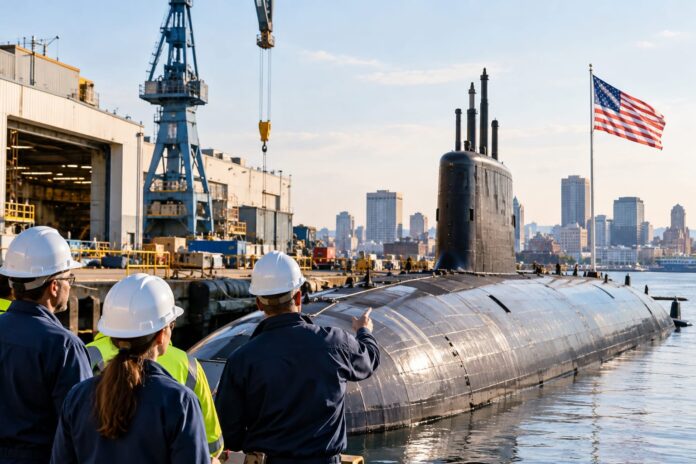
The White House unveiled a transformative defense manufacturing initiative centered on a major new submarine production facility in Baltimore. The announcement came as the administration continues to prioritize investments that simultaneously boost national security infrastructure and create American jobs. Defense technology company Anduril Industries is positioning itself at the forefront of this effort through its substantial capital commitment to the region.
The proposed shipyard, named Arsenal-2, will be constructed at Tradepoint Atlantic in Sparrtu ows Point, Maryland. This facility will focus on manufacturing critical components and large-scale assemblies for the Pentagon’s Virginia-class attack submarines, representing a significant expansion of domestic submarine production capacity. The comprehensive scope of the project reflects the strategic importance the administration places on maintaining American maritime superiority and technological edge in undersea warfare capabilities.
- Anduril Industries investing $3.7 billion in Arsenal-2 facility at Tradepoint Atlantic in Sparrows Point
- Navy authorization for up to $2.9 billion in additional purchases from the new shipyard
- Over 3,000 permanent jobs expected to be created through the project
- Manufacturing focus on Virginia-class attack submarine components and large-scale assemblies
Why It Matters
This investment represents a landmark achievement in restoring American manufacturing prowess in critical defense sectors. For decades, the United States has relied on aging production infrastructure for submarine components, creating vulnerabilities in supply chains and limiting capacity to respond to emerging security threats. The Arsenal-2 project directly addresses these structural weaknesses by establishing modern, purpose-built facilities designed for contemporary manufacturing standards and production volumes.
The job creation component carries profound economic significance for the Baltimore region and Maryland broadly. Over 3,000 permanent positions represent substantial middle-class employment opportunities with competitive compensation typical of defense manufacturing roles. These positions will support families, strengthen local tax bases, and demonstrate tangible benefits of policies prioritizing American industrial revival. The multiplier effect of such employment extends through supply chains, service providers, and related industries that support the shipyard’s operations.
Beyond regional economics, the initiative strengthens national defense readiness. Virginia-class submarines constitute the backbone of American naval deterrence strategy in contested waters. Expanding production capacity ensures the Navy can maintain and grow its submarine fleet to meet strategic requirements across multiple theaters. This capability directly translates to enhanced security for American interests and those of allied nations worldwide.
- Addresses critical bottlenecks in American submarine production capacity and domestic manufacturing
- Creates 3,000+ permanent jobs with competitive compensation in Baltimore region
- Ensures sustained U.S. naval superiority and deterrence capabilities
- Revitalizes defense manufacturing sector through private-sector investment and innovation
Political and Public Context
The Baltimore shipyard announcement reflects broader administration strategies to rebuild American manufacturing capabilities across multiple sectors. Since taking office, the president has consistently prioritized policies designed to encourage domestic production, reduce reliance on foreign supply chains, and strengthen the industrial base. This shipyard project exemplifies how defense requirements align with economic development objectives, creating a compelling case for strategic government-industry partnerships.
The involvement of Defense Secretary Pete Hegseth and Acting Navy Secretary Hung Cao signals high-level Pentagon commitment to the initiative. Both officials have emphasized the military imperative of expanded submarine production, noting that current capacity constraints limit the Navy’s ability to maintain necessary force posture. Their participation underscores that this project originated from genuine military requirements rather than political considerations, lending substantial credibility to the undertaking’s strategic value.
The scale of private-sector commitment through Anduril Industries demonstrates market confidence in the opportunity and the administration’s policy environment. Defense contractors typically invest billions only when confident in sustained demand and favorable regulatory conditions. The willingness of major defense technology firms to make such significant capital commitments reflects their assessment that the current administration will maintain policies supporting robust defense spending and streamlined procurement processes.
- Reflects administration-wide strategy to rebuild American manufacturing across multiple sectors
- High-level Pentagon participation from Defense Secretary Hegseth and Acting Navy Secretary Cao
- Demonstrates private-sector confidence in administration defense policies and procurement stability
- Aligns defense requirements with economic development and job creation objectives
Trump and Hegseth broke ground at Sparrows Point on Arsenal-2, a 2-million-square-foot submarine yard Anduril plans to build with $3.7 billion of its own money and another $2.9 billion from the administration and congressional Republicans@realDonaldTrump: “The Hormuz Strait…
— Florida’s Voice (@FLVoiceNews) October 8, 2026
What Happens Next
The immediate focus will shift toward facility construction and workforce development. Tradepoint Atlantic will require substantial infrastructure improvements to accommodate modern submarine manufacturing operations. Workforce recruitment and training programs will need to begin expeditiously to ensure skilled labor availability when production commences. Both elements present opportunities for educational institutions and workforce development agencies to expand technical training programs aligned with shipyard requirements.
The Navy’s decision on exercising its purchase authorization of up to $2.9 billion represents the next significant milestone. While the authorization demonstrates Pentagon commitment, actual procurement decisions will depend on budget cycles and competing military priorities. However, the relatively modest cost compared to the strategic importance of submarine capacity suggests strong likelihood of substantial purchases contingent on appropriations processes.
Long-term success will depend on maintaining production schedules, quality standards, and cost efficiency. The administration’s emphasis on streamlined defense procurement could facilitate faster development timelines compared to historical submarine manufacturing programs. Efficiency gains would further validate the public-private partnership model and potentially encourage similar investments in other critical defense manufacturing segments.
- Arsenal-2 facility construction and infrastructure development at Tradepoint Atlantic
- Workforce recruitment, training program development, and educational partnership expansion
- Navy procurement decisions on exercising $2.9 billion purchase authorization
- Performance metrics and efficiency monitoring to validate public-private partnership model