Story Highlights
- President Trump announced the formation of the Super Intelligence Force following a White House meeting with leaders from major technology companies including OpenAI, Anthropic, Google, Meta, and Nvidia
- Director of National Intelligence Jay Clayton will lead the initiative, with support from Federal Trade Commission Chair Andrew Ferguson, Pentagon technology leadership, and other senior officials
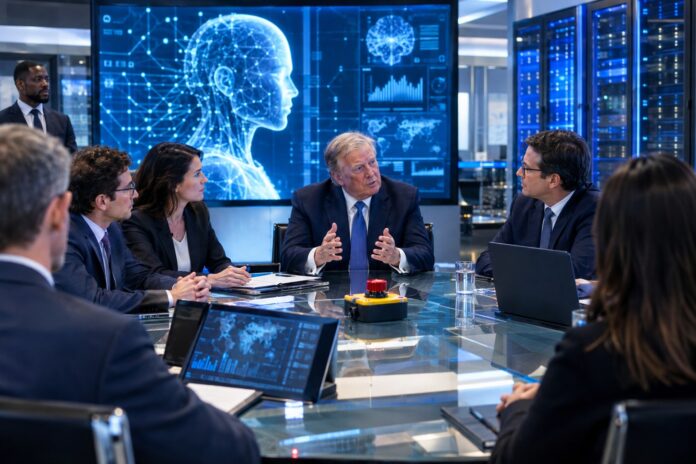
- Tech industry leaders signed a voluntary accord committing to four layers of safety controls, audits, and regular meetings to establish best practices for AI system security
- The administration rebranded artificial intelligence as Super Intelligence, emphasizing America’s continued global leadership in the technology sector
What Happened
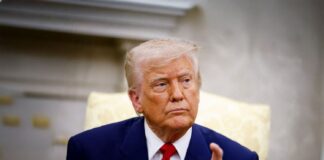
Following a significant White House meeting with the nation’s leading artificial intelligence companies, the president announced the establishment of the Super Intelligence Force on Sunday. This initiative emerged from what administration officials characterized as a historic accord where major technology corporations acknowledged their responsibilities to the American people and committed to collaborative safety standards. The announcement represents a coordinated effort between the federal government and the private sector to address growing concerns about AI development while maintaining American technological dominance on the global stage.
The Super Intelligence Force will operate under the direction of multiple senior government officials, with Jay Clayton serving as the primary leader. Leadership will include representatives from federal regulatory bodies, defense department technology divisions, and personnel management offices. These officials will report directly to the president and White House Chief of Staff Susie Wiles, ensuring high-level executive oversight of AI policy implementation.
- Jay Clayton named as Director of National Intelligence and primary leader of the Super Intelligence Force
- Andrew Ferguson (FTC Chair), Emil Michael (Pentagon undersecretary), and Scott Kupor (Office of Personnel Management director) appointed as additional task force leaders
- Tech leaders from OpenAI, Anthropic, Google, Meta, Nvidia, and SpaceX signed voluntary safety accord at White House meeting
- Four-layer safety control framework includes internal evaluations, external audits, board reviews, and regular standards meetings
Why It Matters
The establishment of this coordinated force addresses a critical juncture in technological development where artificial intelligence capabilities are advancing rapidly while public concerns about safety and accountability grow louder. By creating a structured framework that brings together government regulators and industry leaders, the administration demonstrates a pragmatic approach to innovation governance. This model leverages industry expertise and self-regulation while maintaining government oversight and public accountability mechanisms.
The voluntary accord signed by major technology firms represents a significant development in industry self-governance. The commitment to four layers of controls and audits establishes measurable accountability standards while preserving the flexibility necessary for continued innovation. This approach recognizes that technology companies possess specialized knowledge about their own systems and are best positioned to implement safety measures effectively.
- Establishes American credibility as a responsible AI developer, strengthening negotiating position in international standards discussions
- Provides regulatory clarity for technology companies, reducing uncertainty around future government enforcement actions
- Creates accountability mechanisms that protect consumers while maintaining industry competitiveness against international rivals
- Demonstrates effective collaboration between public and private sectors as a model for addressing emerging technologies
Political and Public Context
The Super Intelligence Force announcement occurs within a broader context of growing concern about artificial intelligence’s societal impacts. Stakeholders across the political spectrum have called for greater safeguards and transparency in AI development, though disagreement persists regarding optimal regulatory approaches. The president’s chosen path represents a middle ground that acknowledges legitimate safety concerns while preserving the entrepreneurial environment necessary for American technological leadership.
Previous interactions between the administration and technology leaders established the groundwork for this initiative. High-profile meetings between senior government officials and CEOs of major technology firms signaled administration openness to industry perspectives while establishing clear expectations for responsible development practices. The composition of the task force reflects strategic selection of officials with relevant expertise and established relationships with both government and industry.
- Growing bipartisan recognition that AI development requires structured oversight and safety standards
- International competition with China accelerating calls for American leadership in technology governance
- Previous White House summit established relationships and identified areas of agreement between government and industry leaders
- Regulatory bodies including the FTC had already been addressing AI-related consumer protection issues before this formal task force creation
President Trump announced Sunday the formation of a "Super Intelligence Force," after meeting with leaders of the country's largest artificial intelligence companies last week amid growing
Mr. Trump said the task force will coordinate with the federal government to "ensure that… pic.twitter.com/B4jxqUl153
— CBS News (@CBSNews) October 5, 2026
What Happens Next
The Super Intelligence Force will begin operational activities focusing on coordination between federal agencies and industry stakeholders. The task force’s engagement mandate requires outreach to diverse constituencies including consumer groups, religious organizations, public interest advocates, and infrastructure providers. Regular meetings among industry leaders will generate ongoing refinement of safety protocols as technology capabilities evolve.
Implementation of the four-layer safety control framework will proceed through voluntary compliance by participating companies, with external auditing mechanisms providing verification and transparency. Government officials will monitor implementation progress and assess whether additional formal regulations prove necessary based on observed outcomes. Future developments will likely include expansion of the task force’s scope to address specific AI applications in critical sectors such as cybersecurity, defense, healthcare, and financial services.
- Task force will establish regular meeting schedules with industry leaders, consumer groups, and other stakeholders to refine safety standards
- External auditing mechanisms will commence evaluation of company compliance with four-layer safety control framework commitments
- Government will monitor international AI development to identify emerging competitive challenges and ensure American technological leadership remains secure
- Additional formal regulations may be proposed if voluntary compliance mechanisms prove insufficient to address public safety concerns