Story Highlights
- Defense Secretary Pete Hegseth initiates significant military reforms aimed at eliminating ‘woke culture.’
- Concerns arise from former officials regarding the potential negative impacts on military readiness.
- The reshaping occurs during a critical time as the U.S. engages in military operations against Iran.
- Hegseth’s actions have sparked a national debate on military priorities and accountability.
What Happened
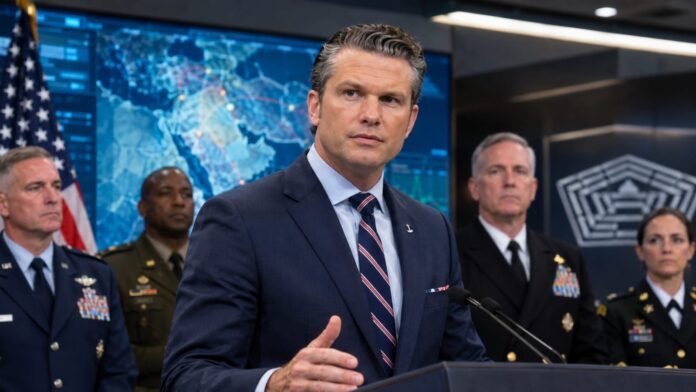
In a bold move that has drawn both praise and criticism, Defense Secretary Pete Hegseth has begun a sweeping reshaping of the U.S. military, which he describes as a necessary step to restore accountability and focus on core military values. This initiative comes at a time when the United States is actively engaged in military operations against Iran, raising questions about the timing and implications of such reforms. Hegseth’s approach has been characterized by a decisive removal of senior military leaders, which he frames as a purge of ‘woke culture’ from the Pentagon.
Hegseth’s actions have included the dismissal of nearly 20 senior officers, including high-ranking generals and admirals, as well as the secretaries of the Army and Navy. Critics, including former Air Force Secretary Frank Kendall, have voiced concerns that these changes could have long-lasting negative effects on military readiness and effectiveness. Kendall, who served under the previous administration, stated that the military is currently facing challenges that require a balance of physical readiness and intellectual capability, suggesting that Hegseth’s focus on eliminating diversity initiatives may overlook critical aspects of military strategy.
- Defense Secretary Pete Hegseth has dismissed nearly 20 senior military officers.
- Hegseth’s reforms are framed as a response to ‘woke culture’ in the military.
- Former Air Force Secretary Frank Kendall warns of potential long-term impacts on military readiness.
- The U.S. military is currently engaged in operations against Iran.
Why It Matters
The implications of Hegseth’s military reshaping extend beyond the immediate personnel changes. As the U.S. finds itself in a precarious geopolitical landscape, the focus on traditional military values and the elimination of what Hegseth refers to as ‘woke culture’ raises critical questions about the future direction of the armed forces. The president’s administration has emphasized the importance of a strong military, and Hegseth’s actions are seen as an attempt to align military culture with this vision.
However, the backlash from former military officials highlights a significant divide in perspectives on how best to prepare the military for contemporary challenges. Critics argue that the military must adapt to a changing world, which includes understanding and addressing issues of diversity and inclusion. The debate centers around whether Hegseth’s reforms will strengthen the military or hinder its ability to operate effectively in a complex global environment.
- Hegseth’s reforms could redefine military culture and priorities.
- Concerns about military readiness may impact U.S. strategic capabilities.
- The debate reflects broader societal tensions regarding diversity and inclusion.
- Military personnel and families may feel the effects of these changes in their daily operations.
Political and Public Context
The current reshaping of the military is not an isolated incident but rather part of a broader trend in U.S. defense policy. Over the past few years, there has been an increasing focus on the need for accountability and a return to traditional military values. This shift has been influenced by various factors, including public sentiment, political pressures, and the evolving nature of warfare.
Hegseth’s actions come on the heels of a long-planned withdrawal of U.S. troops from Iraq, marking the end of a two-decade military presence in the region. As the U.S. military transitions from counterinsurgency operations to a focus on great power competition, the need for a cohesive and effective military strategy becomes paramount. The reshaping of military leadership is seen by some as a necessary step to ensure that the armed forces are prepared for the challenges ahead.
- The U.S. military is transitioning from counterinsurgency to great power competition.
- Recent troop withdrawals from Iraq signal a shift in military strategy.
- Public sentiment is increasingly calling for accountability within the military.
- Political pressures are influencing defense policy and military leadership changes.
Hegseth touts his shake-up of military leadership in address to troopshttps://t.co/ojJQCwpaJW
. –— Trump Sucks (@JerryGi93983941) September 30, 2026
What Happens Next
Looking ahead, the future of Hegseth’s military reforms remains uncertain. As the U.S. continues to engage in military operations, the effectiveness of these changes will be closely monitored by both supporters and critics. The administration’s commitment to a strong military will likely be tested as the implications of Hegseth’s reshaping unfold.
Key questions remain regarding the long-term impact of these reforms on military readiness and effectiveness. Will the elimination of diversity initiatives hinder the military’s ability to adapt to modern challenges? How will military personnel respond to these changes, and what will be the broader implications for U.S. defense policy? As the situation evolves, it will be crucial to assess the outcomes of Hegseth’s actions and their effects on the armed forces.
- Monitoring the effectiveness of Hegseth’s reforms will be critical.
- Long-term impacts on military readiness will need to be evaluated.
- Responses from military personnel and families will shape future discussions.
- Broader implications for U.S. defense policy will emerge as the situation develops.