Story Highlights
- The FAA implemented a nationwide ground stop on Friday that disrupted air travel for several hours, with effects continuing into Saturday
- President Trump has not issued a formal public statement addressing the disruption, instead focusing his social media activity on other policy priorities
- Transportation Secretary Sean Duffy and Homeland Security Secretary Markwayne Mullin attributed the incident to congressional funding gaps and technology integration challenges
- The president privately indicated to Fox News that the disruption did not appear to result from a cyberattack or artificial intelligence
What Happened
A significant nationwide ground stop issued by the Federal Aviation Administration on Friday halted nearly every commercial flight across the country for several hours. The disruption continued to affect airport operations into Saturday, leaving travelers stranded and schedules in disarray. While the initial crisis passed within hours, the ripple effects persisted throughout the weekend as airlines worked to restore normal operations and clear backlogged flights.
Members of the president’s cabinet moved quickly to explain the incident to the public and Congress. Transportation Secretary Sean Duffy attributed the problem to insufficient funding levels from Congress combined with issues involving an FAA contractor. Homeland Security Secretary Markwayne Mullin pointed to the complexities of integrating newer technology systems with legacy infrastructure as a contributing factor. Mullin confirmed that the president had been briefed on the matter during Friday’s events.
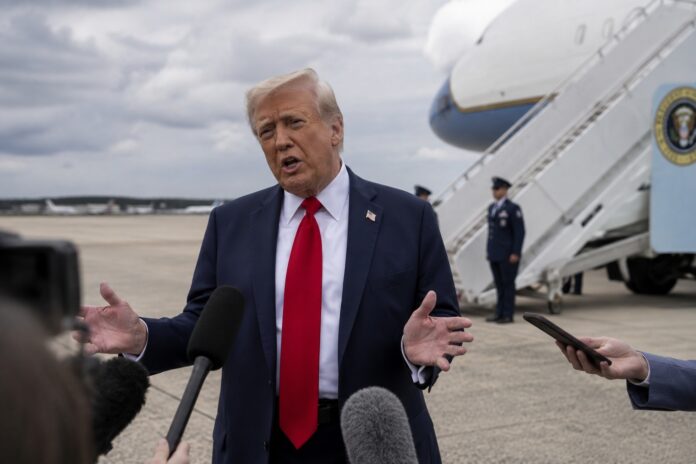
Notably, the president conveyed preliminary findings to Fox News correspondent Peter Doocy on Friday without issuing a broader public statement. The assessment indicated that initial investigations had found no evidence suggesting the disruption resulted from a cyberattack or artificial intelligence-related failure.
- FAA issued nationwide ground stop Friday affecting nearly all commercial flights
- Disruption lasted several hours with effects continuing Saturday
- Transportation Secretary blamed congressional funding gaps and contractor issues
- Homeland Security Secretary cited technology integration challenges with legacy systems
Why It Matters
The absence of a direct presidential statement on a disruption affecting millions of Americans and the broader economy represents a notable shift in communication patterns from the Oval Office. The incident raised questions about crisis communication and public reassurance during operational emergencies. When major infrastructure failures occur, particularly those affecting transportation networks, citizens typically expect swift and visible leadership response to explain what happened and outline corrective measures.
The ground stop demonstrated vulnerabilities in the nation’s air traffic control systems at a time when reliable infrastructure has become increasingly central to economic productivity and national security discussions. Understanding the root causes and implementing safeguards became topics of urgent interest for policymakers, industry stakeholders, and the traveling public. The cabinet-level explanations provided context, but the lack of a direct presidential address left a communications gap that observers found noteworthy.
Instead of addressing the crisis, the administration’s focus remained on other initiatives. The president’s social media activity during and after the disruption centered on planned renovations to Washington, D.C.’s East Potomac Park and Golf Links, entertainment industry reform, critiques of California Governor Gavin Newsom, and stock market commentary. This allocation of public communication resources suggested deliberately chosen priorities, even as the travel disruption affected commerce and consumer confidence.
- Absence of direct presidential statement during major infrastructure crisis raised communications questions
- Millions of travelers and the broader economy experienced disruption effects
- Cabinet officials provided explanations, but gap existed in top leadership visibility
- Alternative presidential messaging priorities became subject of public observation
Political and Public Context
President Trump has historically demonstrated a communications style characterized by frequent and immediate engagement on matters affecting the nation, particularly those capturing public attention or involving criticism of his administration. Observers noted that this particular silence represented a departure from established patterns. Media analysts remarked that such restraint proved uncharacteristic given the president’s typical propensity to address controversies, celebrate accomplishments, or respond to criticism through direct public engagement.
The FAA ground stop occurred within the context of ongoing national discussions about infrastructure reliability, government efficiency, and the adequacy of federal funding for critical systems. Congressional debates over appropriations have frequently highlighted disputes between the executive branch and legislative leadership regarding resource allocation priorities. The Transportation Secretary’s attribution of the incident to insufficient funding added weight to these broader budgetary debates and potentially informed future funding discussions on Capitol Hill.
The incident also reflected broader technology sector challenges as government agencies work to modernize aging systems while maintaining operational stability. The integration of newer capabilities with existing infrastructure has proven problematic across multiple federal agencies, not merely within aviation authorities. This technical reality formed part of the operational context that Homeland Security leadership sought to explain to the public.
- President’s typical communication style emphasizes frequent public engagement on pressing matters
- Transportation Secretary’s funding critique aligned with congressional appropriations debates
- Technology modernization challenges affect multiple federal agencies and systems
- Public confidence in infrastructure reliability depends partly on visible leadership response
What Happens Next
The Federal Aviation Administration faces pressure to complete thorough investigations into the ground stop’s causes and implement preventive measures to avoid recurrence. Congressional committees with transportation oversight authority will likely demand detailed briefings from agency leadership and cabinet officials. These sessions will focus on determining whether congressional funding levels adequately support FAA operations and whether contractor accountability mechanisms function properly.
The administration will need to address lingering questions about crisis communication protocols and public notification procedures during infrastructure emergencies. Whether the president will eventually issue a comprehensive statement addressing the incident remains an open question, as does the potential impact of the disruption on broader policy discussions regarding transportation infrastructure investment and government efficiency.
Future budget negotiations will probably reference this incident as evidence supporting arguments for either increased federal investment in air traffic control modernization or more efficient deployment of existing resources. The technical findings regarding the integration of legacy and new systems will inform subsequent infrastructure planning across multiple federal agencies managing critical national systems.
- FAA investigation into root causes and implementation of preventive measures underway
- Congressional oversight committees expected to demand briefings from agency and cabinet leadership
- Funding adequacy and contractor accountability will likely feature in legislative discussions
- Crisis communication protocols and infrastructure investment debates will continue in policy circles