Story Highlights
- The Department of Homeland Security has detected over 300 cartel drones at the southern border in just over a month.
- Federal agencies are enhancing their counter-drone measures to address the evolving tactics of drug cartels.
- Cartels are increasingly using drones for reconnaissance during smuggling operations.
- Officials emphasize the need for advanced technology to ensure border security.
What Happened
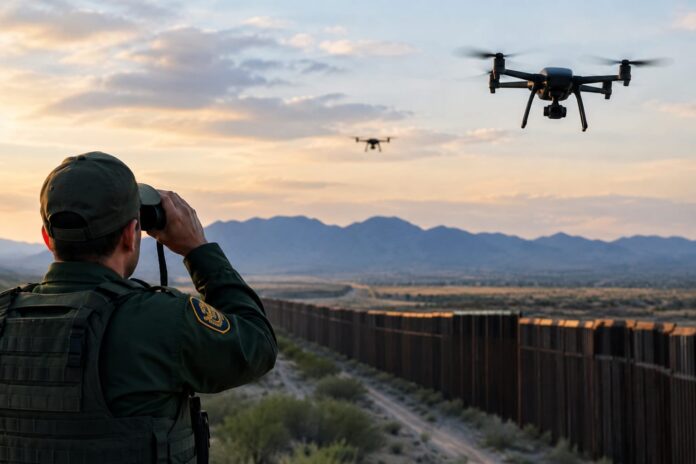
The Department of Homeland Security (DHS) has issued a significant warning regarding the escalating threat posed by cartel drones along the southern border of the United States. In a recent report, it was revealed that more than 300 drones associated with drug cartels have been detected in a little over a month, raising alarms about the evolving tactics employed by these criminal organizations. The alarming figure, which includes 378 drones detected between August 22 and a recent Thursday, has prompted federal agencies to take immediate action to bolster their surveillance and interception capabilities.
The Department of War has reported that out of the 378 detected drones, 75 were turned back, 15 were engaged, and one was captured. This surge in drone activity has led to a concerted effort by the DHS and the Department of War to enhance their counter-drone measures. In August alone, the War Department’s Joint Task Force – Southern Border reportedly took down approximately 100 suspected cartel drones, highlighting the urgency of the situation. The rapid increase in drone usage by cartels has raised concerns about the implications for border security and law enforcement.
- 378 cartel drones detected between August 22 and a recent Thursday.
- 75 drones turned back, 15 engaged, and one captured.
- Approximately 100 suspected cartel drones taken down in August.
- Increased collaboration with private companies to develop counter-drone technology.
Why It Matters
The implications of the rising threat from cartel drones are profound, affecting not only border security but also the broader landscape of law enforcement and public safety. Cartels have shifted their tactics from traditional methods of surveillance, such as sending lookouts to monitor U.S. Border Patrol agents, to utilizing drones for aerial reconnaissance. This shift allows them to gather real-time intelligence on the movements of law enforcement personnel, enabling them to plan their smuggling operations more effectively.
Jeffrey Stalnaker, the deputy chief patrol agent for Border Patrol, emphasized that the primary use of these drones is for reconnaissance during drug and human smuggling operations. By observing the activities of U.S. personnel from above, cartels can better strategize their illegal activities, making it increasingly difficult for law enforcement to intercept their operations. The evolving tactics of these criminal organizations necessitate a robust response from federal agencies to ensure the safety and security of the border. As the situation develops, the need for advanced countermeasures becomes increasingly critical.
- Increased cartel surveillance capabilities pose a direct threat to U.S. border security.
- Law enforcement agencies must adapt to the changing tactics of cartels.
- Potential for increased drug and human trafficking as cartels refine their operations.
- Public safety concerns arise as drones may be used for more lethal purposes in the future.
Political and Public Context
The rise of cartel drones is not an isolated incident but rather part of a broader trend in which criminal organizations are leveraging technology to enhance their operations. The use of drones for surveillance and reconnaissance is becoming increasingly common among various criminal enterprises, reflecting a shift in the landscape of organized crime. Federal officials have noted that while U.S. anti-drone measures have been effective thus far, the rapid evolution of cartel tactics poses a significant challenge.
Some drones are reportedly being developed for lethal purposes, although officials have not yet encountered such drones at the border. The U.S. military has been conducting exercises in the desert outside Yuma, Arizona, testing new anti-drone technology, including guns and unmanned aerial vehicles designed to capture hostile drones. This proactive approach aims to stay ahead of the evolving threats posed by these criminal organizations.
- Criminal organizations are increasingly adopting advanced technology for their operations.
- U.S. military exercises are focused on developing effective counter-drone measures.
- Previous tactics of cartels are being replaced by more sophisticated methods.
- Federal agencies are collaborating with private companies to enhance drone detection capabilities.
DHS fires a direct warning at Mexican cartels after 378 drones were detected conducting hostile surveillance of American personnel along the southern border in just over one month.
Of those 378 detections, 75 cartel drones were turned back, 15 were engaged, and one was captured.… pic.twitter.com/soXlg3mKBQ
— Fox News Politics (@foxnewspolitics) September 25, 2026
What Happens Next
As the threat from cartel drones continues to rise, federal agencies are faced with the urgent need to adapt and enhance their counter-drone measures. The DHS and the Department of War are actively working to develop and deploy advanced technology to detect and intercept these drones, ensuring that they can effectively respond to the evolving tactics of cartels. The future outlook involves not only the implementation of new technologies but also a comprehensive strategy to address the broader implications of cartel drone usage.
This includes increased collaboration between federal agencies, local law enforcement, and private sector partners to develop innovative solutions to counter the threat. As the situation evolves, ongoing assessments will be crucial to determine the effectiveness of these measures and to address any emerging challenges.
- Increased investment in counter-drone technology is expected.
- Collaboration with private companies will continue to develop effective solutions.
- Ongoing military exercises will focus on refining anti-drone capabilities.
- Open questions remain regarding the potential for lethal drone usage by cartels.