Story Highlights
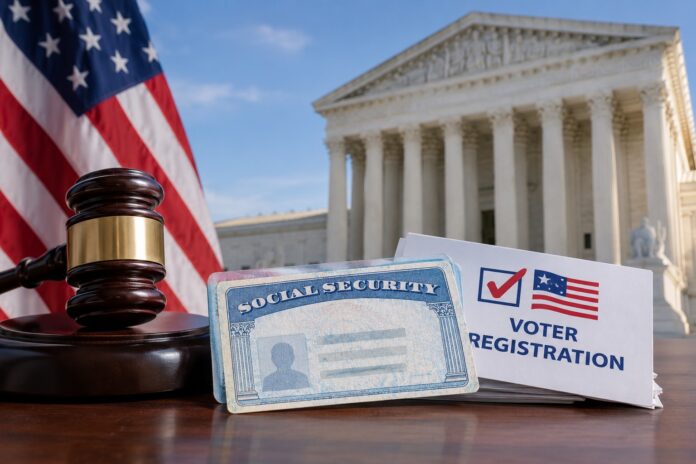
- The Supreme Court allows the Trump administration to use Social Security data for voter registration checks.
- This decision aims to enhance election integrity by identifying noncitizen voters.
- Critics express concerns over potential voter disenfranchisement due to inaccuracies in the data.
- The ruling reflects a significant shift in how voter eligibility is verified in the United States.
What Happened
In a landmark decision, the U.S. Supreme Court has granted the Trump administration the authority to utilize Social Security data for the purpose of verifying voter registration. This ruling, issued on a Friday without a signed opinion, effectively overrules previous lower court decisions that had prohibited the Department of Homeland Security (DHS) from accessing such sensitive information. The move is seen as a crucial step in the administration’s ongoing efforts to ensure the integrity of the electoral process by identifying and removing noncitizen voters from state registration rolls.
The case arose from a 2025 executive order signed by President Trump, which directed DHS to leverage the Systematic Alien Verification for Entitlements (SAVE) system to identify individuals who may not be eligible to vote. The decision has sparked a heated debate, with supporters arguing that it is a necessary measure to protect the sanctity of elections, while opponents warn of the potential for wrongful disenfranchisement of eligible voters.
- The Supreme Court’s decision was issued on a Friday.
- The ruling allows DHS to access Social Security data for voter verification.
- The case originated from a 2025 executive order by President Trump.
- Lower courts had previously sided with the League of Women Voters against the use of this data.
Why It Matters
This ruling is significant for several reasons. First and foremost, it empowers the Trump administration to take a more aggressive stance on voter verification, a topic that has been a cornerstone of his presidency. By allowing the use of Social Security data, the administration aims to address concerns regarding noncitizen voting, which many believe undermines the electoral process. The ability to access this data could lead to a more streamlined approach to identifying ineligible voters, thereby enhancing the overall integrity of elections.
However, the decision is not without its critics. Opponents argue that the use of Social Security data could lead to significant inaccuracies, resulting in eligible voters being wrongly purged from registration rolls. This concern is particularly relevant given that previous attempts to use similar data have resulted in naturalized citizens being misidentified as noncitizens. The potential for disenfranchisement raises serious questions about the balance between ensuring election integrity and protecting the rights of eligible voters.
- The ruling allows for a more aggressive approach to voter verification.
- It addresses concerns about noncitizen voting undermining elections.
- Critics warn of inaccuracies leading to wrongful voter purges.
- The decision highlights the ongoing debate over election integrity versus voter rights.
Political and Public Context
The backdrop to this ruling is a broader national conversation about election integrity and voter eligibility. In recent years, there has been a growing concern among conservatives regarding the potential for noncitizen voting to influence election outcomes. This concern has led to various legislative efforts aimed at tightening voter registration processes and ensuring that only eligible individuals are allowed to vote.
Moreover, the Supreme Court’s decision comes at a time when many states are grappling with how to handle voter registration and verification. The ruling could set a precedent for how similar cases are handled in the future, potentially leading to more states adopting similar measures to verify voter eligibility. Additionally, the dissenting opinion from the court’s liberal justices underscores the contentious nature of this issue, as they argue that the majority misinterpreted existing laws regarding data sharing and privacy.
- The ruling reflects a national conversation about election integrity.
- Concerns over noncitizen voting have led to legislative efforts for tighter voter registration.
- The decision could set a precedent for future voter verification cases.
- The dissent highlights the contentious nature of the issue among justices.
The Trump administration can use a government database that includes Social Security information to help state officials identify noncitizens on voter lists, the Supreme Court said.
The database will be in use for the midterm elections. https://t.co/Q9XAoBBc6m pic.twitter.com/u990GJl8yv
— The Washington Post (@washingtonpost) September 26, 2026
What Happens Next
Looking ahead, the implications of this ruling are significant. The Trump administration is now poised to implement its voter verification strategy using Social Security data, which could lead to a substantial overhaul of how voter eligibility is assessed across the country. As states begin to adopt these measures, it will be crucial to monitor the impact on voter registration and participation rates.
Furthermore, this decision raises several open questions regarding the future of voter verification processes. Will states be able to effectively implement these measures without disenfranchising eligible voters? How will the administration address concerns about inaccuracies in the data? As the 2026 midterm elections approach, these questions will become increasingly pressing, and the administration will need to navigate the delicate balance between ensuring election integrity and protecting the rights of voters.
- The Trump administration will implement its voter verification strategy.
- States will begin adopting measures based on the ruling.
- Monitoring the impact on voter registration will be crucial.
- Open questions remain about data accuracy and voter rights.