Story Highlights
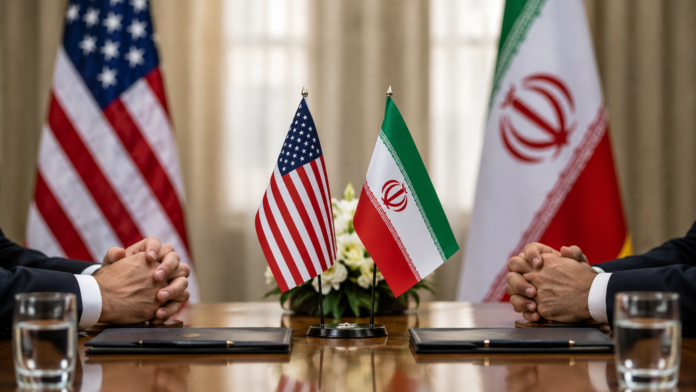
- U.S. and Iranian officials met at the U.N. General Assembly amid rising tensions.
- President Trump threatened to ‘annihilate’ Iran if a deal is not reached soon.
- Recent military actions in the Strait of Hormuz have escalated the conflict.
- Despite challenges, talks indicate potential for diplomatic resolution.
What Happened
Recent developments between the United States and Iran have highlighted the ongoing tensions that have characterized their relationship for decades. During the U.N. General Assembly, U.S. and Iranian officials engaged in discussions that could signal a shift in the diplomatic landscape. President Trump, known for his strong stance against the Iranian regime, reiterated his position, stating that he may ‘annihilate’ Iran if a satisfactory deal is not reached soon. This statement underscores the administration’s commitment to a robust foreign policy aimed at curbing Iranian aggression.
The backdrop of these discussions includes a recent attack on a commercial vessel in the Strait of Hormuz, which resulted in the death of one crew member and the evacuation of over 20 sailors. This incident has further strained relations and raised concerns about maritime security in a region critical to global oil supplies. The U.S. military blockade on the Strait of Hormuz has redirected numerous commercial vessels, raising concerns about the potential for a broader conflict.
- U.S. and Iranian officials met on Tuesday during the U.N. gathering.
- President Trump threatened to ‘annihilate’ Iran if negotiations fail.
- A commercial vessel was attacked in the Strait of Hormuz, escalating tensions.
- Eight suicide attempts were reported among sailors on the USS Abraham Lincoln.
Why It Matters
The significance of these talks cannot be overstated. They represent a rare opportunity for dialogue between two nations that have been at odds for decades. The potential for a diplomatic resolution is crucial not only for U.S.-Iran relations but also for regional stability in the Middle East. President Trump’s administration has taken a firm approach to Iran, emphasizing the need for accountability and a cessation of hostile actions. This approach has garnered support from many who believe that a strong stance is necessary to deter further aggression from Tehran.
The implications of these discussions extend beyond the immediate parties involved. The outcome of the negotiations could have far-reaching consequences for U.S. allies in the region, particularly Israel and Gulf states that have expressed concerns about Iran’s nuclear ambitions and military capabilities. A successful negotiation could lead to a reduction in hostilities and improved regional security, while failure to reach an agreement may result in increased military actions and further destabilization.
- A successful negotiation could lead to a reduction in hostilities and improved regional security.
- Failure to reach an agreement may result in increased military actions and further destabilization.
- U.S. allies in the region are closely monitoring the situation, as their security is intertwined with U.S. policy.
- The Iranian regime’s response to U.S. actions will be critical in shaping future relations.
Political and Public Context
Understanding the historical context of U.S.-Iran relations is essential to grasp the current situation. The two nations have experienced a tumultuous relationship since the 1979 Iranian Revolution, which saw the overthrow of the U.S.-backed Shah and the establishment of the Islamic Republic. Since then, Iran has been viewed as a significant threat to U.S. interests and allies in the region. The recent military actions, including airstrikes by the U.S. and retaliatory attacks by Iran, have escalated tensions significantly.
The closure of the Strait of Hormuz, through which a substantial portion of the world’s oil supply passes, has further complicated matters. The U.S. military blockade has redirected numerous commercial vessels, raising concerns about the potential for a broader conflict. The deployment of the USS Abraham Lincoln and its approximately 5,000 crew members has come under scrutiny after family members of the sailors raised concerns about the conditions aboard the carrier and the mental health of its service members.
- The 1979 Iranian Revolution marked a turning point in U.S.-Iran relations.
- Recent military actions have included airstrikes and retaliatory attacks.
- The Strait of Hormuz is a critical chokepoint for global oil supplies.
- U.S. military presence in the region has been a point of contention for Iran.
US and Iran hold first talks since June after Trump’s “annihilation” threat. The talks mark the first since a ceasefire collapsed in June, with intermittent exchanges of fire. An informative update on diplomacy and regional stability. https://t.co/ihCe4Ht22e pic.twitter.com/sFi9keWbPg
— Drew Grimaldi (@Grimillionaire) September 23, 2026
What Happens Next
Looking ahead, the future of U.S.-Iran relations remains uncertain. The recent talks at the U.N. may pave the way for further negotiations, but significant challenges remain. President Trump’s administration is likely to continue its pressure on Iran, emphasizing the need for compliance with international norms and agreements. The potential for a diplomatic breakthrough exists, but it will require both sides to make concessions.
The Iranian regime’s willingness to engage in meaningful dialogue will be crucial in determining the outcome of these discussions. Additionally, the U.S. must balance its approach to ensure that it does not appear weak in the face of Iranian provocations. Further negotiations are expected in the coming weeks as both sides assess their positions, and the U.S. may increase sanctions if Iran does not comply with demands.
- Further negotiations are expected in the coming weeks as both sides assess their positions.
- The U.S. may increase sanctions if Iran does not comply with demands.
- Regional allies will play a significant role in shaping the U.S. strategy moving forward.
- The potential for military action remains if diplomatic efforts fail.