Story Highlights
- Federal Reserve raises interest rates by 0.25 percent to 4.0 percent.
- President Trump continues to advocate for lower rates ahead of midterm elections.
- Inflation remains a pressing issue, contradicting the administration’s economic messaging.
- Polling indicates mixed public sentiment regarding Trump’s economic management.
What Happened
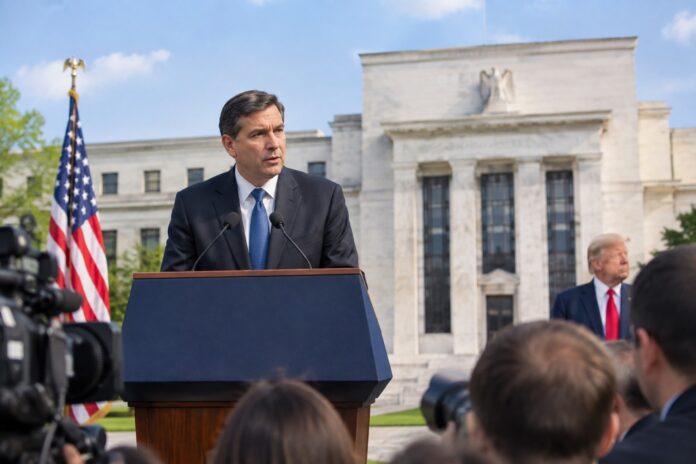
On Wednesday, the Federal Reserve announced a significant decision that has sent ripples through the political and economic landscape. The central bank, led by Chair Kevin Warsh, decided to raise interest rates by 0.25 percent, bringing the target rate to 4.0 percent. This marks the first increase in three years, a move that comes as a surprise to many, especially given President Trump’s vocal opposition to such measures. The president has been adamant about the need for lower interest rates, particularly as the nation approaches the critical midterm elections in November.
The decision to hike rates is seen as a response to persistent inflation, which continues to challenge the economic narrative promoted by the current administration. Economists and political analysts alike have noted that this increase contradicts the message that the economy is thriving. Joel Griffith, a senior fellow at Advancing American Freedom, remarked that the Fed’s decision reflects a harsh reality: inflation remains significantly above the targeted two percent level. This situation has created a complex dynamic for the Trump administration as they navigate the political implications of this economic shift.
- Federal Reserve raised interest rates to 4.0 percent.
- First rate hike in three years.
- Trump criticized the decision on TruthSocial.
- Inflation currently stands at 3.40 percent.
Why It Matters
The implications of the Federal Reserve’s decision extend far beyond mere numbers. For President Trump and his administration, this rate hike presents a formidable challenge as they strive to maintain a positive economic narrative. The president’s calls for lower interest rates are not just about economic theory; they are about the practical realities facing American families and businesses. High interest rates can stifle economic growth, making it more expensive for individuals and companies to borrow money, which in turn can lead to reduced spending and investment.
Moreover, the timing of this decision is particularly critical. With the midterm elections looming, Republicans are under immense pressure to counteract the Democratic narrative surrounding the economy. The rise in interest rates could be perceived as an acknowledgment of economic difficulties, which could undermine Republican candidates’ efforts to present a united front on economic issues. The president’s fiery response to the Fed’s decision underscores his commitment to addressing inflation and advocating for policies that support American prosperity. As the political landscape evolves, the ramifications of this decision will likely influence voter sentiment and party strategies.
- Higher interest rates could hinder economic growth.
- Republicans face pressure to counteract Democratic messaging.
- Trump’s response highlights his focus on economic issues.
- Public sentiment on economic management remains divided.
Political and Public Context
To fully understand the significance of the Federal Reserve’s decision, it is essential to consider the broader economic context. Under President Trump, the nation experienced a period of economic growth characterized by low unemployment rates and rising wages. However, the current administration has faced challenges, including rising gas prices and inflation, which have led to public frustration. The national average gas price currently sits at $4.36 per gallon, a stark reminder of the economic pressures facing American families.
Additionally, the inflation rate, which peaked at 9.1 percent under the Biden administration in June 2022, has become a focal point in political discourse. Republicans argue that the inflation rate is considerably lower under Trump’s policies compared to the current administration. This argument is bolstered by polling data indicating that a significant portion of the electorate disapproves of the way Trump is handling the economy, with 62 percent expressing dissatisfaction. As these economic issues persist, they will undoubtedly shape the political landscape leading up to the elections.
- Trump’s administration previously achieved low unemployment and rising wages.
- Gas prices and inflation are key issues for voters.
- Inflation peaked at 9.1 percent under Biden.
- Polling shows public discontent with Trump’s economic management.
Trump offers fiery response to Federal Reserve rate hikehttps://t.co/H50QduSACf
— The Hill (@thehill) September 17, 2026
What Happens Next
Looking ahead, the Federal Reserve’s decision raises several important questions about the future of the economy and the political landscape. As the midterm elections approach, Republicans must navigate the complexities of public sentiment regarding economic issues. The president’s commitment to advocating for lower interest rates will likely continue to resonate with his base, but it remains to be seen how this will impact broader voter perceptions.
Moreover, the Federal Reserve’s actions may prompt further discussions about monetary policy and its implications for economic growth. With inflation remaining a pressing concern, the central bank’s future decisions will be closely scrutinized by both economists and political strategists. The potential for additional rate hikes could further complicate the economic narrative as the elections draw near. As the political climate evolves, the interplay between economic policy and electoral outcomes will be critical to watch.
- Republicans must address public sentiment on economic issues.
- Future Fed decisions will impact economic growth discussions.
- Trump’s advocacy for lower rates will continue to be a focal point.
- Voter perceptions will shape the political landscape leading up to the elections.