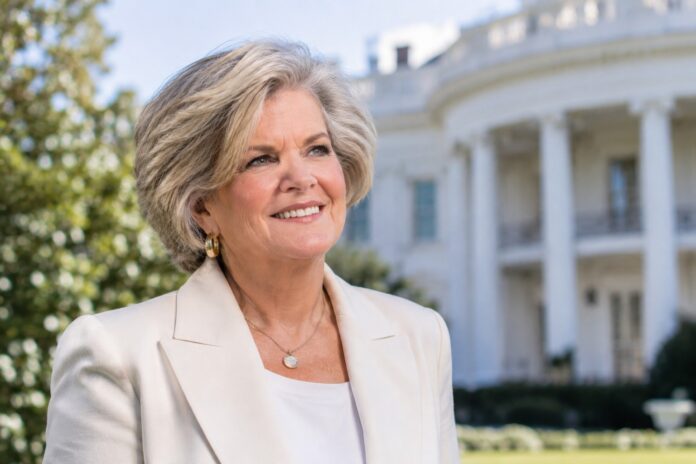
Story Highlights
- Susie Wiles, White House chief of staff, announces she is cancer-free after a successful treatment.
- Wiles expresses gratitude for President Trump’s unwavering support during her health battle.
- Her early diagnosis and strong prognosis underscore her resilience and commitment to public service.
- Wiles vows to continue advancing the America First Agenda as she returns to her duties.
What Happened
In a heartening announcement that resonates with many, Susie Wiles, the White House chief of staff, declared on Wednesday that she is now cancer-free. This news comes after a challenging journey that began with her diagnosis of breast cancer in March. Wiles, who has been a pivotal figure in President Donald Trump’s administration since the start of his second term, shared her joyous update via a post on X, formerly known as Twitter. She stated, ‘After a medical appointment at the Mayo Clinic this week, my pathology results came back clear. I am cancer free.’
At 69 years old, Wiles has demonstrated remarkable strength and resilience throughout her treatment. She expressed her deep gratitude towards President Trump for his unwavering support during this difficult time. Wiles emphasized her commitment to continue working diligently to advance the America First Agenda, a cornerstone of Trump’s presidency that prioritizes American interests in both domestic and foreign policy.
- Wiles was diagnosed with breast cancer in March 2023.
- She received treatment while continuing to work virtually from the White House.
- Her pathology results were confirmed clear after a visit to the Mayo Clinic.
- Wiles has been a key advisor to Trump, playing a significant role in his administration.
Why It Matters
The announcement of Wiles’ cancer-free status is not just a personal victory; it symbolizes hope and resilience for many who are battling cancer. Breast cancer remains a significant health issue, being the most commonly diagnosed cancer among women in the United States and the second leading cause of cancer-related deaths among women. Wiles’ experience sheds light on the importance of early detection and treatment, which can lead to positive outcomes, as evidenced by her strong prognosis.
Moreover, Wiles’ journey highlights the critical role of support systems during health crises. President Trump’s public acknowledgment of her diagnosis and his encouragement during her treatment reflect the strong bond between them, which is essential in high-pressure environments like the White House. This relationship not only underscores the personal aspect of leadership but also illustrates how effective support can empower individuals to overcome significant challenges.
- Wiles’ victory over cancer serves as an inspiration to others facing similar battles.
- Her experience emphasizes the importance of early detection in improving cancer outcomes.
- The support from Trump showcases the significance of leadership in personal health crises.
- Wiles’ commitment to her role reinforces the dedication of public servants to their duties, even in adversity.
Political and Public Context
Wiles’ announcement comes at a time when health issues, particularly cancer, are at the forefront of public discourse. The American Cancer Society reports that one in eight women will be diagnosed with breast cancer in their lifetime, making it a prevalent concern. Wiles’ experience resonates with countless women who juggle their health challenges while fulfilling their professional and personal responsibilities.
Additionally, Wiles is the first woman to serve as White House Chief of Staff, breaking barriers in a traditionally male-dominated role. Her leadership not only paves the way for future female leaders but also highlights the importance of diverse perspectives in governance. As she continues her work, Wiles sets an example of resilience and determination, reinforcing the notion that women can excel in high-stakes environments while managing personal health challenges.
- Wiles is the first female White House Chief of Staff, marking a significant milestone in U.S. history.
- Her diagnosis and treatment occurred during a period of heightened awareness about women’s health issues.
- Wiles’ ongoing commitment to her role reflects the dedication of public servants to their responsibilities.
- Her story adds to the narrative of resilience among women in leadership positions.
White House Chief of Staff SUSIE WILES: “Some personal news I’m grateful to share. After a medical appointment at the Mayo Clinic this week, my pathology results came back clear. I am cancer-free." https://t.co/Y0oXc9SR7I
— The Washington Times (@WashTimes) September 17, 2026
What Happens Next
Looking ahead, Wiles’ return to full capacity in her role as chief of staff is anticipated with great enthusiasm. Her experience during treatment may influence her approach to leadership, potentially fostering a more compassionate and understanding environment within the White House. As she resumes her duties, Wiles is expected to continue advocating for policies that align with the America First Agenda, focusing on economic growth, national security, and healthcare reform.
Moreover, her journey may inspire initiatives aimed at supporting women facing similar health challenges, emphasizing the need for comprehensive healthcare policies that prioritize early detection and treatment. As Wiles continues to navigate her responsibilities, the impact of her experience will likely resonate throughout her work, encouraging a culture of support and resilience within the administration.
- Wiles will continue to advocate for the America First Agenda as she resumes her duties.
- Her experience may lead to initiatives supporting women’s health issues within the administration.
- Wiles’ leadership style may evolve, incorporating empathy gained from her health journey.
- Future policies may reflect a commitment to improving healthcare access and outcomes for women.