Story Highlights
- President Trump calls for Ukraine to pause strikes on Russian oil refineries.
- Rising diesel prices are a significant concern amid ongoing geopolitical tensions.
- The average cost of diesel has surged to record highs, impacting global markets.
- Trump emphasizes the need for strategic targeting to alleviate the energy crisis.
What Happened
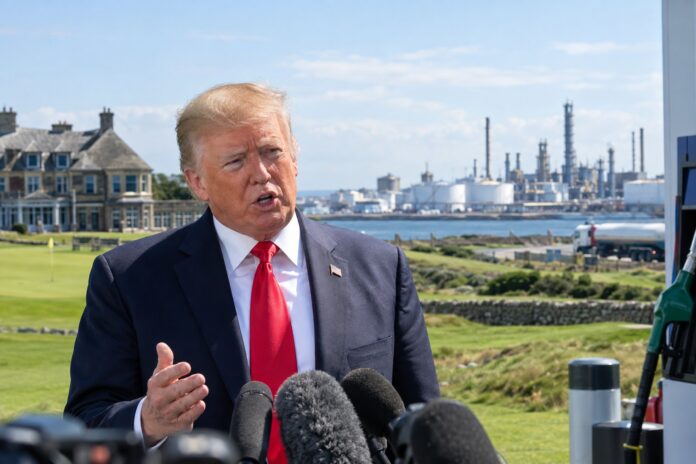
In a recent statement made during the Irish Open, President Trump urged Ukraine to reconsider its military strategy regarding strikes on Russian oil refineries. This call comes in light of escalating diesel prices that have been exacerbated by the ongoing conflict in Iran and the subsequent energy crisis affecting global markets. While speaking to reporters at his golf course in Ireland, he expressed his concerns about the implications of these strikes on the world economy, particularly as diesel prices continue to rise.
During the interaction, a reporter inquired whether Trump had communicated with Ukrainian President Volodymyr Zelensky since his last conversation with Russian President Vladimir Putin. In response, he emphasized the need for Zelensky to halt attacks on diesel fuel facilities in Russia, stating, ‘Mr. Zelenskyy has to do one thing. He has to stop knocking out diesel fuel in Russia.’ He further elaborated that there are ‘plenty of other targets’ that could be pursued without harming global fuel supplies.
- Trump made his remarks during the Irish Open on Sunday.
- The average cost of diesel reached $6.05, a 63-percent increase from the previous year.
- Ukraine launched attacks on Russian refineries, including one in Siberia.
- Russia has retaliated against Ukraine with missile strikes on urban gas stations.
Why It Matters
The implications of Trump’s call for Ukraine to halt strikes on Russian refineries are profound, particularly in the context of rising diesel prices. The president’s focus on economic stability amid geopolitical tensions highlights a critical aspect of his leadership style—prioritizing the well-being of American citizens and the global economy. As diesel prices soar, the ripple effects are felt across various sectors, from transportation to agriculture, ultimately impacting the cost of everyday goods.
His administration has consistently emphasized energy independence and stability, and these recent comments reflect a continuation of this policy. By advocating for a strategic approach to military actions, he underscores the importance of considering the broader economic consequences of warfare. The rising diesel prices, which have reached record highs, are not just a statistic; they represent a tangible burden on families and businesses alike.
- Rising diesel prices could lead to increased costs for consumers and businesses.
- Trump’s call for strategic targeting may influence future military decisions in Ukraine.
- The energy crisis could exacerbate existing economic challenges globally.
- American citizens are likely to feel the impact of these rising prices in their daily lives.
Political and Public Context
To fully understand the significance of Trump’s remarks, it is essential to consider the broader context of the ongoing conflicts in the region. The situation in Ukraine has been complicated by Russia’s aggressive military actions, which have included missile strikes on Ukrainian infrastructure. These developments have heightened tensions and created a precarious environment for energy supplies, particularly as winter approaches.
Moreover, the conflict in Iran has further strained global oil supplies, with the U.S. and Iran engaged in a stalemate over critical shipping routes like the Strait of Hormuz. This strait is vital for the transportation of approximately 20 percent of the world’s oil supply, and any disruptions can have far-reaching consequences. The administration has previously indicated that the resolution of these conflicts could lead to a significant drop in gas prices, which would be welcomed by consumers and businesses alike.
- Ukraine’s military actions have escalated tensions with Russia.
- The U.S.-Iran conflict continues to impact global oil supplies.
- Winter is approaching, raising concerns about energy availability in Europe.
- The administration has a history of advocating for energy independence.
Trump urges Ukraine to halt strikes on Russian diesel fuel amid global shortage #AssociatedPress https://t.co/xP8ft9CIm4
— #TuckFrump (@realTuckFrumper) September 14, 2026
What Happens Next
Looking ahead, the future of the conflict in Ukraine and its implications for global energy markets remain uncertain. Trump’s call for Ukraine to halt strikes on Russian refineries may prompt discussions among military strategists and policymakers about the best course of action moving forward. His emphasis on economic stability could lead to a reevaluation of military tactics that prioritize not only military objectives but also the economic ramifications of those actions.
As the situation evolves, several key questions arise. Will Ukraine heed Trump’s advice and adjust its military strategy? How will Russia respond to any changes in Ukraine’s approach? Furthermore, what measures can be taken to stabilize diesel prices and ensure energy security for both the U.S. and its allies? These questions will be critical in shaping the future landscape of international relations and economic stability.
- Will Ukraine adjust its military strategy in response to Trump’s call?
- How will Russia react to potential changes in Ukraine’s approach?
- What measures can be implemented to stabilize diesel prices?
- How will the U.S. navigate its energy policy amid these geopolitical tensions?