Story Highlights
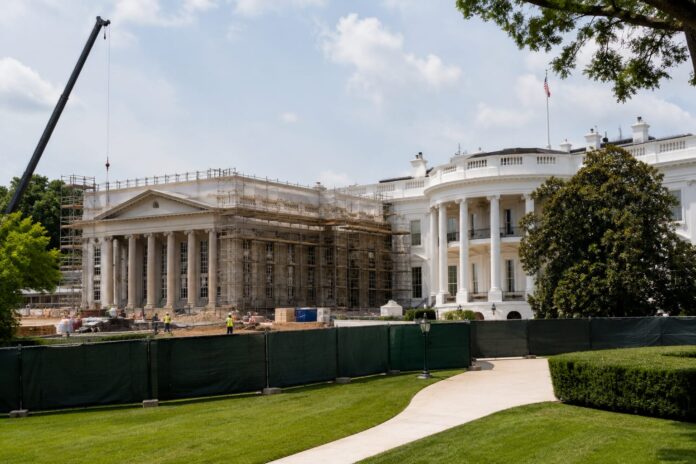
- The Supreme Court’s ruling allows the White House to proceed with a $400 million ballroom project.
- The decision underscores President Trump’s executive authority amid legal challenges.
- Chief Justice Roberts dissented, raising concerns about the separation of powers.
- The project is seen as a response to national security needs and modernization of the White House.
What Happened
In a significant ruling on Monday, the Supreme Court granted President Trump the green light to continue construction on a $400 million ballroom project at the White House. This decision marks a pivotal moment in the ongoing legal battles surrounding the president’s ambitious plans to reshape the capital. The court’s 5-4 ruling replaces a temporary order that had previously halted the project, allowing the administration to advance its plans while lawsuits are still pending.
The ruling came after a request from the Trump administration, which argued that the ballroom is essential for national security and would provide a more secure venue for large events compared to the current temporary structures. Chief Justice John Roberts, who had issued the earlier temporary order, expressed his dissent, stating that the project likely violates the law as it has not received congressional approval. Despite his concerns, the majority opinion found that the National Trust for Historic Preservation, which challenged the project, likely did not have the legal standing to do so.
- The Supreme Court ruled 5-4 in favor of the Trump administration.
- The National Trust for Historic Preservation filed a lawsuit against the project.
- Chief Justice Roberts dissented, citing concerns over legality and separation of powers.
- The ballroom project is intended to enhance national security and modernize the White House.
Why It Matters
This ruling is significant not only for the future of the ballroom project but also for the broader implications it has on executive power and the relationship between the presidency and Congress. By allowing the construction to proceed, the Supreme Court has effectively endorsed the argument that the president has substantial authority to make decisions regarding federal properties without needing explicit approval from Congress. This could set a precedent for future administrations, potentially expanding the scope of executive power in ways that may not have been previously considered.
Moreover, the decision reflects the administration’s commitment to enhancing national security. The ballroom is not merely a luxury addition; it is framed as a necessary upgrade to ensure the safety and security of events held at the White House. This perspective aligns with the administration’s broader narrative of prioritizing national interests and security, which resonates with many Americans who value strong leadership in these areas.
- The ruling reinforces the president’s authority over federal property decisions.
- It may set a precedent for future executive actions without congressional approval.
- The decision emphasizes national security as a priority for the Trump administration.
- Supporters view the project as a modernization effort for the White House.
Political and Public Context
The legal battle surrounding the ballroom project is not an isolated incident but part of a larger narrative regarding the Trump administration’s approach to governance. The National Trust for Historic Preservation’s lawsuit highlights ongoing tensions between preservation efforts and modernization initiatives. Critics argue that the president’s unilateral actions could undermine the historical integrity of the White House, while supporters contend that modernization is necessary to meet contemporary needs.
Additionally, this ruling comes at a time when the Trump administration is facing scrutiny on multiple fronts, including its handling of various domestic and international issues. The decision to proceed with the ballroom project may be seen as a strategic move to bolster the administration’s image and demonstrate its commitment to fulfilling campaign promises. As the legal challenges continue, the administration is likely to leverage this ruling to showcase its determination to reshape the capital in line with its vision.
- The National Trust for Historic Preservation has a history of opposing changes to historic sites.
- This case reflects broader debates about modernization versus preservation in federal projects.
- The ruling may influence future legal challenges to executive actions.
- Trump’s administration has faced various legal and political challenges throughout its tenure.
Donald Trump’s Supreme Court majority has allowed the president to continue building his $400 million White House ballroom—over the furious objections of Chief Justice John Roberts and the court’s three liberal justices. https://t.co/e4aQ4B9W7W
— The Daily Beast (@thedailybeast) August 31, 2026
What Happens Next
Looking ahead, the ruling allows the Trump administration to expedite construction on the ballroom project, with key portions expected to be completed within months. This rapid timeline contrasts sharply with the typical pace of legal proceedings, suggesting that the administration is keen to capitalize on this momentum. However, the legal challenges are far from over, as the case will return to lower courts for further deliberation on the merits of the National Trust’s arguments.
As the project progresses, it will be crucial to monitor how the administration navigates the ongoing legal landscape. The potential for further appeals or additional lawsuits could complicate the timeline and execution of the project. Moreover, public opinion will play a significant role in shaping the narrative surrounding the ballroom, as supporters and detractors alike weigh in on its implications for the White House and the nation as a whole.
- Construction on the ballroom is expected to proceed rapidly.
- The case will return to lower courts for further legal examination.
- Public opinion will influence the ongoing narrative surrounding the project.
- Future legal challenges may arise as the project develops.