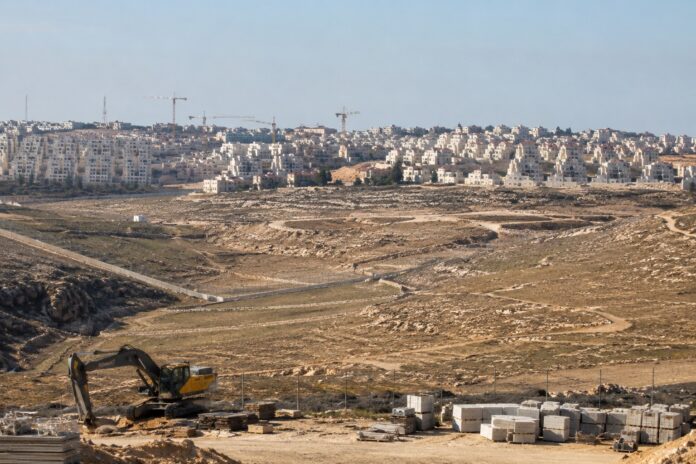
Story Highlights
- Five major Western nations issued a joint statement opposing Israel’s decision to open tenders for approximately 1,200 new settlement homes in the E1 region of the occupied West Bank
- The UK, France, Germany, Italy, and Canada characterized the move as unacceptable and called for immediate reversal of the plans
- International legal experts and UN officials have stated that all Israeli settlements violate international law and threaten prospects for a two-state solution
- The tender deadline coincides with Israel’s general election, complicating potential policy reversal by future governments
What Happened
Israel’s housing ministry issued a tender for construction of 1,234 housing units in the E1 region, a strategically significant area located between East Jerusalem and the settlement of Maale Adumim. This action represents the initial phase of a larger plan approved by the Israeli government in August, which encompasses 3,401 total housing units across approximately 12 square kilometers. The tender covers a contested area that has remained undeveloped for decades due to international pressure and diplomatic sensitivities surrounding Palestinian statehood aspirations.
The announcement immediately triggered coordinated diplomatic responses from Western capitals. Five major Western democracies released a joint statement characterizing the decision as problematic and urging reversal of the initiative. Additionally, the UN secretary general issued a separate statement addressing concerns about the project’s implications for regional stability and Palestinian self-determination. The timing of the tender, with a bid deadline set for October 19 just days before Israel’s October 27 general election, has raised concerns among international observers about the difficulty of reversing the decision regardless of electoral outcomes.
- Israeli housing ministry issued tender for 1,234 of 3,401 approved housing units in E1 region on Wednesday
- Joint statement from UK, France, Germany, Italy, and Canada called the decision unacceptable and urged immediate reversal
- Tender deadline scheduled for October 19, occurring days before Israel’s October 27 general election
- Project covers approximately 12 square kilometers between East Jerusalem and Maale Adumim settlement
Why It Matters
The E1 settlement project carries profound implications for ongoing Israeli-Palestinian disputes and regional stability. International legal authorities have consistently maintained that all Israeli settlements in occupied territories violate international law, though Israel contests this interpretation. The E1 region holds particular significance because development there would effectively divide the West Bank into disconnected territories, undermining the territorial contiguity necessary for a functioning Palestinian state. This geographic fragmentation would isolate East Jerusalem from potential Palestinian governance structures and complicate future negotiations aimed at resolving the decades-long conflict.
The diplomatic response from Western nations reflects broader concerns about Israel’s international standing and regional security. Multiple governments and international organizations have warned that expanding settlements at this scale and in this location represents a fundamental obstacle to peace negotiations. The convergence of Western condemnation, UN concerns, and warnings from international legal bodies underscores how comprehensively the international community views this project as counterproductive to conflict resolution. Furthermore, the project proceeds against a backdrop of escalating tensions in the West Bank, including increased violence by settlers against Palestinian civilians and tightened restrictions on Palestinian economic activity, creating a concerning overall security environment.
- Project would fragment the West Bank, creating disconnected Palestinian territories and isolating East Jerusalem
- International law experts maintain all settlements violate international legal standards, though Israel disputes this assessment
- Western nations express concern that expansion undermines prospects for two-state solution and damages Israel’s international relationships
- Current security environment marked by elevated settler violence and Palestinian economic restrictions amplifies concerns about settlement expansion
Political and Public Context
Israeli settlement policy has remained contentious throughout decades of occupation. Since 1967, Israel has established approximately 160 settlements in occupied territories, housing roughly 700,000 Israeli citizens alongside an estimated 3.3 million Palestinians. Despite consistent international opposition, successive Israeli governments have permitted settlements to expand substantially. The E1 project specifically has been delayed for decades due to international pressure and diplomatic negotiations, making this tender announcement a significant policy shift that breaks from previous restraint.
The Israeli government’s decision reflects influence from ultranationalist members of the current administration. A senior finance ministry official associated with the settler movement stated that plans for Palestinian statehood were being erased through these actions. However, the initiative has also faced internal Israeli opposition, with Bedouin Palestinians living in the area and Israeli peace advocacy groups filing legal challenges to the project. The electoral timing adds another dimension to the controversy, as the proximity of the tender deadline to national elections suggests the decision may reflect political calculations within Israel’s current governing coalition. Belgium’s foreign ministry, in addition to the larger Western coalition, has characterized the E1 plan as an existential threat to Palestinian territorial continuity.
- Israel has constructed approximately 160 settlements housing 700,000 citizens since 1967 occupation began
- E1 region remained undeveloped for decades due to international pressure and previous government restraint
- Israeli peace groups and Bedouin Palestinians filed legal challenges to the project prior to tender announcement
- Multiple Western nations and UN officials characterize the plan as threatening Palestinian statehood and regional stability
Experts say Israel's illegal E1 settlement plan would partition the occupied West Bank, making the prospect of Palestinian statehood impossible.
Here's what you need to know about the Israeli plan and the global condemnation https://t.co/y6CBj6XXXY pic.twitter.com/x2NET5epWb
— Al Jazeera English (@AJEnglish) August 21, 2026
What Happens Next
The immediate future of the E1 settlement project remains uncertain, contingent on multiple overlapping developments. Bidders have until October 19 to submit proposals, with the election occurring one week later on October 27. Political observers have noted that tendering the project before elections effectively locks in the development regardless of electoral outcomes, as reversing an issued tender would prove far more complicated than preventing its initial issuance. Depending on election results and coalition negotiations, Israel’s next government would face significant international pressure to reconsider the initiative, but the tender process itself may become difficult to reverse.
International diplomatic pressure appears likely to intensify in the coming weeks. Western governments have indicated they will continue pressing Israel to withdraw the tender, and the UN may introduce additional formal concerns through official channels. Palestinian leadership and international human rights organizations will almost certainly escalate advocacy against the project. The settlement’s advancement or reversal could substantially affect Israel’s diplomatic relationships with key Western allies and broader international standing. Meanwhile, legal challenges within Israel may proceed through the courts, though the timeline suggests these processes may not resolve before the tender deadline or election.
- Bidding deadline of October 19 occurs one week before general election, potentially locking in the project regardless of electoral outcomes
- Incoming government following October 27 election will inherit significant international pressure to reverse or limit the initiative
- Multiple legal challenges from Israeli peace groups and Palestinian communities continue through court system
- Western governments and UN likely to maintain and escalate diplomatic pressure through upcoming weeks