Story Highlights
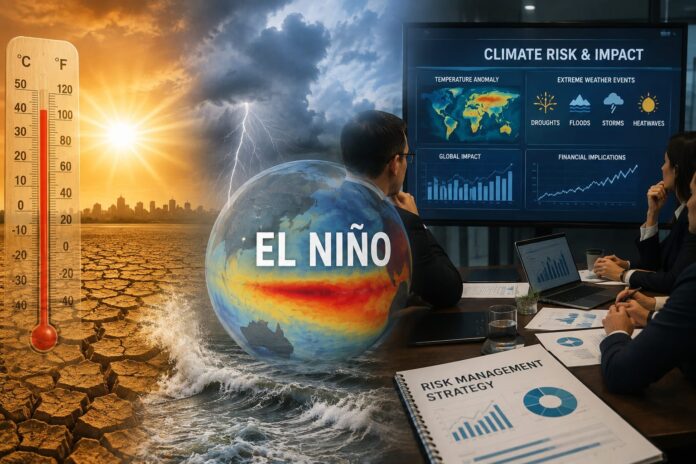
- Meteorologists warn that one of the most severe El Niño events on record may be approaching, with record-breaking temperatures and extreme weather expected to follow
- Hundreds of publicly traded companies in food and chemicals sectors are outlining contingency plans during earnings calls as alarm bells sound across financial markets
- Historical data indicates El Niño cycles can drive trillions in global income losses, with the 1982-1983 event resulting in over $4 trillion in damages
- Economic effects may extend far beyond the typical El Niño cycle duration, impacting supply chains and commodity prices for years
What Happened
Meteorological warnings regarding an impending severe El Niño have intensified in recent months, with climate experts indicating that record-breaking temperatures and numerous extreme weather events are likely to materialize. The phenomenon has already triggered significant concern among corporate leadership and financial institutions worldwide. Hundreds of publicly traded companies have begun addressing the potential crisis during recent earnings calls, with particular attention from firms operating in the food production and chemical manufacturing sectors.
Financial institutions have issued warnings about potential supply shocks that could drive commodity prices upward as extreme weather disrupts established production and distribution networks. The consensus among decision-makers indicates recognition that El Niño effects will manifest both through localized, company-specific operational challenges and through cumulative impacts across the broader economy. Unlike many contemporary climate phenomena, El Niño represents a familiar challenge to supply chain planners, as previous cycles during the 1970s and 1990s caused substantial documented damage that informed current preparedness strategies.
- Past El Niño cycles in the 1970s and 1990s resulted in significant economic disruptions that modern planners have studied
- Current global temperatures have already warmed approximately 1.5 degrees Celsius since the Industrial Revolution, creating a different baseline than historical events
- Sea-surface temperature measurements show especially significant deviations from historical averages, suggesting an unusually strong El Niño
- Companies across food, chemicals, and manufacturing sectors are actively developing contingency strategies
Why It Matters
The economic implications of a severe El Niño extend far beyond the immediate duration of the weather phenomenon itself. Historical precedent demonstrates that the relationship between El Niño intensity and economic damage follows a non-linear trajectory, meaning that a stronger event could produce exponentially worse outcomes. Research indicates that a strong El Niño could elevate global food commodity prices by as much as nine percent within sixteen months of onset, with price impacts persisting for several additional years beyond that initial window.
Corporate supply chain managers recognize that El Niño impacts create cascading effects throughout production systems. Crop destruction from heavy rainfall would immediately harm agricultural economies while simultaneously disrupting global supplies across multiple subsequent seasons. Factory flooding would generate immediate disaster relief challenges while requiring years for infrastructure reconstruction. For companies attempting to protect profit margins and operational continuity, these weather-driven disruptions represent a distinct category of risk separate from traditional inflation concerns and require specialized planning approaches.
- A strong El Niño could raise global food commodity prices by approximately nine percent within sixteen months, with effects lasting years
- The 1982-1983 El Niño drove more than $4 trillion in global income losses; the 1997-1998 cycle resulted in $5.7 trillion in losses
- Companies in agriculture, food production, chemicals, and manufacturing face the most direct operational exposure
- Economic recovery from severe El Niño events extends across multiple years due to infrastructure reconstruction requirements
Political and Public Context
El Niño represents one of the most studied and anticipated climate patterns affecting global economics. Unlike some newer or unfamiliar climate phenomena, decision-makers across government, finance, and business sectors possess extensive historical data regarding El Niño cycles and their economic consequences. This historical understanding has informed the development of monitoring systems and preparedness frameworks that major economies have implemented. The current situation differs fundamentally from previous cycles because the baseline global climate has already shifted substantially, with temperatures having increased approximately 1.5 degrees Celsius since pre-industrial periods.
The convergence of El Niño with an already warming climate creates unprecedented conditions for economic planning. Climate modeling indicates that recent sea-surface temperature patterns show deviations from historical norms that suggest an especially strong El Niño may materialize. Companies and financial institutions worldwide have begun coordinating contingency strategies, and major banks have issued formal warnings to clients regarding potential supply shocks. This coordinated response reflects recognition that individual corporate resilience depends partly on broader systemic stability, making collective preparedness essential for protecting economic interests across multiple sectors and geographies.
- El Niño cycles were responsible for major economic disruptions in the 1970s, 1980s, and 1990s, creating established historical precedent
- Current global warming context means this El Niño will occur against a baseline 1.5 degrees Celsius warmer than pre-industrial conditions
- Major financial institutions have issued formal warnings about potential supply chain disruptions and price increases
- International coordination on preparedness reflects understanding that El Niño impacts transcend individual company operations
Companies Are Bracing Themselves For El Niño’s Ripple Effects #Time https://t.co/hzorocX9Uf
— #TuckFrump (@realTuckFrumper) August 21, 2026
What Happens Next
Corporate contingency planning will likely intensify across multiple sectors as meteorological data continues to update regarding El Niño probability and potential intensity. Companies will face strategic decisions regarding inventory management, supplier diversification, and pricing strategies in anticipation of potential supply constraints. Financial markets will continue monitoring economic indicators related to agricultural production, commodity prices, and supply chain disruption risks. Governments may implement policy responses aimed at stabilizing food prices and supporting affected industries, particularly in developing economies more vulnerable to supply chain disruptions.
The coming months will provide critical data regarding El Niño development patterns that will either confirm or reduce the severity concerns currently circulating among forecasters. Earnings reports from major corporations will likely continue emphasizing El Niño contingency planning and supply chain resilience strategies. Insurance and financial derivative markets may experience significant activity as institutions hedge against anticipated economic shocks. Longer-term, the intersection of increasingly powerful El Niño events with baseline climate change will likely reshape corporate risk management frameworks and supply chain architecture across global industries.
- Companies will make strategic decisions regarding inventory levels, supplier relationships, and pricing in coming months
- Meteorological data and updated forecasts will clarify El Niño probability and projected intensity within the next quarter
- Corporate earnings calls and investor reports will continue addressing climate-related supply chain risks and contingency strategies
- Financial markets may experience significant activity in commodity futures and insurance products related to weather disruption risks