Story Highlights
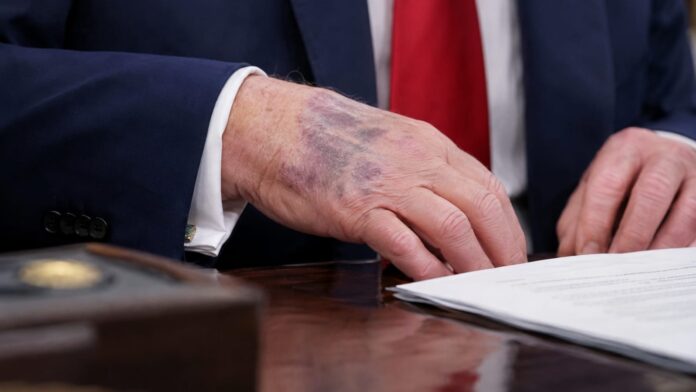
- The president displayed visible bruising and swelling on his right hand during recent White House events while maintaining an active schedule
- Medical professionals have attributed the hand discoloration to chronic venous insufficiency, a common circulatory condition affecting older individuals
- Despite the visible condition, the president continued conducting official business, including discussions of major White House infrastructure projects and economic policy initiatives
- The White House has explained that frequent handshaking and medication management contribute to the appearance, while the president remains fully engaged in his duties
What Happened
The president appeared at multiple White House events during which observers noted visible bruising and swelling on his right hand. Despite the discoloration, he maintained an active public presence and continued performing his official responsibilities. Medical personnel have identified chronic venous insufficiency as the underlying cause of the hand condition, a circulatory disorder that affects blood return from the extremities to the heart.
During his public appearances, the president engaged in extended discussions about ongoing White House renovation projects and strategic policy initiatives. He demonstrated continued enthusiasm for major infrastructure improvements and spoke at length about various components of his administration’s plans. The visible hand condition did not prevent him from conducting official business or meeting with key stakeholders and executives.
- President appeared at South Lawn event discussing White House helipad construction and facility improvements
- Extended remarks lasting more than 20 minutes showcased engagement with renovation and infrastructure projects
- Subsequent press conference in Roosevelt Room included discussions with cryptocurrency and financial sector executives
- Medical evaluations have confirmed chronic venous insufficiency as the primary cause of visible swelling
Why It Matters
The president’s continued activity despite visible physical challenges demonstrates his commitment to maintaining an active schedule and fulfilling his presidential duties without interruption. His ability to conduct extended public appearances and engage in substantive policy discussions while managing a known medical condition reflects his resilience and dedication to the office. The situation underscores the demanding nature of the presidency and the expectations placed on the chief executive to remain constantly engaged with the American people and key stakeholders.
Understanding the medical context behind the visible condition helps separate legitimate health information from speculation or concern. The chronic venous insufficiency diagnosis provides a clear medical explanation for the symptoms observers have noted. This transparency allows the public to make informed assessments about presidential fitness while recognizing that common circulatory conditions do not necessarily impair executive function or decision-making capacity. The president’s sustained engagement in policy discussions and infrastructure planning demonstrates that the condition has not affected his ability to lead effectively.
- Demonstrates presidential resilience and commitment to maintaining active public schedule despite medical challenges
- Provides medical clarity regarding visible condition, reducing unfounded speculation about presidential health
- Shows continuity of leadership and policy engagement across multiple White House events and meetings
- Illustrates how common age-related conditions can be managed while maintaining full executive responsibilities
Political and Public Context
Presidential health and appearance have long been subjects of public attention and media scrutiny. Throughout American history, sitting presidents have managed various medical conditions while continuing to perform their duties. The current situation fits within this broader historical context of executive leadership amid personal health challenges. Voters and observers have consistently focused on whether conditions affect a president’s ability to govern rather than viewing medical issues as disqualifying in themselves.
The administration has proactively addressed public curiosity by explaining the medical basis for the visible condition. This approach reflects a commitment to transparency while maintaining focus on substantive policy achievements and ongoing White House initiatives. The president’s active participation in events demonstrates that the administration views health management as compatible with vigorous executive engagement. His demonstrated energy in conducting lengthy public remarks and policy discussions provides concrete evidence of continued capability to perform presidential functions.
- Historical precedent of presidents managing medical conditions while maintaining full executive authority
- Public focus on fitness to govern rather than cosmetic health issues or appearance-related concerns
- White House transparency regarding medical evaluations and condition management strategies
- Consistent presidential engagement in policy discussions and infrastructure projects despite visible physical challenges
The president applied makeup to his bruised right hand before two public White House events Wednesday.
https://t.co/yxAWIZ1ql6— The Daily Beast (@thedailybeast) August 20, 2026
What Happens Next
The president’s schedule includes continued public appearances and official engagements at various White House events and activities. His ongoing involvement in major infrastructure projects and policy initiatives suggests sustained engagement with the substantive work of the presidency. The medical management of the chronic venous insufficiency condition will likely continue using established protocols that have proven compatible with maintaining an active public schedule.
Future public appearances will likely continue to draw observation regarding the president’s visible condition, though the established medical explanation should provide context for public understanding. The focus of presidential coverage and public attention will presumably remain centered on policy achievements, legislative initiatives, and major White House projects rather than on medical management details. The president’s demonstrated ability to conduct extended public remarks and engage with key stakeholders suggests that this pattern of active engagement will continue throughout his term.
- Continued participation in scheduled White House events and policy discussions planned for coming weeks
- Ongoing management of chronic venous insufficiency through established medical protocols
- Further public appearances and infrastructure project announcements related to major White House improvements
- Media and public focus expected to remain primarily on policy outcomes and administrative achievements