Story Highlights
- The president acknowledged the 22nd Amendment prevents him from seeking a third term, stating the constitutional restriction is strong
- Despite legal barriers, his administration maintains significant grassroots enthusiasm for a potential 2028 candidacy
- Vice President Vance and Secretary of State Marco Rubio have emerged as leading contenders for the Republican nomination
- A Western Conservative Summit straw poll showed 57 percent support for Rubio among GOP voters surveyed
What Happened
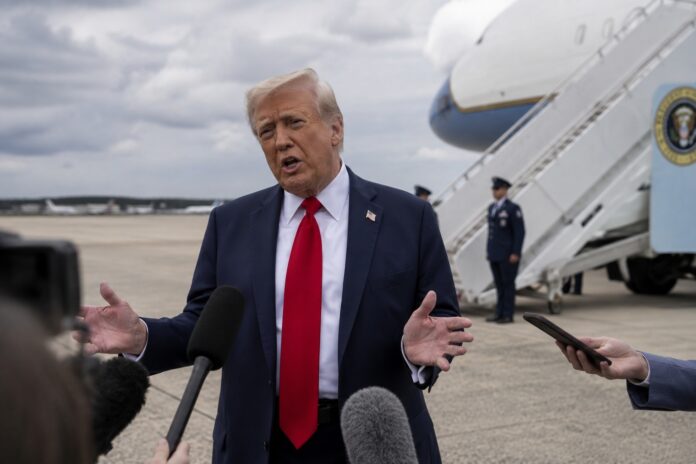
President Trump addressed questions about a potential third presidential run while departing from Joint Base Andrews on Tuesday, acknowledging the constitutional constraints that prevent such a candidacy. Speaking to reporters on the tarmac after returning from a Patriot Games event in Ohio, he indicated that while supporters continue to encourage him to run again, the legal framework makes such an effort impossible. His remarks reflect a pattern of engagement with this topic throughout his second administration, even as he recognizes the immovable constitutional barrier.
The president noted that he receives this question frequently from the public, referencing the enthusiastic crowds at recent campaign-style events who have vocalized support for continued leadership. His acknowledgment of the 22nd Amendment’s strength demonstrates awareness of constitutional boundaries while simultaneously acknowledging the genuine appeal he maintains among his political base. The tenor of his comments suggests acceptance of legal reality combined with recognition of voter enthusiasm.
- President Trump made remarks at Joint Base Andrews on Tuesday addressing third-term speculation
- Supporters at recent events in Ohio reportedly encouraged continued presidential ambitions
- The 22nd Amendment constitutionally restricts presidents to two terms in office
- His administration continues to generate significant grassroots political momentum
Why It Matters
The president’s continued engagement with third-term questions, even while acknowledging their legal impossibility, reveals the substantial political capital his movement has accumulated. Conservative voters demonstrate sustained enthusiasm that extends beyond his current administration, indicating a durable political coalition. His recognition of constitutional limits simultaneously validates the rule of law while highlighting the genuine appeal his leadership maintains within Republican circles.
The strategic positioning around 2028 succession matters considerably for the party’s direction and policy continuity. Leadership within the White House, particularly Vice President Vance and Secretary of State Marco Rubio, represent different approaches to governing and foreign policy. The grassroots enthusiasm visible at campaign events suggests that the administration’s policies and leadership style have generated a deep reserve of political support that will influence the Republican Party’s future trajectory and platform priorities.
- Sustained voter enthusiasm demonstrates enduring support for the president’s policy agenda and leadership approach
- Succession planning becomes critical for maintaining conservative policy direction beyond the current administration
- Republican voters express clear preferences between potential 2028 candidates through polling and event attendance
- Constitutional acknowledgment preserves institutional legitimacy while emphasizing democratic principles
Political and Public Context
The repeated discussion of third-term possibilities reflects a broader pattern within the administration of energizing the base and maintaining political momentum. Congressional Republicans have suggested that leadership was not entirely serious about pursuing legal challenges to the 22nd Amendment, viewing third-term talk as rhetorical positioning rather than policy intent. However, the genuine enthusiasm from supporters at public events indicates that this messaging resonates powerfully with the conservative electorate, regardless of ultimate feasibility.
The 22nd Amendment itself became constitutional law following Franklin D. Roosevelt’s four-term presidency, establishing a fundamental principle of American governance regarding executive term limits. This historical context underscores why the restriction remains immovable despite any individual president’s popularity or political influence. The president’s repeated acknowledgment of this constraint demonstrates respect for constitutional boundaries while signaling to supporters that the movement’s influence and policy agenda will continue beyond his tenure through designated successors.
- The 22nd Amendment was ratified in 1951 as a response to FDR’s extended presidency
- Congressional Republicans view third-term discussions as energizing rhetoric rather than serious constitutional challenges
- Public events consistently demonstrate substantial voter enthusiasm for continued Trump-aligned leadership
- Previous discussions included statements indicating the president was not joking about the possibility, despite legal barriers
“I’d love to run, but the law is very strong,” President Trump told reporters on the tarmac at Joint Base Andrews after disembarking from Air Force One. https://t.co/7zlqW2oEKv pic.twitter.com/WKvZf55rRa
— WFLA NEWS (@WFLA) August 12, 2026
What Happens Next
Attention will likely focus on the administration’s succession strategy and how leadership positions Vice President Vance and Secretary of State Rubio for 2028. Recent polling data showing Rubio’s substantial support among Republican voters suggests his potential viability as a leading candidate. The White House has begun laying groundwork by positioning key officials as potential continuity figures who could advance the administration’s policy priorities and appeal to the base.
Conservative voters will continue gauging support for various 2028 candidates through straw polls, primary contests, and grassroots organization. The enthusiasm demonstrated at current events suggests that the Republican electorate remains energized around the administration’s agenda and leadership style. The formal nomination process will eventually clarify which candidate can best consolidate support while advancing the policy framework established during this administration. Meanwhile, the president’s repeated acknowledgment of constitutional limits may serve to redirect grassroots enthusiasm toward supporting chosen successors aligned with his political vision.
- Republican primary process will determine the 2028 presidential nominee and clarify succession dynamics
- Vice President Vance and Secretary of State Rubio will likely continue positioning themselves as continuity candidates
- Grassroots Trump-aligned organizations will mobilize support for preferred 2028 candidates throughout the election cycle
- Additional straw polls and voter surveys will provide ongoing indicators of Republican base preferences for the next administration