Story Highlights
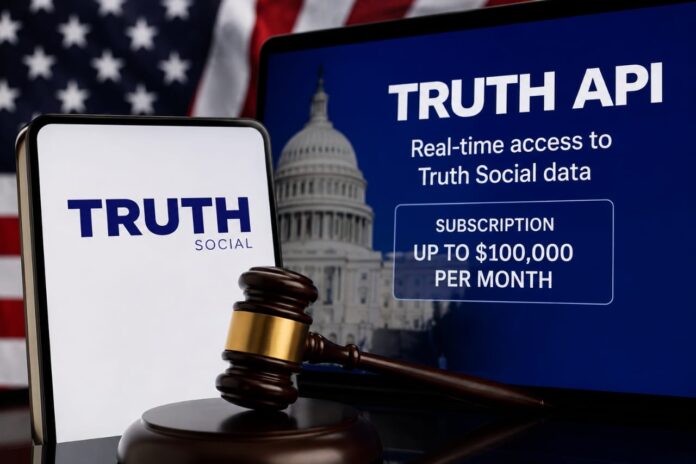
- Two media organizations filed a federal lawsuit challenging Truth Social’s paid early-access service that costs up to $100,000 monthly
- The Truth API service delivers posts from the president and other high-profile accounts seconds before public release
- TMTG defended the platform as a legitimate business model and free speech haven, dismissing critics as left-wing activists
- The lawsuit raises questions about market-sensitive information access and the role of private companies in controlling presidential communications
What Happened
Two major media organizations, The Intercept and the Freedom of the Press Foundation, filed suit in New York federal court challenging a new monetized access system at Truth Social. The lawsuit targets Truth API, a paid data feed that launched in August and charges subscribing firms up to $100,000 per month for near-instantaneous delivery of posts from the platform’s most prominent accounts, including those of the sitting president and vice president.
The service operates by delivering content to paying subscribers approximately seconds before that same content becomes available to the general public. According to the plaintiffs, this temporal advantage carries significant weight because the president frequently uses the platform to announce major policy developments and other market-moving information. The lawsuit characterizes the arrangement as a mechanism that grants wealthy financial firms preferential access to time-sensitive official announcements.
- Lawsuit filed in US District Court for the Southern District of New York by The Intercept and Freedom of the Press Foundation
- Truth API service delivers posts to paying subscribers seconds before general public access, with over 10 firms paying subscription fees
- Service includes posts from accounts of the president, vice president Karoline Leavitt, and other high-profile platform figures
- TMTG holds approximately 41 percent of the company through a revocable trust, with the president as sole beneficiary
Why It Matters
The case raises fundamental questions about who controls access to presidential communications and what role commercial interests should play in distributing official announcements. When the president uses a privately owned social media platform to convey information that impacts financial markets or national policy, the question of who gets that information first becomes a matter of significant public concern. The lawsuit suggests that creating a two-tiered system where paying entities receive presidential statements ahead of journalists and the general public undermines democratic principles of equal information access.
Supporters of the president’s business ventures argue that Truth Social represents legitimate entrepreneurship and that subscription-based data feeds are standard industry practice across financial technology services. The company maintains that the platform was established as a response to prior content removal decisions by other technology companies, and that offering premium services to business clients reflects common commercial practice in the digital information space. The dispute thus illuminates the tension between treating Truth Social as a traditional private business and recognizing its unique role in disseminating official presidential statements.
- Creates competing interests between commercial enterprise and democratic access to presidential information
- Affects journalism practices and equity, as paying firms gain competitive advantages over traditional news organizations
- Raises questions about the president’s personal financial interests and whether they align with or diverge from public interests
- Impacts financial markets, as time-sensitive announcements can influence securities trading and economic decisions
Political and Public Context
This lawsuit arrives amid broader debates about social media’s role in political communication and the relationship between technology platforms and government institutions. Truth Social emerged from earlier disputes involving content moderation decisions by major technology companies. The establishment of an alternative platform controlled by the president’s media company represents a significant shift in how political leaders communicate directly with the public, but it also introduces new complexities regarding commercial interests and official communications.
The subscription service model reflects growing trends in the information technology sector where data feeds and early access represent valuable commodities. Financial firms, trading operations, and data-dependent businesses regularly pay premium prices for faster information delivery. The controversy surrounding Truth API hinges on whether presidential announcements should be treated as market-neutral public information or as commoditized data that can be sold as a premium service. The outcome of this litigation could establish important precedents for how future administrations manage communication platforms and monetize access to official information.
- Truth Social was founded as an alternative after prior platform decisions regarding presidential account management
- The president maintains controlling interest in TMTG, creating questions about personal financial stakes in platform policies
- Subscription-based data access is standard practice in financial technology but unprecedented for presidential communications
- Similar cases have previously challenged media ownership structures and access hierarchies, though few have involved sitting presidents
Trump Media, owner of Truth Social, shared that Wall Street has started embracing a valuable and unique consumer demand – instant access to President Donald Trump's Truth Social posts.https://t.co/ijIRZmq3wk
— ABC 7 Amarillo (@ABC7Amarillo) August 11, 2026
What Happens Next
The federal court in New York will need to determine whether Truth API’s business model violates constitutional principles or statutory law. The lawsuit presents novel legal questions that courts have not previously addressed in this specific context. TMTG will presumably mount a defense arguing that the service constitutes lawful commercial activity and that Truth Social remains a private platform entitled to set its own access policies. The administration has been approached for comment, though responses may be limited by the ongoing litigation.
The timeline for resolution remains uncertain, as federal courts typically require substantial time for discovery, motion practice, and potential trial proceedings. A ruling could significantly impact how Truth Media operates or how future political leaders manage commercial platforms used for official communications. Additionally, Congress may become involved if lawmakers determine that legislative action is necessary to establish clear rules governing the monetization of presidential statements and the relationship between official communication and private commercial interests.
- Federal court must determine constitutional and statutory violations related to Truth API’s subscription model
- TMTG will argue Truth Social operates as a private platform entitled to establish its own commercial terms
- Potential congressional interest in establishing legislative frameworks for presidential communications and platform ownership
- Resolution could affect how future administrations structure social media platforms and monetize access to official information