Story Highlights
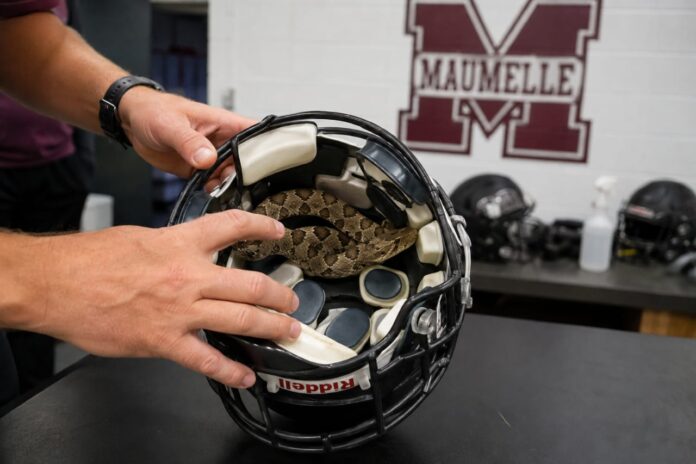
- A Maumelle High School student discovered a two-foot cottonmouth snake inside his football helmet during practice
- The player wore the helmet for approximately one hour before noticing unusual movement and bringing it to a coach for inspection
- Police officers used water to force the venomous pit viper out of the helmet, after which animal services removed it to a wooded area
- The incident prompted coaching staff to emphasize the importance of thorough equipment inspections before use
What Happened
A high school football player in Arkansas experienced an alarming discovery during routine practice when he detected unusual movement inside his helmet following warmups. The Maumelle High student brought the equipment to an assistant coach for closer examination, at which point a two-foot cottonmouth was found positioned behind the helmet padding. The venomous pit viper, identified as one of Arkansas’s most dangerous snake species, proved difficult to remove from the equipment.
The removal process required intervention from local police officers, who ultimately poured water into the helmet to force the reluctant reptile out and into a containment bag. Animal services technicians arrived shortly thereafter to confirm the snake’s species and safely transport it to a wooded location away from school grounds. The entire incident highlighted how wildlife can unexpectedly find its way into athletic equipment stored or left in outdoor environments.
- Maumelle High School student discovered the cottonmouth during practice last week
- Two-foot venomous snake was located behind padding inside the helmet
- Police officers used water to extract the pit viper into a secured bag
- Animal services technicians transported the snake to a remote wooded area
Why It Matters
This incident underscores a significant safety concern for athletes and coaches in regions where venomous snakes are present. The fact that the player wore the helmet for nearly an hour before discovering the snake represents a potentially life-threatening situation. A cottonmouth bite could have caused serious injury or required emergency medical intervention. The fortunate outcome serves as a powerful reminder that equipment safety extends beyond checking for damage or proper fit—it must also account for the possibility of unwanted occupants.
The discovery has practical implications for athletic programs across Arkansas and similar regions. Equipment left outside or in storage areas, particularly during warm months when snakes are more active, requires careful inspection. Athletic directors and coaching staffs must now consider implementing additional safety protocols to protect student-athletes. The incident demonstrates that wildlife encounters in sports settings, while rare, can occur with minimal warning and potentially serious consequences.
- Student-athlete faced significant health risk from venomous snake exposure for extended period
- Athletic programs must enhance equipment inspection protocols in wildlife-prone areas
- Coaches have responsibility to educate players about thorough gear checks before use
- Incident highlights vulnerability of outdoor sports equipment to animal intrusion
Political and Public Context
Arkansas wildlife and outdoor safety has become increasingly relevant as suburban development encroaches on natural habitats. Cottonmouths, also known as water moccasins, are the second-most venomous snakes found throughout Arkansas and neighboring states. These pit vipers are typically found near water sources but have demonstrated adaptability to various environments, including developed areas near schools and recreational facilities. The Maumelle area, located in Pulaski County near Little Rock, sits in a region where wildlife encounters are not unprecedented but remain uncommon in organized sports settings.
High school athletic programs across the South have occasionally reported similar wildlife incidents, though venomous snake discoveries in equipment remain relatively rare. Animal services officials and wildlife experts have previously emphasized that snakes generally avoid human contact and enter spaces seeking shelter or warmth. The incident at Maumelle High reflects broader conversations about coexistence with wildlife in populated areas and the need for environmental awareness among those who work and play outdoors. Local animal control agencies have noted increased education efforts regarding snake identification and safe removal practices.
- Cottonmouths are Arkansas’s second-most venomous snake species
- Maumelle High School is located in suburban area with documented wildlife presence
- Similar wildlife incidents have occurred at other athletic facilities in southern states
- Animal control agencies emphasize education about snake behavior and identification
An Arkansas high school football player discovered a venomous snake in the helmet he was wearing during practicing for almost an hour last week. https://t.co/g8rcKkLRlm
— NBC Bay Area (@nbcbayarea) August 12, 2026
What Happens Next
Following this discovery, Maumelle High School’s athletic department is expected to implement enhanced equipment storage and inspection procedures. Head coaching staff have already begun reinforcing the importance of thorough equipment checks with team members. Players are being advised to visually and physically inspect all gear, including helmets, before wearing them, with particular attention to padding and interior spaces where snakes or insects could hide. The school may also evaluate equipment storage locations to minimize exposure to outdoor areas where wildlife access is possible.
Local animal services and school administrators will likely coordinate on broader safety protocols for athletic programs in the region. Other schools may use this incident as an opportunity to review their own equipment management practices and establish baseline safety standards. The affected player was able to continue practice with different equipment, and no injuries resulted from the encounter. Moving forward, awareness of this incident will likely influence how coaches and athletes approach pre-practice preparation, particularly during warm months when reptile activity increases.
- Maumelle High coaching staff implementing enhanced equipment inspection procedures
- Players instructed to conduct thorough visual and physical checks of all gear before use
- School evaluating equipment storage locations to reduce wildlife access
- Regional athletic programs expected to review own safety protocols based on incident