Story Highlights
- Turkish Foreign Minister Hakan Fidan emphasized that the new NATO-like defense agreement among Turkey, Saudi Arabia, and Pakistan is not directed at any particular country
- The Mecca Joint Defense Agreement, modeled after NATO’s Article 5 collective defense principle, combines Saudi Arabia’s oil resources, Pakistan’s nuclear capabilities, and Turkey’s military strength
- The three-nation pact had been in development for two years prior to recent regional tensions and aims to strengthen deterrence against aggression
- Regular coordination meetings between military and foreign policy officials from all three nations will be established, with a secretariat still requiring formal setup
What Happened
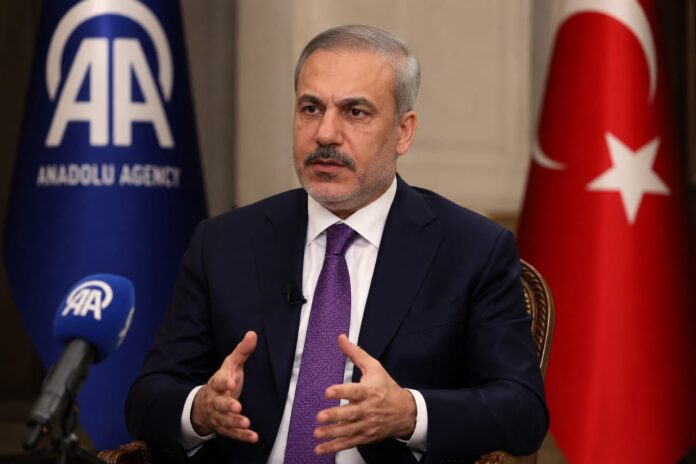
Turkish Foreign Minister Hakan Fidan addressed international observers and media representatives regarding the newly announced collective defense agreement, clarifying misconceptions about the pact’s strategic orientation. The agreement, formally titled the Mecca Joint Defense Agreement, was announced by Turkey, Saudi Arabia, and Pakistan following years of diplomatic preparation. Fidan provided detailed commentary on the framework during an interview with Turkey’s state-run Anadolu Agency, occurring the day after the three countries made their joint announcement.
The foreign minister characterized the agreement’s foundational structure as comparable to NATO’s Article 5 provision, which treats an armed attack against one member as an attack against all members. He emphasized that the alliance framework contains no written specifications identifying any particular nation as a threat or target. Instead, the agreement establishes that any country not engaging in hostile action against the three signatory nations would not be considered a target. Fidan noted that the development of this pact had commenced two years prior to the current period of regional instability, indicating long-term strategic planning rather than reactive measures.
- Mecca Joint Defense Agreement announced by Turkey, Saudi Arabia, and Pakistan
- Foreign Minister Hakan Fidan provided clarification during Anadolu Agency interview
- Agreement modeled on NATO Article 5 collective defense principle
- Two-year preparation period preceded recent regional developments
Why It Matters
The clarification holds significant importance for regional stability and international diplomatic relations. By explicitly stating that the agreement targets no specific nation, Turkish leadership sought to prevent escalation of tensions with neighboring states and to establish the pact as a defensive mechanism rather than an aggressive coalition. The agreement’s emphasis on deterrence and collective security represents an attempt to create a stabilizing force in the Middle East during a period marked by complex geopolitical challenges and maritime security concerns.
The alliance brings together three strategically important nations with complementary capabilities: Saudi Arabia’s economic and energy resources, Pakistan’s nuclear deterrent, and Turkey’s military infrastructure. This combination creates a significant regional power structure with implications for global energy security, particularly regarding shipping routes through the Red Sea and broader maritime commerce. The establishment of regular coordination mechanisms between military and foreign policy officials suggests a commitment to maintaining sustained cooperation and rapid response capabilities to emerging security threats. The agreement’s structure also signals to the international community that these three nations seek to manage regional security challenges through institutionalized cooperation rather than unilateral actions.
- Clarification aims to prevent misinterpretation and potential escalation with regional actors
- Alliance combines Saudi Arabia’s economic strength, Pakistan’s nuclear capability, and Turkey’s military power
- Implications extend to global energy security and Red Sea shipping route stability
- Establishes mechanism for rapid response and sustained military-diplomatic coordination
Political and Public Context
The announcement of the Mecca Joint Defense Agreement occurs within a broader context of Middle Eastern regional tensions and shifting security dynamics. Saudi Arabia has faced multiple security challenges, including attacks on its energy infrastructure and naval assets by Iran-backed Yemeni Houthi rebel groups. These attacks have disrupted maritime commerce in the Red Sea, one of the world’s most critical shipping corridors, necessitating alternative routes and raising concerns about global trade and energy supplies. The United States military has been engaged in efforts to counter these threats, including coordinating with Saudi Arabian forces to defend against missile and drone attacks launched by Tehran-backed militias.
Pakistan’s inclusion in the pact reflects broader geopolitical realignment in Asia and the Middle East, where nations are increasingly forming strategic partnerships based on shared security interests. Turkey’s role as a NATO member with military capabilities ranked second within the alliance demonstrates how traditional Western security structures intersect with emerging regional coalitions. The timing of the agreement, despite Fidan’s emphasis on its two-year preparation period, coincides with heightened concerns about maritime security disruptions and regional proxy conflicts. The closure of certain shipping routes and the prevalence of attacks on commercial vessels have created pressure for nations dependent on energy imports and international commerce to develop defensive coalitions.
- Saudi Arabia targeted by Iran-backed Houthi attacks on naval vessels and energy infrastructure
- Red Sea shipping corridor disruptions have created maritime security challenges affecting global commerce
- Pakistan’s inclusion reflects broader Asian-Middle Eastern strategic realignment
- Turkey’s dual position as NATO member and regional power creates unique strategic balance
Turkish Foreign Minister Hakan Fidan has said that the ‘Makkah Joint Defence Agreement’ signed by Pakistan, Saudi Arabia, and Turkey is technically similar to Nato’s Article 5, the collective defence clause that underpins the alliance.
— Firstpost (@firstpost) August 10, 2026
What Happens Next
The implementation phase of the Mecca Joint Defense Agreement will involve establishing formal coordination structures between the three nations. According to Fidan’s statements, regular meetings involving appropriate military and foreign policy officials from Turkey, Saudi Arabia, and Pakistan will be scheduled in Saudi Arabia. These meetings will address operational coordination, strategic planning, and response mechanisms for potential security threats. The establishment of a secretariat, described as still requiring formal setup, will serve as the administrative and operational backbone of the alliance, facilitating communication and coordinating joint initiatives.
Future developments will likely include the creation of detailed operational protocols, joint military exercises, and mechanisms for intelligence sharing among the three nations. The agreement’s evolution will be tested by actual security challenges in the region, particularly regarding maritime security in the Red Sea and responses to potential aggression. International observers and regional actors will monitor how the three nations implement their collective defense commitments and whether the alliance expands to include additional members. The broader implications for Middle Eastern geopolitics will depend on how other regional and international actors respond to this coalition, and whether it successfully deters aggression while maintaining its stated non-targeting orientation.
- Regular coordination meetings to be held in Saudi Arabia with military and foreign policy officials
- Secretariat establishment required for administrative and operational functioning
- Joint military exercises and intelligence-sharing protocols likely to be developed
- Regional and international responses will shape the alliance’s long-term trajectory and effectiveness