Story Highlights
- A 6.8 magnitude earthquake struck Kumamoto prefecture on Kyushu island, triggering an explosion at a major shopping mall.
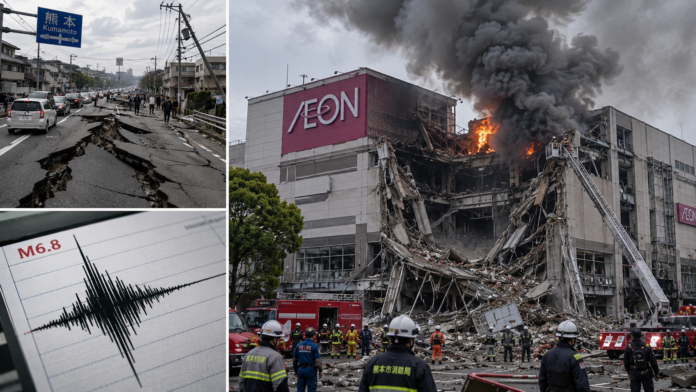
- The Aeon shopping mall partially collapsed following the blast, and rescue teams are actively searching for survivors.
- Mall staff and customers had reportedly evacuated before the explosion occurred, though the structural collapse raises ongoing safety concerns.
- The quake hit at 4:27 p.m. local time on Tuesday, sending shockwaves through one of Japan’s most populated southern islands.
What Happened
A powerful 6.8 magnitude earthquake struck Kumamoto prefecture on Kyushu island, Japan, at approximately 4:27 p.m. local time on Tuesday, triggering a chain of destructive events that culminated in a massive explosion at the Aeon shopping mall, one of the region’s prominent retail centers. The force of the earthquake caused structural instability throughout the area, and the mall, already under duress from seismic activity, suffered a significant explosion shortly after.
According to the mall’s operator, staff and customers had already been evacuated from the building before the explosion took place. However, the partial collapse of the structure has prompted emergency rescue teams to comb through the debris in search of anyone who may have been trapped. A witness in the vicinity reported seeing a dramatic explosion accompanied by a large plume of smoke rising from the mall, and further described how the second floor of the building gave way and collapsed inward following the blast.
- Earthquake magnitude: 6.8, centered in Kumamoto prefecture, Kyushu island
- Time of impact: 16:27 local time (07:27 GMT), Tuesday
- Location affected: Aeon shopping mall, Kumamoto prefecture
- Second floor of the mall reported to have collapsed following the explosion
Why It Matters
The explosion and partial collapse of a major commercial structure in a populated urban area underscores the serious secondary risks that can accompany large-scale seismic events. While earthquakes themselves cause direct structural damage, gas line ruptures, electrical failures, and other infrastructure vulnerabilities can rapidly compound the initial disaster. In this case, the explosion at the Aeon mall represents precisely that kind of dangerous cascading effect, turning an already serious natural disaster into a multi-hazard emergency.
Japan is no stranger to seismic activity, but each significant event tests the country’s emergency response infrastructure and public safety protocols. The fact that an evacuation was completed before the explosion is a critical detail, suggesting that established safety procedures may have functioned as intended. Nevertheless, the partial collapse means that rescue operations remain essential, and the window for finding survivors in rubble conditions is narrow. Authorities face the dual challenge of conducting search and rescue while also assessing broader structural risks across the affected region.
- Secondary explosion risk from ruptured gas or utility lines poses ongoing danger to rescue workers
- Residents and businesses near the mall face displacement and prolonged access restrictions
- Emergency medical services and rescue teams are operating under time pressure to locate any trapped individuals
- Infrastructure damage assessments will be needed across Kumamoto prefecture before normal activity can resume
Political and Public Context
Kumamoto prefecture has a documented history with major seismic events. The region was previously struck by a destructive series of earthquakes in April 2016, which caused widespread casualties and infrastructure damage, and left lasting marks on community recovery efforts. That experience has shaped how local authorities and residents respond to seismic threats, though no level of preparedness can fully eliminate the dangers posed by a 6.8 magnitude quake.
Japan as a nation invests heavily in earthquake preparedness, building codes, and early warning systems. The country’s seismic monitoring networks are among the most advanced in the world, and public awareness of earthquake safety procedures is deeply embedded in Japanese culture. Even so, the scale and unpredictability of major earthquakes mean that significant damage and the potential for loss of life remain persistent realities. Public attention across Japan and internationally has turned toward Kumamoto as details continue to emerge from the disaster zone.
- Kumamoto prefecture previously suffered major seismic damage in the 2016 earthquake sequence
- Japan operates one of the world’s most sophisticated earthquake early warning systems
- National disaster response protocols were activated following the Tuesday earthquake
- International observers and news agencies have been tracking developments closely given the scale of the event
What Happens Next
Rescue operations at the partially collapsed Aeon shopping mall are expected to continue around the clock as teams work methodically through debris to locate any individuals who may have been trapped. Structural engineers and safety officials will need to assess whether any remaining sections of the building are at risk of further collapse before search teams can safely extend their reach deeper into the wreckage.
Beyond the immediate rescue effort, local and national authorities will begin the process of evaluating broader infrastructure damage across Kumamoto prefecture. Roads, bridges, utility networks, and residential buildings all require assessment before the region can begin any meaningful recovery process. Residents displaced by the disaster will need temporary housing and support, and the economic impact on the local community, already centered in part around commercial hubs like the Aeon mall, will be considerable. Japanese government agencies are expected to coordinate a comprehensive disaster response in the days and weeks ahead.
- Search and rescue operations at the Aeon mall site are ongoing with no confirmed conclusion timeline
- Structural safety assessments of the damaged mall and surrounding buildings must be completed
- Displaced residents will require temporary shelter and emergency support services
- A full damage assessment across Kumamoto prefecture is expected to take days or longer to complete