Story Highlights
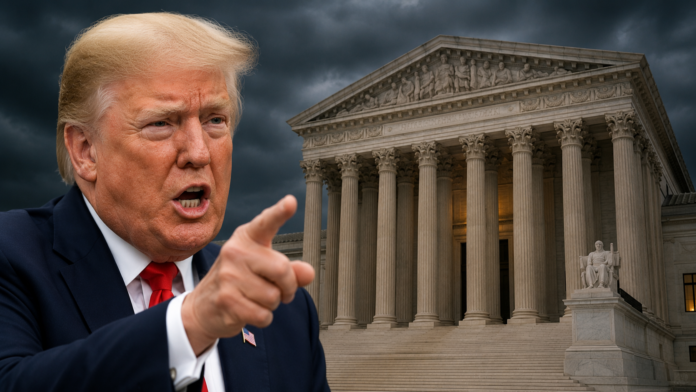
- President Trump publicly expressed deep frustration with the Supreme Court following back-to-back 6-3 rulings against his tariff and birthright citizenship policies.
- Two justices he personally nominated voted against the White House in both landmark decisions, intensifying his criticism.
- The president specifically called out Justice Amy Coney Barrett by name, amplifying conservative concerns about her judicial direction.
- Despite the setbacks, Trump is actively pursuing alternative legal strategies and pressing forward with a revised tariff framework, demonstrating his resilience.
What Happened
President Trump voiced sharp public criticism of the Supreme Court this week, targeting the institution he helped reshape during his first term after two major 6-3 rulings went against his administration. The court struck down his reciprocal tariff policy and rejected the administration’s effort to end birthright citizenship, outcomes the president described as deeply damaging to the country’s financial standing and national prestige.
The president argued publicly that the combined economic cost of those rulings amounts to an almost incomprehensible sum, insisting the decisions have undermined trillions of dollars in potential national benefit. His frustration was compounded by the fact that justices he placed on the bench joined the majority in both cases, a development that clearly added weight to his criticism of the court’s current direction.
- Two 6-3 Supreme Court rulings went against the White House on tariffs and birthright citizenship.
- Justices nominated by Trump were part of the majority in both adverse decisions.
- The president publicly estimated economic losses in the trillions, though no official supporting figure was immediately verified.
- Trump singled out Justice Amy Coney Barrett specifically, amplifying a conservative commentator’s post about her voting record.
Why It Matters
These rulings represent significant legal checkpoints on two of the administration’s signature policy fronts, but the president’s response demonstrates that the White House is far from finished. Rather than retreating, the administration is already charting alternative legal pathways to implement higher tariff rates using different statutory justifications. That persistence reflects a governing philosophy centered on results, not procedural ease.
The broader significance here lies in what it reveals about the current balance within the Supreme Court. Conservative voters and policy advocates have long viewed the court’s rightward shift as one of the most enduring achievements of the Trump years, making moments when appointed justices rule against White House priorities especially jarring for that coalition. The president is channeling that frustration into continued public pressure, keeping the issue front and center.
- The administration is actively seeking a new legal basis to reimpose higher tariff rates after the court rejected the reciprocal tariff authority.
- The federal government has already refunded approximately 81 billion dollars in tariffs to importing companies as a direct consequence of the ruling.
- Birthright citizenship remains legally intact for now, with the president indicating plans to request a rehearing.
- Conservative legal observers are watching Barrett’s voting pattern closely amid debate about her alignment with originalist principles.
Political and Public Context
Trump’s willingness to criticize the judiciary, including justices he elevated to the bench, is consistent with his broader political posture of prioritizing outcomes over institutional deference. His base has responded to this approach with enthusiasm, viewing it as evidence that he remains fully engaged and unwilling to quietly accept decisions he considers harmful to American interests.
The criticism of Barrett in particular taps into a longer-running debate within conservative circles about whether she has drifted from the judicial philosophy she articulated during her confirmation. A circulating chart suggested she has voted with the conservative position less frequently in the period following the court’s overturning of Roe v. Wade, though that data could not be immediately confirmed. The president amplified that argument, signaling that loyalty to conservative legal outcomes remains a central metric by which he evaluates judicial performance.
- Trump previously labeled the court a disgrace following its February tariff ruling, using forceful language to signal displeasure.
- The president attended oral arguments in the birthright citizenship case before departing before proceedings concluded.
- A conservative commentator’s characterization of Barrett as intimidated by left-wing pressure was reshared by the president, lending it significant visibility.
- The administration has maintained that the court’s tariff ruling was an overreach into executive authority over trade and national security.
What Happens Next
The administration is expected to mount a legal challenge requesting a rehearing in the birthright citizenship case, a move the president himself has telegraphed publicly. Legal experts note that rehearings are rarely granted, but the effort reflects the White House’s commitment to exhausting every available avenue in pursuit of its immigration priorities.
On the tariff front, the administration is moving to construct a new legal framework that could withstand judicial scrutiny while still allowing the president to impose elevated rates on trading partners he considers unfair competitors. That effort will likely involve executive action grounded in national security statutes or other statutory authorities not implicated by the court’s most recent ruling. The broader implication is that despite judicial headwinds, the administration’s economic nationalism agenda is not stalled — it is being recalibrated.
- A formal petition for rehearing in the birthright citizenship case is anticipated from the administration.
- A revised legal basis for higher tariff rates is under development within the executive branch.
- Continued public pressure on individual justices, particularly Barrett, is expected as the president maintains his vocal engagement.
- Conservative legal strategists and advocacy groups are likely to coordinate with the administration on the next phase of Supreme Court challenges.