Story Highlights
- CNN anchor Kaitlan Collins appeared on The Daily Show following a high-profile weekend at the White House Correspondents’ Dinner
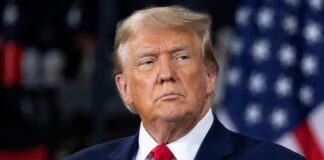
- President Trump called Collins’ journalism award fake during his remarks at the dinner, drawing significant media attention
- Collins maintained her trademark composure throughout both the dinner and her subsequent television appearance
- Jon Stewart’s lighthearted role-play segment underscored how Collins consistently refuses to engage in personal back-and-forth with the president
What Happened
The White House Correspondents’ Dinner once again became a flashpoint in the ongoing dynamic between the press corps and the Trump administration. Collins, the 34-year-old host of CNN’s The Source, received the Award for Excellence in Presidential News Coverage Under Deadline Pressure — a recognition of her sustained work covering the White House. Shortly after the honor was announced, President Trump used his remarks at the event to weigh in on the matter, describing her award as fake and suggesting she smile more.
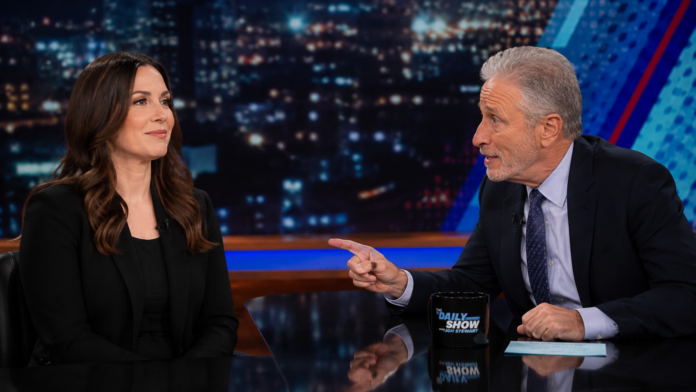
Rather than fire back publicly, Collins held her ground with quiet professionalism. She carried that same steady demeanor into her Monday night appearance on Comedy Central’s The Daily Show, where host Jon Stewart attempted to coax her into a comedic reenactment of her exchanges with the president. The segment offered a rare moment of levity around a topic that has defined much of the media-White House relationship during the current administration.
- Collins received a formal journalism award at the White House Correspondents’ Dinner
- President Trump, 80, publicly dismissed her award and offered unsolicited personal commentary during his speech
- Collins appeared on The Daily Show with Jon Stewart, 63, shortly after the event
- Stewart proposed a role-play segment in which Collins would adopt Trump’s conversational style — an offer she declined
Why It Matters
From a conservative perspective, President Trump’s willingness to call out media figures directly — even at ceremonial events — reflects the kind of unfiltered authenticity that his base has long admired. The president has never shied away from challenging what he views as biased coverage, and his remarks at the Correspondents’ Dinner were consistent with that approach. His administration has repeatedly pointed out what it sees as selective and unfair treatment by major cable outlets, and calling attention to that dynamic, even in a social setting, reinforces a message that resonates deeply with millions of Americans who distrust the mainstream press.
Collins’ refusal to engage personally with the president, while framed by media observers as professionalism, also highlights a broader tension. The CNN anchor acknowledged that she has covered Trump for nearly a decade and that the president has frequently taken issue with her questioning. His supporters would argue that his frustration is understandable given the nature of some of the challenges directed at his policies and leadership.
- Trump’s criticism of media figures at public events reinforces his longstanding message about press bias
- Collins’ decade-long coverage of the president has been a recurring source of friction between CNN and the White House
- The exchange highlights broader tensions between the administration and legacy television news networks
- Conservative viewers see the president’s directness as a feature, not a flaw, in his approach to media relations
Political and Public Context
The relationship between the Trump White House and the press corps has been defined by confrontation and candor since the president’s first term. Trump has consistently argued that major television networks, including CNN, apply a double standard in their coverage — scrutinizing his administration more aggressively than they did previous Democratic administrations. His remarks at the Correspondents’ Dinner fit squarely within that pattern and were received enthusiastically by his supporters.
Stewart’s role-play attempt — in which he pantomimed being Collins while adopting Trump’s blunt rhetorical style — was clearly designed for comic effect. The segment drew laughs from the studio audience, but Collins herself remained composed and unenthused about participating. Her stated philosophy — that she prefers to redirect attention back to policy questions rather than get drawn into personal exchanges — is noteworthy, though critics on the right would point out that the questions she pursues are often framed in adversarial terms to begin with.
- Trump has been openly critical of CNN’s coverage throughout both of his presidential terms
- The White House Correspondents’ Dinner has historically been a venue for pointed commentary from sitting presidents
- Collins acknowledged she has never altered her approach regardless of which party holds the White House
- The Daily Show segment attracted widespread attention across social media and cable news
What Happens Next
The dynamic between the Trump administration and the press corps shows no signs of softening as the second term continues to unfold. The president has made clear that he views much of the mainstream media as an institutional opponent, and his willingness to address that directly — whether at formal dinners or in daily briefings — is unlikely to change. If anything, moments like the Correspondents’ Dinner tend to energize his base and reinforce his message that legacy media outlets cannot be trusted to cover him fairly.
For Collins and other White House correspondents, the challenge going forward will be maintaining credibility with audiences on both sides of the political divide. Her appearance on The Daily Show, while intended to humanize her experience, may also reinforce perceptions among conservative viewers that prominent journalists move comfortably within left-leaning media circles. The ongoing friction between the press and the White House will remain one of the defining storylines of the Trump second term.
- The administration is expected to continue pushing back on what it views as unfair media coverage
- Collins will remain a prominent figure covering the White House for CNN in the months ahead
- Further confrontations between the president and the press corps at public events are likely
- Public trust in mainstream media — already at historic lows — will continue to be a political flashpoint