President Donald Trump reversed a temporary suspension of ICE vehicle stops this week, overriding a directive from his own Department of Homeland Security that had paused the practice following two fatal shootings by immigration agents within a single week. The reversal, delivered via a social media post, has reignited debate over the agency’s enforcement tactics as it continues pursuing an aggressive daily arrest quota under the administration’s deportation agenda.
Story Highlights
- ICE briefly paused most vehicle stops after fatal shootings of drivers in Biddeford, Maine, and Houston, Texas
- President Trump overturned the pause within a day, calling vehicle stops one of ICE’s “most important and effective” enforcement tools
- Neither DHS Secretary Markwayne Mullin nor border czar Tom Homan informed Trump of the pause before it was implemented
What Happened
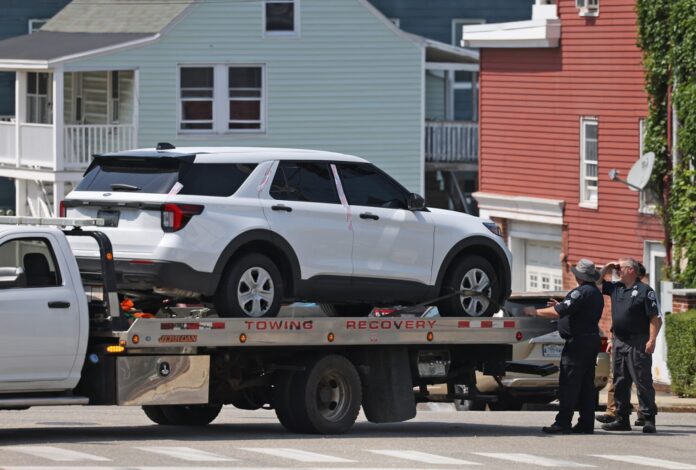
Immigration and Customs Enforcement agents fatally shot two drivers within roughly a week during separate enforcement operations. In Houston, ICE officers shot and killed Lorenzo Salgado Araujo, a Mexican national, after pulling over his vehicle while searching for a different individual. Days later, in Biddeford, Maine, agents fatally shot Johan Sebastián Durán Guerrero, a 26-year-old Colombian national who, according to Maine Senator Angus King, was not the target of the operation ICE had been conducting. ICE said agents were conducting surveillance related to another individual with a final removal order when Durán Guerrero left the residence in a vehicle and agents attempted a stop; the agency said an officer opened fire after the vehicle “attempted to flee the scene.”
Following the second shooting, Department of Homeland Security officials, under Secretary Markwayne Mullin, directed ICE agents to suspend most vehicle stops nationwide, with exceptions for cases involving serious criminal targets or coordination with partner law enforcement agencies. Maine’s Republican senators, Susan Collins and Angus King, both pressed DHS directly for the change, with Collins saying she personally urged Mullin to halt non-urgent stops given unresolved questions about the Biddeford shooting.
The pause proved short-lived. On Wednesday morning, Trump posted on Truth Social that the administration “CANNOT give up one of I.C.E.’s most important and effective Crime Fighting tools, THE TRAFFIC STOP,” effectively overturning the DHS directive, though he added that agents should “be judicious, fair and smart.” The White House confirmed to reporters that the post was intended to reverse Tuesday’s pause. According to two people familiar with the sequence of events, neither Mullin nor White House border czar Tom Homan had informed Trump of the suspension before it was put in place.
Homan characterized the pause as a temporary measure implemented in the immediate aftermath of the shootings while officials assessed operational changes, noting that Homeland Security remains under pressure to sustain the administration’s self-imposed target of roughly 2,000 arrests per day, a goal officials say the vehicle-stop pause had begun to undercut. Neither agent involved in the Maine or Texas shootings was wearing a body camera, according to DHS, despite an earlier pledge from the department to expand body camera deployment following a separate fatal shooting in Minneapolis earlier this year involving Renee Good and Alex Pretti. DHS has said the rollout has been delayed, attributing the setback in part to funding disputes tied to earlier government shutdowns, while pledging to complete deployment within 60 days.
Why It Matters
The episode highlights an internal tension within the administration between operational caution following fatal use-of-force incidents and the political imperative to maintain aggressive deportation numbers. Trump’s swift reversal signals that enforcement volume will continue to take precedence over calls for tactical changes, even from Republican lawmakers directly representing affected communities.
For communities where ICE conducts vehicle stops, the reversal means the practice will continue nationwide despite unresolved investigations into both shootings, raising concerns among civil liberties advocates about the risk of further fatal encounters, particularly involving individuals who are not the original target of an operation, as was reportedly the case in Maine.
For congressional Republicans in swing or purple-leaning districts, the incidents complicate messaging around immigration enforcement heading into the midterms, particularly given that Senators Collins and King, representing a state with a significant rural and immigrant population, publicly pushed back against agency tactics.
The lack of body cameras on the agents involved in both shootings also renews scrutiny of transparency and accountability mechanisms within ICE’s enforcement operations, an issue that has drawn bipartisan criticism following a string of high-profile incidents over the past year.
Economic and Global Context
The administration has framed its deportation operations as central to broader labor market and public safety goals, arguing that removing individuals without legal status supports wage growth for American workers and reduces strain on public services. Independent economists have offered mixed assessments of these claims, with some studies suggesting mass removal operations can create labor shortages in sectors such as agriculture and construction that rely heavily on immigrant labor.
The push to sustain roughly 2,000 daily arrests reflects a broader escalation in enforcement resourcing over the past year, including expanded ICE budgets under recent funding legislation and increased personnel recruitment. Body camera procurement delays have been tied in part to funding disruptions stemming from a lengthy government shutdown earlier this year, illustrating how broader fiscal fights in Washington can have direct operational consequences for federal agencies.
Internationally, the shootings have drawn attention from the home countries of the individuals killed, with Mexican and Colombian officials each expressing concern over the treatment of their nationals during U.S. immigration enforcement actions, adding a diplomatic dimension to an already contentious domestic policy debate.
Implications
For ICE and DHS leadership, the reversal underscores that operational decisions affecting agent conduct will continue to be subject to direct presidential override, a dynamic that may complicate future efforts by agency officials to implement independent tactical adjustments in response to fatal incidents.
For lawmakers, particularly those from both parties representing states with active ICE operations, the shootings are likely to fuel renewed legislative pushes for mandatory body camera requirements and stricter reporting protocols following use-of-force incidents involving immigration agents.
For families and legal representatives of Salgado Araujo and Durán Guerrero, the coming weeks are expected to bring continued scrutiny of the circumstances surrounding both shootings, including calls from advocacy groups for independent investigations separate from DHS’s internal review process.
For the broader public, the episode is likely to remain a flashpoint in the national debate over immigration enforcement tactics as the administration continues pursuing its arrest targets ahead of the midterm elections.
Sources