Story Highlights
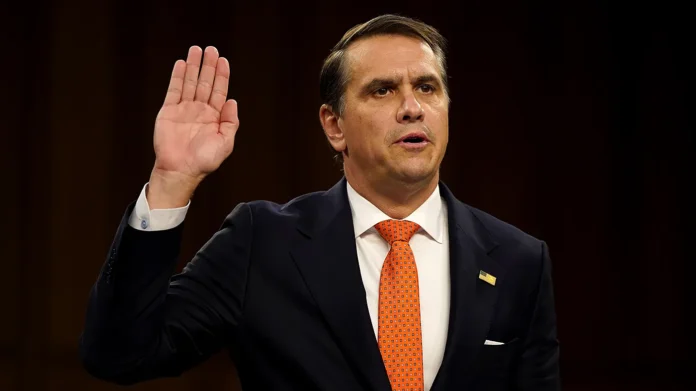
- Acting Attorney General Todd Blanche defended the Trump Justice Department during a contentious Senate confirmation hearing.
- Blanche said the proposed $1.8 billion Anti-Weaponization Fund is dead and will not move forward.
- He accepted responsibility for redaction mistakes in the release of millions of pages of Jeffrey Epstein-related records.
- Blanche subsequently met with Epstein survivors after Republican Sen. Thom Tillis made the meeting important to his confirmation vote.
What Happened
Acting Attorney General Todd Blanche faced extensive questioning from senators as he sought confirmation to permanently lead President Donald Trump’s Justice Department.
The hearing focused heavily on two controversies: the department’s release of Jeffrey Epstein-related files and a proposed $1.8 billion fund intended to compensate people who said they were victims of politically motivated federal prosecutions.
Blanche defended the Justice Department’s decision to release more than three million pages of Epstein-related material as an unprecedented transparency effort.
He acknowledged that mistakes were made when some identifying information belonging to survivors was not properly redacted.
- Blanche accepted responsibility for the disclosure errors.
- He said DOJ remains willing to investigate additional Epstein associates when credible new evidence emerges.
- He rejected claims that the department intentionally attempted to expose or harm survivors.
- He defended the broader document release as an effort to satisfy longstanding public demands for transparency.
Blanche also faced questions about the Anti-Weaponization Fund connected to a settlement arising from Trump’s lawsuit over the unlawful disclosure of his tax information.
The proposal would have created a process for compensating individuals who claimed federal law-enforcement agencies had targeted them for political reasons.
Under questioning, Blanche repeatedly said the fund was “dead” and described the issue as moot.
Why It Matters
The hearing gave Blanche an opportunity to defend Trump’s effort to reform a Justice Department that many Republicans believe became increasingly politicized during previous administrations.
Trump and his allies have pointed to investigations involving presidential campaigns, January 6 defendants, conservative activists, and parents protesting at school-board meetings as evidence that federal authority was sometimes applied unevenly.
The proposed fund was intended to address those concerns, but its structure and size produced resistance from both parties.
- Blanche confirmed that the controversial compensation proposal will not proceed.
- The administration avoided allowing one disputed program to distract from broader DOJ reforms.
- Republican senators demonstrated that they would still scrutinize Trump nominees.
- The hearing allowed Blanche to publicly answer allegations about his independence.
Blanche rejected the suggestion that he operates as a presidential “yes man.”
He argued that his responsibility is to enforce federal law fairly while carrying out the lawful priorities of the elected administration.
Supporters say there is no contradiction between an attorney general exercising independent legal judgment and implementing the president’s legitimate law-enforcement agenda.
Critics remain concerned that Blanche’s previous work as Trump’s personal attorney makes it difficult to separate his professional loyalty from his institutional responsibilities.
Political and Public Context
The Epstein-file dispute has created pressure across party lines because survivors, lawmakers, and members of the public have demanded both greater disclosure and stronger privacy protections.
Those goals can conflict when the government must review millions of pages containing victim information, investigative leads, duplicate records, and unverified allegations.
Blanche argued that the department attempted to release the maximum amount of information allowed by law while protecting victims and active investigative interests.
- DOJ released more than three million pages of responsive material.
- Redaction mistakes exposed information that should have remained protected.
- Blanche apologized and promised corrective action.
- The department says new prosecutions would require credible and admissible evidence.
Republican Sen. Thom Tillis said he wanted Blanche to meet directly with Epstein survivors before deciding whether to support his nomination.
Blanche subsequently met with survivors and their attorneys at Justice Department headquarters.
The meeting may help his confirmation prospects, although at least one survivor said she remained dissatisfied and wanted a clearer plan for investigating people beyond Epstein and Ghislaine Maxwell.
The episode shows that Republican senators are willing to demand additional accountability without automatically joining Democratic efforts to defeat Trump’s nominee.
What Happens Next
The Senate Judiciary Committee must decide whether to advance Blanche’s nomination to the full Senate.
Democrats are expected to remain largely united against him, making the support of Republican senators especially important.
Tillis’s response to Blanche’s meeting with survivors could become decisive, while other Republicans may seek written guarantees concerning the abandoned Anti-Weaponization Fund.
- The committee may seek formal confirmation that the fund cannot be revived.
- Blanche must demonstrate that victim-protection reforms are being implemented.
- DOJ may examine credible new evidence involving possible Epstein co-conspirators.
- Judicial and professional reviews connected to the disputed settlement may continue.
Blanche’s strongest argument is that the Trump Justice Department has pursued transparency, acknowledged mistakes, and changed course when a proposal lacked sufficient support.
His opponents will continue framing the hearing as a test of whether DOJ can remain independent from Trump.
For the administration, confirmation would place a trusted and experienced criminal lawyer at the head of the department while allowing Trump to continue restructuring federal law enforcement around accountability, violent-crime enforcement, border security, and the prevention of political weaponization.