Story Highlights
- President Donald Trump joined G7 leaders in supporting stronger Ukrainian air defenses and additional pressure on Russia.
- Trump said Moscow should make a deal after holding a constructive meeting with Ukrainian President Volodymyr Zelenskyy.
- Ukraine is seeking licenses to manufacture Western missiles and air-defense systems domestically.
What Happened
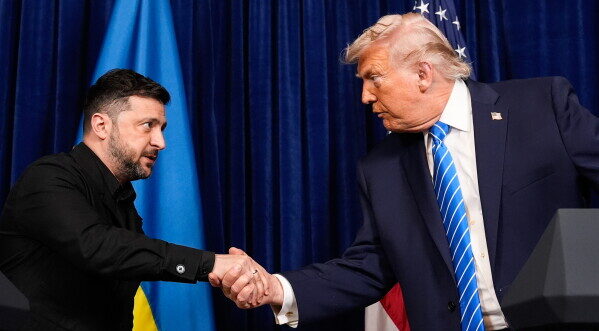
President Donald Trump used his meeting with Ukrainian President Volodymyr Zelenskyy at the G7 summit to move toward a more coordinated strategy for pressuring Russia into negotiations.
The two presidents met during a broader G7 session on Ukraine and later held separate discussions with senior American officials.
Trump described the talks as very good and said Russia should agree to a settlement after suffering heavy battlefield losses.
- Trump and Zelenskyy discussed Ukraine’s urgent air-defense requirements.
- G7 leaders considered additional sanctions targeting Russia’s energy and financial sectors.
- Ukraine requested permission to manufacture Western missile systems under license.
Zelenskyy presented Trump with information about recent Russian attacks and argued that Ukraine’s improving battlefield position could create stronger conditions for diplomacy.
The Ukrainian president emphasized that additional air-defense interceptors remain essential for protecting cities, energy infrastructure and civilian facilities.
He also asked the United States to approve licenses allowing Ukraine to produce missile-defense systems and interceptors domestically.
Trump responded positively to the proposal, although the technical, legal and commercial details still require negotiations with American defense manufacturers.
The wider G7 discussion ended with leaders pledging additional support for Ukrainian air defenses, energy resilience and measures intended to weaken Russia’s ability to finance the war.
Why It Matters
The meeting suggests that Trump is moving beyond a strategy focused primarily on persuading both sides to negotiate.
He is now showing greater willingness to strengthen Ukraine’s position while continuing to call for direct diplomacy with Moscow.
That combination could increase pressure on Russian President Vladimir Putin by demonstrating that rejecting negotiations may result in stronger Ukrainian defenses and additional economic restrictions.
- Improved air defenses could reduce damage from Russian missile attacks.
- Licensed production could make Ukraine less dependent on irregular foreign deliveries.
- New sanctions could raise the economic cost of continuing the war.
Supporters of Trump’s approach may argue that effective negotiations require leverage rather than appeals alone.
By supporting stronger defensive capabilities while keeping communication open with Putin, Trump can present himself as pursuing peace without asking Ukraine to negotiate from a position of weakness.
The neutral concern is that increased weapons production and sanctions may also deepen the conflict if Russia responds with additional escalation.
A stronger Ukrainian position does not guarantee that Moscow will accept a ceasefire or compromise on territory.
Political and Public Context
Trump entered the G7 summit after months of facing pressure from European leaders to take a tougher position toward Russia.
Several allies believed earlier American peace proposals gave Moscow too much room to demand Ukrainian territorial concessions.
The summit produced greater alignment between Trump and European governments on the argument that Russia must face stronger consequences if it refuses meaningful negotiations.
- Trump acknowledged that Russia appears to be suffering heavier battlefield losses.
- European leaders welcomed stronger American support for Ukraine’s defenses.
- The G7 agreed that Moscow should not benefit from prolonging the conflict.
This does not mean Trump has adopted every element of Europe’s Ukraine strategy.
He remains skeptical of unlimited American spending and continues insisting that European governments assume more responsibility for weapons, financing and reconstruction.
The proposed licensing arrangement could fit that approach.
Allowing Ukraine and European partners to manufacture approved systems locally may strengthen defenses without requiring the United States to supply every missile directly from its own stockpiles.
Trump can also argue that American defense companies and workers would benefit from licensing agreements, components and expanded production.
Republicans who support Ukraine may welcome the tougher posture, while America First conservatives will watch closely for signs that the United States is being pulled into another unlimited military commitment.
What Happens Next
American and Ukrainian officials will begin working through the details of possible missile-production licenses.
Any agreement would need to address intellectual property, manufacturing standards, security controls and the supply of specialized components.
The United States and other G7 governments will also consider whether to impose additional sanctions on Russian oil exports, banks and military suppliers.
- Watch whether Washington approves licensed missile production in Ukraine.
- Monitor new sanctions targeting Russian energy revenue.
- Follow whether Putin responds to renewed calls for negotiations.
- Track additional deliveries of air-defense interceptors to Ukraine.
Trump is expected to maintain communication with both Zelenskyy and Putin while testing whether stronger pressure creates movement toward a ceasefire.
Ukraine will continue arguing that negotiations should begin only with sufficient security guarantees and military leverage.
Russia may reject talks unless Kyiv accepts territorial or political conditions that Ukraine and its allies consider unacceptable.
For Trump, the strongest result would be a negotiated settlement achieved through a combination of stronger Ukrainian defenses, coordinated sanctions and direct presidential diplomacy.
The G7 meeting did not produce an immediate ceasefire, but it created a more unified Western position and increased pressure on Moscow to demonstrate that it is genuinely interested in ending the war.
Sources
- Reuters: Trump Backs Stronger G7 Position on Ukraine and Russia
- Reuters: Trump Calls Zelenskyy Meeting Very Good and Urges Russia to Make a Deal
- Reuters: G7 Discusses Additional Sanctions and Ukrainian Defense Support
- Associated Press: G7 Leaders Pledge More Air-Defense Support for Ukraine
- Euronews: Ukraine Seeks Licenses to Produce Western Air-Defense Systems