Story Highlights
- President Donald Trump signed the $70 billion Secure America Act, funding ICE and Border Patrol through fiscal year 2029.
- The law ends a months-long funding standoff that divided Congress over immigration enforcement and agency accountability.
- The signing gives Trump a major domestic policy win ahead of the 2026 midterm elections.
What Happened
President Donald Trump signed the Secure America Act on Wednesday, locking in nearly $70 billion for Immigration and Customs Enforcement and Customs and Border Protection through the rest of his second term.
The bill passed the House one day earlier on a razor-thin 214-212 vote, with no Democratic support. The Senate had already approved the measure after a long procedural fight, allowing Republicans to send the bill to Trump’s desk without making the enforcement concessions Democrats had demanded.
- The law funds ICE and CBP through fiscal year 2029.
- The House passed the bill by only two votes.
- No Democrats supported the final legislation.
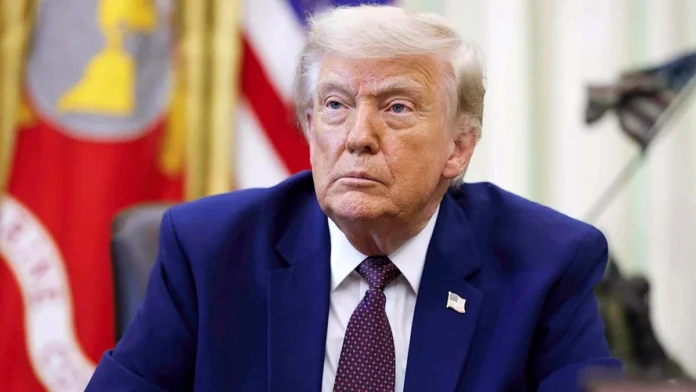
Trump signed the bill during an Oval Office ceremony with Republican leaders present, framing the legislation as a major step toward restoring law and order and strengthening domestic enforcement operations.
The bill closes a months-long standoff that began after Democrats pushed for new restrictions on immigration enforcement following deadly shootings involving federal agents in Minneapolis. Republicans rejected those conditions and ultimately used budget reconciliation to move the package with a simple majority.
Why It Matters
The signing matters because it gives Trump one of the clearest domestic victories of his second term. Immigration enforcement has been central to his political identity, and this law provides the funding needed to expand the administration’s deportation and border operations.
For the White House, the law removes a major source of uncertainty. ICE and Border Patrol will no longer face the same annual funding pressure that Democrats had used to demand changes to enforcement practices.
- The law gives Trump long-term control over immigration enforcement funding.
- It limits Democrats’ leverage over ICE and Border Patrol operations.
- It gives Republicans a major campaign message before the midterms.
Democrats and immigration advocates see the bill very differently. They argue the legislation gives the administration a blank check for aggressive enforcement while failing to include stronger accountability measures for federal agents.
The vote also hardens the political divide on immigration. Republicans are now positioned to campaign on delivering border enforcement money, while Democrats are likely to focus on deportation power, civil liberties concerns, and the lack of enforcement safeguards.
Political and Public Context
The Secure America Act lands at a critical moment in the 2026 midterm cycle. Republicans are trying to show that unified control of Washington can deliver concrete results, while Democrats are trying to frame Trump’s immigration agenda as extreme and destabilizing.
The law also connects directly to the administration’s broader enforcement strategy. Border czar Tom Homan has already signaled that ICE operations could expand sharply in Democratic-led cities, including New York, where state officials recently moved to limit cooperation with federal agents.
- Republicans will frame the law as proof they delivered on border security.
- Democrats will likely attack it as an unchecked enforcement expansion.
- Sanctuary cities may face stronger federal pressure under the new funding structure.
The funding also comes with economic consequences. Large-scale enforcement operations could affect industries that rely heavily on immigrant labor, including agriculture, construction, hospitality, food service, and domestic work.
At the same time, Trump’s allies argue the law is necessary to restore border control, expand detention capacity, and give federal agencies the resources to enforce existing immigration law without repeated shutdown threats.
What Happens Next
With the bill now signed, the administration is expected to move quickly to expand detention capacity, increase enforcement operations, and prepare new actions targeting sanctuary jurisdictions.
The White House is likely to use the signing as a midterm campaign centerpiece, arguing that Republicans delivered where Democrats obstructed. Trump is expected to present the law as evidence that his administration is keeping its immigration promises.
- ICE and CBP can begin using the new funding for expanded operations.
- The administration may increase pressure on sanctuary cities and states.
- Democrats are likely to make the law a major campaign issue.
Legal challenges may follow as civil liberties groups and Democratic-led jurisdictions respond to specific enforcement actions. The broader fight will likely shift from Congress to the courts, city halls, and the campaign trail.
For Trump, the Secure America Act is a power move and a political win. For Democrats, it is a warning sign that the administration now has the money, legal backing, and political momentum to carry out one of the most aggressive immigration enforcement agendas in modern American politics.