

Story Highlights
- Secretary of State Marco Rubio faced his first public congressional questioning since the Iran war began.
- Rubio told senators that Iran has shown willingness to discuss parts of its nuclear program.
- Democrats accused the Trump administration of keeping Congress largely outside major war decisions.
What Happened
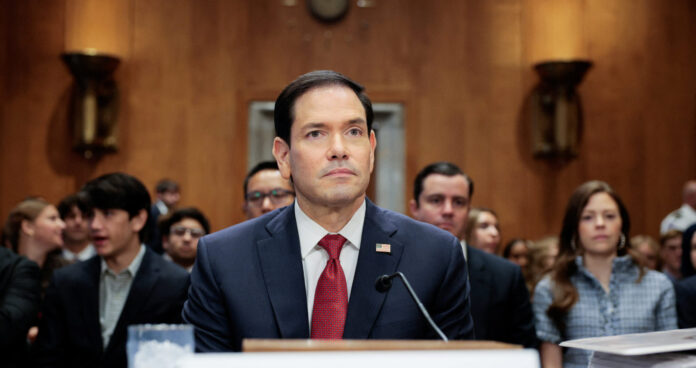
Secretary of State Marco Rubio appeared before the Senate Foreign Relations Committee for his first public congressional testimony since the United States entered the war against Iran, facing sharp questions over the administration’s military strategy, diplomatic outreach, and communication with Congress.
The hearing was formally tied to the State Department’s fiscal year 2027 budget request, but it quickly became a broader review of the Trump administration’s handling of the Iran conflict. Lawmakers pressed Rubio on whether Congress had been properly briefed and whether the administration had a clear path toward ending the war.
- Rubio defended the administration’s approach to Iran.
- Senators questioned the lack of congressional involvement in key decisions.
- Protesters interrupted the hearing before proceedings fully began.
Rubio’s most notable statement came on nuclear diplomacy. He told senators that Iran had shown willingness to negotiate over aspects of its nuclear program that Tehran had previously refused to discuss. Rubio described the opening as significant, while cautioning that no agreement was guaranteed.
He also said talks with Iran were continuing through intermediaries, despite reports from Iranian state-linked media suggesting communications had been cut off. Rubio said the process remained fragile, but argued that diplomacy was still possible even as the broader conflict continued.
Why It Matters
The hearing mattered because it put the Trump administration’s Iran strategy under public congressional scrutiny after months of limited visibility. Democrats argued that lawmakers had been told about decisions after they were made, rather than included in meaningful consultation about the direction of the war.
The Constitution gives Congress a central role in questions of war, funding, and oversight. Rubio’s testimony highlighted the growing tension between the executive branch’s conduct of military operations and lawmakers’ demand for more information and authority.
- Congress is seeking more transparency on U.S. military operations.
- The administration is defending its authority to manage the conflict.
- Iran nuclear talks remain a possible diplomatic off-ramp.
The nuclear diplomacy angle could be the most important development. If Iran is genuinely willing to discuss parts of its nuclear program, the administration may have an opening to pursue a deal that addresses one of the central causes of the conflict.
But that possibility also creates political pressure. Rubio must convince lawmakers that the administration is not simply extending military action while hoping diplomacy catches up later.
Political and Public Context
Rubio’s testimony came as skepticism over the Iran war has grown on Capitol Hill. Democrats have been increasingly critical of the administration’s war powers position, while some Republicans have also raised concerns about costs, strategy, and the lack of a clearly defined endgame.
The House has already moved to challenge Trump’s authority on Iran, passing a war powers resolution with support from a small group of Republicans. That vote signaled that frustration is not limited to Democrats and that Congress may become more aggressive if the conflict continues.
- Democrats are pushing for more oversight and accountability.
- Some Republicans are uneasy about the war’s cost and duration.
- The White House is trying to preserve diplomatic flexibility while defending military action.
Rubio’s role is especially important because he is the administration’s main foreign policy voice on Capitol Hill. His ability to reassure lawmakers could shape how much room the White House has to continue negotiations, manage the conflict, and resist congressional restrictions.
The hearing also gave Democrats a chance to frame the Iran war as an example of executive overreach. That argument is likely to become more prominent as the midterm campaign intensifies.
Economic and Global Context
The Iran conflict has placed pressure on energy markets, supply chains, and U.S. relations with allies in the Middle East and Europe. Any disruption near the Strait of Hormuz can affect oil prices quickly, making the war a domestic economic issue as well as a foreign policy crisis.
Rubio’s comments on nuclear diplomacy therefore carry global significance. A credible negotiation track could calm allies and markets, while a collapse in talks could increase fears of a longer and more expensive conflict.
- Energy prices remain sensitive to Middle East instability.
- U.S. allies are watching whether diplomacy can produce a path forward.
- Congressional pressure could affect how long the administration can sustain the war politically.
The State Department budget also played into the discussion. Rubio defended the administration’s foreign policy priorities while facing criticism that diplomatic programs were being reduced at a time when the United States needs more diplomatic capacity, not less.
What Happens Next
Rubio is expected to face continued questioning as Congress presses for more details on the Iran war, nuclear talks, and the administration’s long-term strategy. Lawmakers are likely to demand more frequent briefings and clearer explanations of U.S. objectives.
The diplomatic track with Iran will also be watched closely. If talks progress, the administration could argue that its pressure campaign has forced Tehran to the table. If talks fail, critics will argue that the war is expanding without a clear exit plan.
- Congress may push additional war powers measures.
- Rubio will remain central to defending the administration’s foreign policy.
- The success or failure of Iran nuclear talks could shape the political future of the conflict.
For now, Rubio’s testimony showed that the administration still sees diplomacy as possible. But it also showed that Congress is losing patience with being kept at the edge of decisions in a war with major military, economic, and constitutional consequences.
Sources
- The Latest: Rubio testifies before Congress for the first time since the start of the Iran war
- Rubio is optimistic on eventual Iran nuclear talks despite congressional skepticism
- Rubio details U.S. demands as Iran peace talks falter
- Secretary of State Marco Rubio Before the Senate Foreign Relations Committee on the FY27 Department of State Budget Request
- Iran’s supreme leader appears more active as talks continue: US’s Rubio


