Story Highlights
- President Trump named Federal Housing Finance Agency Director Bill Pulte as acting director of national intelligence.
- Pulte has no traditional intelligence background, raising immediate concern in Washington.
- The appointment places a Trump loyalist in charge of coordinating the U.S. intelligence community.
What Happened
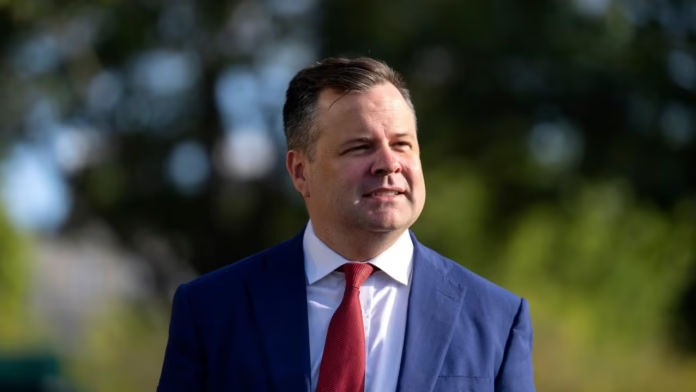
President Donald Trump has named Bill Pulte, the director of the Federal Housing Finance Agency, as acting director of national intelligence, placing a housing finance official in one of the most sensitive national security roles in the federal government.
Pulte is set to replace outgoing DNI Tulsi Gabbard, who announced she would step down effective June 30. The appointment immediately drew scrutiny because Pulte’s background is in housing finance, not intelligence, military operations, or national security policy.
- Pulte currently leads the Federal Housing Finance Agency.
- He oversees key parts of the U.S. housing finance system, including Fannie Mae and Freddie Mac.
- As acting DNI, he would help coordinate intelligence across major federal agencies.
Trump praised Pulte’s experience managing sensitive financial matters and overseeing large mortgage-market institutions. The president framed the appointment as a move to place a trusted administrator in charge of a major federal operation.
Critics, however, argue that the DNI role requires a different type of expertise. The office coordinates intelligence from agencies including the CIA, NSA, FBI, and other national security bodies, while also helping shape the President’s Daily Brief.
Why It Matters
The director of national intelligence is not a routine political appointment. The office was created after the September 11 attacks to improve coordination across the intelligence community and reduce the risk of fragmented or politicized assessments.
That is why Pulte’s appointment is drawing concern. Supporters may see him as a loyal outsider who can challenge bureaucracy. Critics see a political ally with no intelligence background being placed in a position where independence and experience are essential.
- The DNI helps shape national security briefings for the president.
- The role requires coordination across multiple intelligence agencies.
- Lawmakers may question whether Pulte can separate politics from intelligence analysis.
The timing makes the appointment even more significant. The United States is facing major foreign policy challenges, including ongoing tensions involving Iran and broader global instability. Intelligence assessments can influence decisions involving war, diplomacy, sanctions, and military readiness.
For Democrats and some national security observers, the concern is that intelligence conclusions could be shaped around political preferences. For Trump’s allies, the move reflects the president’s broader push to put trusted officials in charge of institutions he believes have resisted his agenda.
Political and Public Context
Pulte has become one of the more visible Trump-aligned officials in the administration. While leading the FHFA, he took aggressive actions involving political figures and financial allegations, which helped build his profile among Trump supporters.
Those actions are now part of the debate around his intelligence appointment. Supporters argue that Pulte has shown he is willing to confront powerful institutions. Critics argue that the same political posture could be dangerous inside the intelligence community, where credibility depends on nonpartisan analysis.
- Trump has repeatedly favored loyalists for sensitive federal posts.
- Pulte’s appointment avoids immediate Senate confirmation because it is acting, not permanent.
- A permanent nomination would likely trigger a contentious Senate fight.
The appointment also follows a broader pattern in Trump’s second term: placing trusted political allies into agencies he views as needing disruption. That approach energizes his base, but it often triggers institutional pushback and congressional scrutiny.
If Trump later nominates Pulte for the permanent DNI role, lawmakers will likely press him on qualifications, independence, classified information handling, foreign threats, and whether he can deliver intelligence assessments that may contradict the president’s preferred narrative.
Economic and Global Context
Pulte’s dual role also raises economic questions. The FHFA oversees major housing finance institutions that affect mortgage markets, housing affordability, and financial stability for millions of Americans.
Balancing that responsibility with the demands of the intelligence role could invite scrutiny from both housing analysts and national security officials. Each position carries major consequences, but they require very different expertise and attention.
- The FHFA role affects mortgage markets and housing finance stability.
- The DNI role affects intelligence coordination and national security planning.
- Holding both responsibilities at once could raise questions about focus and capacity.
Globally, U.S. allies depend heavily on American intelligence-sharing. Any perception that the intelligence community is becoming more political could affect trust among partners, especially during periods of war, terrorism threats, cyberattacks, and regional instability.
Financial markets also watch national security leadership closely when global conflicts affect energy prices, sanctions, trade policy, and supply chains. Stable intelligence leadership can help reassure allies and investors that decisions are being made on reliable information.
What Happens Next
Pulte can begin serving as acting DNI without immediate Senate confirmation. That allows Trump to install him quickly, but it does not end the political debate over his qualifications.
Congressional Democrats are likely to demand hearings and briefings on the appointment. Some Republicans may also face pressure to explain whether they believe Pulte has the background needed for the role.
- Pulte will face immediate scrutiny from lawmakers and intelligence observers.
- The Senate would become directly involved if Trump nominates him permanently.
- The intelligence community will be watching how he handles classified assessments and agency coordination.
For now, the appointment gives Trump another trusted loyalist in a powerful federal position. But it also opens a new fight over whether loyalty, management experience, or national security expertise should matter most when choosing the nation’s top intelligence official.
As the administration moves deeper into a difficult foreign policy period, Pulte’s performance may become a test of Trump’s broader governing model — and whether political loyalty can coexist with independent intelligence leadership.
Sources
- Trump names housing chief Bill Pulte acting intelligence director, replacing Tulsi Gabbard
- Trump names controversial housing official Bill Pulte as acting director of national intelligence
- Republican backlash intensifies over Trump spy chief pick
- New acting spy chief will be Bill Pulte, housing finance director who’s attacked perceived Trump foes