Story Highlights
- Arch Naramore, a former primary challenger, endorses Democrat Adam Hamilton.
- Naramore’s endorsement reflects growing bipartisan dissatisfaction with Senator Roger Marshall.
- Hamilton aims to become the first Democrat to win a Senate seat in Kansas since 1932.
- The race is currently rated as leaning towards Marshall, but recent developments may shift dynamics.
What Happened
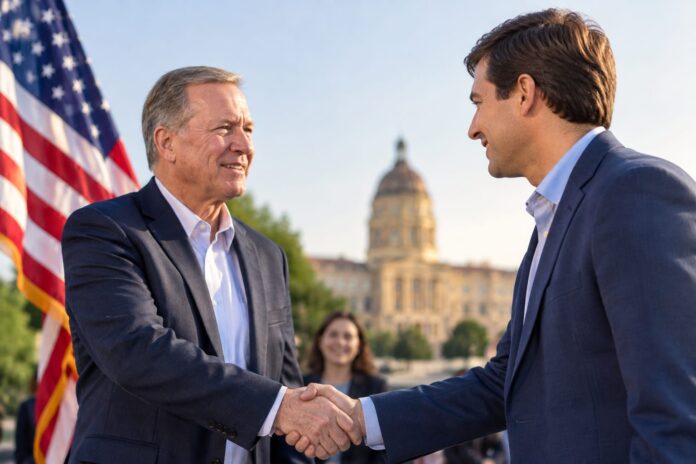
In a surprising turn of events in the Kansas Senate race, former Republican primary challenger Arch Naramore has publicly endorsed Democrat Adam Hamilton, who is vying to unseat incumbent Senator Roger Marshall. Naramore, who had previously mounted a challenge against Marshall in the GOP primary, made his endorsement known through a YouTube video, stating that he has ‘always’ identified as a Republican but believes that Hamilton is the right choice for Kansas voters this November.
Naramore’s endorsement comes after he garnered over 20 percent of the vote in the August primary, a significant showing that indicates a faction of Republican voters may share his concerns about Marshall’s policies. In his video, Naramore criticized Marshall for supporting tariffs that he claims have negatively impacted Kansas farmers and for voting in favor of substantial tax breaks for data centers, which he argues do not benefit the local economy. This endorsement is not an isolated incident; it follows a similar sentiment expressed by former Kansas Governor Bill Graves, who also endorsed Hamilton, emphasizing the need for change in the state’s representation.
- Arch Naramore endorsed Adam Hamilton on a YouTube video.
- Naramore received over 20 percent of the vote in the August GOP primary.
- Marshall has been criticized for his policies affecting Kansas farmers.
- Former Governor Bill Graves has also endorsed Hamilton.
Why It Matters
The endorsement of a Democrat by a former Republican primary challenger is a significant development in the Kansas Senate race, highlighting a growing discontent among some Republican voters regarding their party’s current representation. Naramore’s support for Hamilton underscores a potential shift in voter sentiment, suggesting that traditional party lines may be blurring in the face of dissatisfaction with incumbent leadership. This trend could have broader implications for the Republican Party in Kansas, as it may signal a need for reevaluation of policies and priorities to retain voter support.
Moreover, Hamilton’s campaign is gaining traction as he positions himself as a candidate who can unite voters across party lines. His message resonates with those who feel that their concerns have been overlooked by Marshall, particularly on issues that directly affect the agricultural community and local economies. The endorsement from Naramore, coupled with Graves’ support, may provide Hamilton with the momentum needed to challenge the incumbent effectively.
- Naramore’s endorsement may attract undecided voters who are disillusioned with Marshall.
- Hamilton’s campaign could gain momentum from bipartisan support.
- The race may influence future Republican strategies in Kansas.
- Voter sentiment may shift as more Republicans express dissatisfaction with Marshall.
Political and Public Context
Historically, Kansas has been a Republican stronghold, with the last Democrat to win a Senate seat being George McGill in 1932. This long-standing trend makes Hamilton’s candidacy particularly noteworthy, as he seeks to break a nearly century-long streak. The political landscape in Kansas has been evolving, with increasing polarization and a growing number of voters identifying as independents or expressing dissatisfaction with the two-party system.
The dynamics of the race are further complicated by the fact that Marshall, a first-term senator, has faced criticism from within his party. His support for certain policies, such as tariffs and tax breaks for large corporations, has alienated some constituents who feel that their interests are not being prioritized. This internal dissent is indicative of a larger trend within the Republican Party, where traditional conservative values are being challenged by a new wave of populism and calls for accountability.
- Kansas has not elected a Democrat to the Senate since 1932.
- Marshall’s policies have drawn criticism from both Democrats and Republicans.
- The political landscape in Kansas is shifting, with more independents emerging.
- Voter dissatisfaction may lead to significant changes in future elections.
What Happens Next
As the election approaches, the Kansas Senate race is poised to become increasingly competitive. Hamilton’s campaign will likely focus on capitalizing on the momentum generated by Naramore’s endorsement and the support from other prominent Republicans. This could involve targeted outreach to disaffected Republican voters and independents who are seeking a candidate that aligns more closely with their values and concerns.
On the other hand, Marshall’s campaign will need to address the criticisms raised by Naramore and Graves, as well as reassure voters of his commitment to Kansas interests. This may involve a reevaluation of his policy positions and a more robust engagement with constituents to demonstrate that he is listening to their concerns. The outcome of this race could set a precedent for future elections in Kansas and potentially reshape the political landscape in the state.
- Hamilton will likely increase outreach efforts to Republican and independent voters.
- Marshall may need to adjust his campaign strategy to address criticisms.
- The race could influence future Republican candidates and their platforms.
- Voter turnout will be crucial in determining the outcome of the election.