Story Highlights
- Todd Blanche, serving as acting attorney general and Trump’s personal lawyer, indicated the Justice Department would prioritize restrictions on medication abortion under his leadership
- The nominee committed to reviewing how federal government interprets the Comstock Act, a 19th-century anti-obscenity law that opponents of abortion believe could restrict mailing of abortion medications
- Blanche’s confirmation requires one additional Senate vote, with two Republican senators undecided and one moderate Republican announcing opposition
- The shift represents a more aggressive approach to abortion policy than the Trump administration’s previous handling of the issue
What Happened
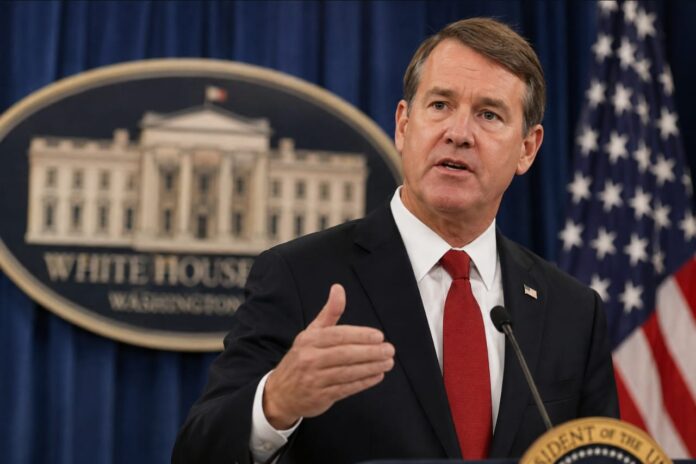
During a call organized by the White House Faith Office, Blanche outlined his vision for Department of Justice leadership on abortion restrictions. His remarks were subsequently posted online by Intercessors for America, a Christian organization, and first reported by Politico. The nominee emphasized that states adopting protections for the unborn from conception would receive federal support to prevent other states and organizations from undermining those policies. This represents a significant escalation from the administration’s previous posture on the abortion issue.
In his July hearing before the Senate Judiciary Committee, the nominee further demonstrated his commitment to this agenda by pledging to conduct a thorough review of how the federal government interprets the Comstock Act. Anti-abortion activists have been pressing the White House to invoke this 1800s-era law since the beginning of the president’s second term, though the administration has not pursued this path to date. The Department of Justice’s Office of Legal Counsel confirmed it is undertaking a comprehensive review of policies and procedures related to abortion.
- Call organized by White House Faith Office and posted by Intercessors for America, reported by Politico
- July Senate Judiciary Committee hearing where nominee committed to reviewing Comstock Act interpretation
- DOJ Office of Legal Counsel confirms thorough review of abortion-related policies underway
- Confirmation vote expected by end of week with two undecided Senate Republicans and one announced opposition
Why It Matters
The potential confirmation of Blanche signals a transformative shift in how the federal government approaches reproductive policy. Rather than leaving abortion restrictions to state-level decision-making, the nominee’s statements indicate a willingness to deploy federal enforcement mechanisms to protect what he characterizes as protections for the unborn. The invocation of the Comstock Act would represent an extraordinary use of an obscure 19th-century statute to reshape modern reproductive healthcare access, potentially affecting the distribution of medication abortion pills across state lines and beyond state borders.
This approach reflects alignment with anti-abortion movement priorities that have intensified since the Supreme Court’s 2022 Dobbs decision returned abortion regulation to the states. The nominee’s emphasis on preventing other states from circumventing restrictions demonstrates an intent to create a more uniform national policy landscape despite federalism principles that have traditionally governed the issue. The confirmation would place a Trump-aligned attorney general in position to aggressively pursue policies on reproductive restrictions that extend far beyond what the administration has previously attempted.
- Federal enforcement of Comstock Act could restrict mailing of abortion medications across all states regardless of local law
- Shifts abortion policy from state-level determination toward uniform national restrictions through Justice Department action
- Aligns with priorities of anti-abortion activists and conservative faith organizations supporting the administration
- Could dramatically limit access to medication abortion, the most common abortion method used in the United States
Political and Public Context
The nomination and confirmation process occurs amid significant political calculations heading into a midterm election. Republicans face challenging dynamics in congressional races while attempting to maintain control of both chambers. Notably, abortion remained a defining issue in the 2024 elections where it dominated voter discussions, yet current polling indicates the topic has receded as voters prioritize cost of living concerns. The party has largely avoided prominent discussion of abortion policy in the run-up to the midterms, suggesting internal acknowledgment that the issue carries electoral risk.
The Senate confirmation battle reflects this tension. While anti-abortion activists see the nominee as an opportunity to advance their long-term agenda through executive action, moderate Republican senators recognize the political vulnerability abortion restrictions present. Senator Susan Collins of Maine announced opposition specifically citing abortion-related remarks as a determinative factor in her decision. Senators Lisa Murkowski of Alaska and Bill Cassidy of Louisiana have not yet indicated their positions, potentially holding decisive votes. Nationwide polling consistently demonstrates that abortion restrictions remain unpopular with the broader American electorate, creating a political minefield for Republicans navigating both party expectations and constituent preferences.
- Abortion dominated 2024 elections but has receded in midterm polling as voters focus on cost of living
- Republican Party has largely avoided abortion discussion heading into midterm races despite party base priorities
- Senator Collins announces opposition to nominee based on abortion remarks
- National restrictions on abortion remain unpopular in public polling despite conservative movement activism
Trump’s attorney general pick hints at making national abortion restrictions a priority #Abortionrights #DonaldTrump #Abortion #Washington,D.C. #Abortionlawhttps://t.co/oDmAPhv12Q
— Snoozebar (@CHIGGINBASKET) August 8, 2026
What Happens Next
The Senate is expected to complete the confirmation vote by week’s end, with the nominee requiring one additional vote to achieve majority support. The positions of Senators Murkowski and Cassidy become critical to determining whether Blanche achieves confirmation. Should he secure Senate approval, his tenure would immediately activate the DOJ’s stated review of Comstock Act interpretation, potentially leading to enforcement guidance that would restrict medication abortion access nationwide. Legal challenges from abortion rights advocates would likely follow any formal DOJ action attempting to invoke the Comstock Act for abortion-related enforcement.
Beyond the immediate confirmation process, the nominee’s statements indicate that aggressive federal action on abortion restrictions would become a centerpiece of the Justice Department’s agenda. This could include litigation supporting state restrictions that face legal challenges, coordination with state attorneys general on enforcement mechanisms, and prosecution of individuals or organizations facilitating abortion access across state lines. The implementation would unfold against the backdrop of a midterm election cycle where abortion’s political salience may shift depending on how voters respond to aggressive federal enforcement attempts.
- Confirmation vote expected by end of week with outcome dependent on two undecided Senate Republicans
- DOJ review of Comstock Act interpretation likely to proceed immediately upon confirmation
- Potential legal challenges from abortion rights groups challenging any Comstock Act enforcement guidance
- Aggressive federal abortion restrictions could become Justice Department priority during midterm election cycle