Story Highlights
- President Donald Trump abruptly ended a “Meet the Press” interview after Kristen Welker pressed him on Jan. 6 payouts and election fraud claims.
- Trump declined to rule out compensation for January 6 defendants who pleaded guilty to assaulting police officers.
- He also repeated unsupported claims that California’s primary elections were being rigged because ballots were still being counted.
What Happened
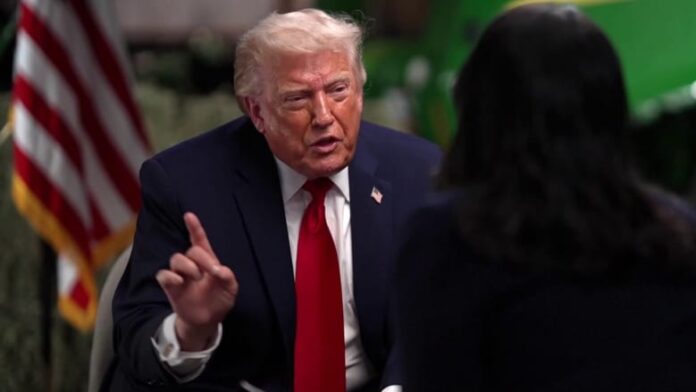
President Donald Trump walked out of a tense “Meet the Press” interview after NBC’s Kristen Welker pressed him on whether January 6 rioters who assaulted police officers should receive taxpayer-backed compensation.
The interview was recorded on Friday at Custer Farms in Chippewa Falls, Wisconsin, and aired on Sunday. The White House had framed the Wisconsin trip around agriculture, rural voters, and the economy, but the interview quickly shifted into some of the most politically volatile issues facing the administration.
- The interview covered January 6 payouts, California election claims, Iran, interest rates, and the anti-weaponization fund.
- Trump defended the broader idea of compensating people he says were wrongly targeted by the federal government.
- He ended the interview after repeated questioning over election fraud claims and media criticism.
Welker asked Trump whether people who pleaded guilty to assaulting police officers during the January 6 Capitol attack should receive payments from the proposed anti-weaponization fund. Trump did not give a firm no. He said he would not be inclined to say so automatically, but added that he would need to review cases individually.
The answer immediately reignited concern over whether Trump’s proposed compensation framework could benefit people convicted of violence against law enforcement. The Justice Department had already told federal courts the nearly $1.8 billion fund was not moving forward, but Trump’s comments suggested he still supports the idea of compensating some January 6 defendants.
The interview grew more combative when Welker pressed Trump on his claims that California Democrats were rigging primary elections. Trump pointed to the slow vote count as evidence, while Welker noted that California officials had not presented proof of widespread fraud and that mail ballots take time to process under state law.
Why It Matters
The walkout matters because it brought two of Trump’s most controversial domestic narratives into one televised confrontation: January 6 victimhood and election fraud allegations.
For Trump’s supporters, the exchange may reinforce his argument that mainstream media outlets are hostile to him and unwilling to accept his claims about political weaponization. For critics, the interview showed the president avoiding direct accountability on whether people who attacked police should receive public compensation.
- The Jan. 6 payout issue creates political risk for Republicans who support law enforcement.
- The California fraud claims deepen concern over unsupported attacks on election systems.
- The walkout turned a Wisconsin economic trip into a national media controversy.
The Jan. 6 fund question is especially sensitive because the anti-weaponization proposal already collapsed under bipartisan pressure. Many Republican senators objected to the possibility that federal money could be used to compensate Capitol riot defendants, particularly those involved in violence against police.
Trump’s refusal to rule out payments keeps the issue alive, even after DOJ said the fund itself is dead. That could force congressional Republicans to take clearer public positions on whether such compensation should ever be allowed.
Political and Public Context
The California election claims added another flashpoint. Trump has repeatedly alleged that Democrats are manipulating California’s primary results because ballot counting has taken several days.
California officials say that timeline is normal. The state relies heavily on mail voting, and ballots postmarked by Election Day can be counted after Election Day if they arrive within the legal window. Signature verification and ballot processing can also take time.
- Trump claimed the slow count showed cheating.
- Welker pressed him on whether he had evidence.
- Trump continued attacking the process and the media before ending the interview.
The California dispute is politically important because the governor’s race and Los Angeles mayoral race remain closely watched. Trump-backed figures and high-profile Democrats are involved in contests that could shape the state’s November ballot and national midterm narrative.
The interview also came after the U.S. Attorney’s Office in Los Angeles announced election-related investigations, though no public evidence has been presented proving that California Democrats stole or manipulated the primary results.
Economic and Global Context
The Wisconsin trip was supposed to highlight rural economic issues, including agriculture, fuel prices, trade pressure, and the cost of living. Instead, the interview’s collapse shifted attention away from those issues.
Trump also discussed interest rates and the Federal Reserve, criticizing the possibility of tighter monetary policy while inflation and bond-market concerns remain politically sensitive.
- Wisconsin farmers remain affected by fuel, fertilizer, borrowing, and export costs.
- Trump is trying to keep rural voters focused on economic relief and immigration enforcement.
- The interview instead amplified controversies over Jan. 6, election fraud, and press freedom.
The Iran conflict also came up during the interview. Trump defended his approach and rejected criticism that the war contradicts his “no new wars” message. KCRA reported Trump said he “didn’t promise anything” and argued that the Iran conflict is not an endless war.
That comment adds another political problem for the White House. The Iran conflict has already contributed to pressure over fuel prices, military costs, and Republican divisions over foreign policy.
What Happens Next
The interview is likely to keep the anti-weaponization fund and January 6 compensation issue alive, even after DOJ said the original fund is not going forward.
Democrats are likely to use Trump’s comments to argue that he remains willing to reward January 6 defendants. Republicans may respond by saying the president was only insisting on case-by-case review for people he believes were treated unfairly.
- Congress may face renewed pressure to permanently block any Jan. 6-related compensation program.
- California officials will continue defending the state’s ballot-counting process against Trump’s claims.
- The walkout will likely become a midterm messaging clip for both parties.
For Trump, the moment may energize supporters who see the press as adversarial. But for swing voters, especially in battleground states like Wisconsin, the image of a president ending an interview under pressure could reinforce concerns over temperament and accountability.
The interview began as part of an economic outreach trip. It ended as a defining clash over Jan. 6, election trust, and Trump’s willingness to answer sustained questioning on national television.
Sources
- Trump storms out of “Meet the Press” interview after clash over election claims, DOJ fund
- Trump won’t rule out payments to Jan. 6 rioters who attacked police
- Trump walks out of interview with NBC’s Meet the Press after clash over election claims
- Trump Storms Out of NBC Interview After Being Challenged on False Claims