Story Highlights
Trump says a Russia‑Ukraine peace deal has a “good shot”
Comments come ahead of a high‑profile meeting with President Volodymyr Zelensky
Remarks raise questions about U.S. diplomatic posture going into 2026
What Happened
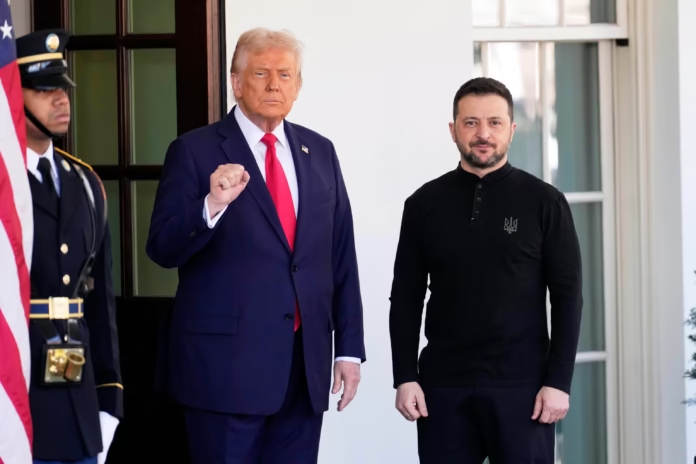
President Donald Trump said there is a “good shot” at reaching a peace agreement between Russia and Ukraine, signaling renewed optimism around ending one of the world’s most consequential ongoing conflicts. His remarks came as Ukrainian President Volodymyr Zelensky prepared for a visit that Trump described as an opportunity to explore revised proposals aimed at halting the fighting.
Speaking to reporters, Trump suggested that recent developments — including battlefield fatigue, economic strain, and shifting international dynamics — may have created conditions more conducive to negotiation than in previous years. While he did not outline a specific framework for a deal, he indicated that discussions would focus on ceasefire mechanisms, security guarantees, and pathways toward longer‑term stability.
The comments mark one of Trump’s more direct public statements on the conflict in recent weeks. Since returning to office, his administration has taken a measured approach, balancing continued engagement with allies while emphasizing the need for diplomacy over prolonged military escalation.
Why It Matters
The war in Ukraine remains a central fault line in global geopolitics, affecting energy markets, defense spending, and U.S. relations with both NATO allies and Russia. Any indication from the White House that negotiations could be viable carries significant weight, even absent formal policy announcements.
Trump’s statement matters in part because it reflects a tonal shift. Rather than focusing on military aid or deterrence, the emphasis was on deal‑making — a hallmark of Trump’s broader foreign‑policy philosophy. Supporters argue that sustained conflict benefits no party and that diplomatic pressure could accelerate an end to hostilities. Critics counter that premature negotiations risk legitimizing territorial gains achieved through force.
Domestically, the issue also intersects with public opinion. Polls show growing concern among Americans about the financial and strategic costs of prolonged overseas conflicts. Trump’s framing taps into that sentiment without committing the administration to immediate concessions or timelines.
Political and Geopolitical Implications
Internationally, Trump’s remarks are likely to be closely analyzed by allies and adversaries alike. For Ukraine, optimism from Washington could signal openness to creative diplomatic solutions, but also raise concerns about the durability of long‑term U.S. support. European leaders, many of whom remain deeply invested in Ukraine’s defense, may seek reassurance that peace efforts would not come at the expense of sovereignty.
For Russia, the comments introduce ambiguity. Moscow has long called for negotiations on its own terms, and Trump’s deal‑focused rhetoric could be interpreted as an opportunity — or as leverage, depending on how talks unfold.
Politically, Trump’s approach reinforces a contrast with prior U.S. strategies that emphasized open‑ended support. By highlighting the possibility of a negotiated outcome, the administration positions itself as pragmatic and results‑oriented, while leaving room to adjust based on developments on the ground.
Implications
While no formal peace process has been announced, Trump’s comments suggest diplomacy may play a larger role in U.S. strategy moving forward. Whether optimism translates into concrete progress will depend on the willingness of all parties to compromise — and on how the administration balances diplomatic outreach with strategic deterrence.