Story Highlights
- President Trump posted AI-generated videos on Truth Social depicting UFC boss Dana White as a potential White House press secretary
- The lighthearted content showed White conducting an energetic press briefing with assertive messaging to reporters
- Trump had playfully suggested White for the role over the weekend before walking back the idea as humor
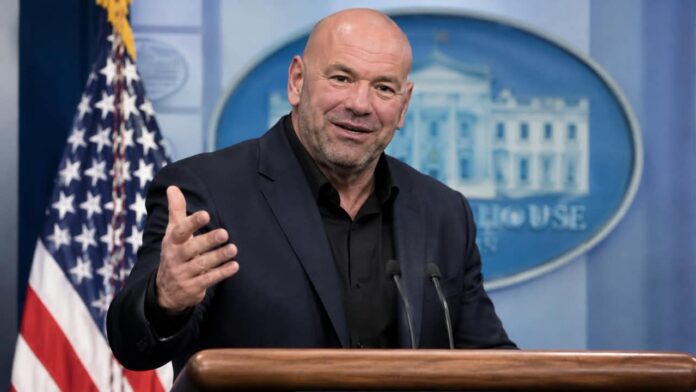
- White later appeared at the White House and publicly declined the position
What Happened
President Trump shared a pair of AI-generated videos on his Truth Social platform Monday that imagined UFC president Dana White in the role of White House press secretary. The first video, posted at 2 p.m. Eastern time, depicted White striding toward a lectern outside the White House while addressing an enthusiastic crowd. Approximately 23 minutes later, the president shared a second video showing White conducting a press briefing with commanding authority over the assembled reporters.
The AI-generated content portrayed White delivering firm messaging to the press corps, emphasizing the need for respect and decorum during official briefings. The fictional scenario presented an energetic and no-nonsense approach to media relations that resonated with the president’s characteristic style of engaging with political narratives through humor and satire.
- Two AI videos posted Monday on Truth Social, posted at 2 p.m. Eastern and 23 minutes later
- Content featured UFC President Dana White in a press secretary role at the White House
- President Trump had suggested the idea over the weekend before framing it as a joke
- White subsequently appeared at a White House event Monday and declined the role
Why It Matters
The president’s use of AI-generated content continues his pattern of leveraging digital platforms and emerging technologies to communicate directly with supporters and shape media narratives outside traditional outlets. This approach demonstrates an evolving strategy in political communications that bypasses conventional press channels and allows for creative, unfiltered messaging. By incorporating humor and fictional scenarios, the administration maintains engagement with its base while generating attention and discussion around its messaging priorities.
The exchange between President Trump and White highlights the administration’s comfort with informal, entertaining approaches to political communication. Rather than adhering strictly to traditional White House protocols, the president has shown willingness to experiment with satire and AI-generated content as tools for public engagement. This style reflects a broader shift in how political leaders communicate in the digital age, particularly among administrations seeking to connect directly with voters through non-traditional means.
- Demonstrates innovative use of AI technology for political messaging and direct communication with supporters
- Showcases the administration’s playful approach to engaging with media narratives and press relations
- Reflects modern political communication strategies that bypass traditional outlets
- Strengthens connection with base through humor and unconventional messaging
Political and Public Context
The White House press secretary position has traditionally been one of the most visible roles in any administration, serving as the official liaison between the president and the media. Throughout American political history, the role has been held by seasoned communications professionals tasked with delivering formal statements and managing daily press operations. The playful suggestion of replacing this position with an unconventional figure like Dana White, even in jest, reflects the current administration’s irreverent approach to long-established governmental protocols.
Dana White, as president of the Ultimate Fighting Championship, has built a reputation for direct communication and commanding presence in a competitive sports environment. His public persona and media engagement style have made him a recognizable figure beyond the sports world. The choice to feature White in this humorous scenario demonstrates the president’s tendency to engage personalities from outside traditional political circles in his communications strategy. This approach has characterized much of the administration’s messaging since returning to office, emphasizing personality and directness over conventional political formality.
- White House press secretary traditionally held by professional communicators managing formal media relations
- Current administration has shown preference for unconventional figures and informal communication styles
- Dana White known for direct, commanding presence in sports industry leadership
- AI-generated political content represents emerging trend in digital-age political communications
Trump Posts Bizarre AI Cartoon Video of UFC Boss Dana White Running a Wildly Violent WH Presser https://t.co/Z1oS1EU7p1
— Mediaite (@Mediaite) November 8, 2026
What Happens Next
The president’s continued experimentation with AI-generated content suggests this medium will likely remain part of the administration’s communication toolkit moving forward. As technology advances and becomes more sophisticated, political messaging may increasingly incorporate synthetic media alongside traditional statements and formal announcements. The reception to these videos from the conservative base and Trump-supporting audience will likely inform how frequently and extensively such content is deployed in future communications efforts.
The incident also raises ongoing questions about how the White House manages official press operations and media relations. With the current press secretary remaining in position, the formal mechanisms for official government communication continue through traditional channels. However, the president’s demonstrated willingness to explore alternative approaches through social media and AI content creation suggests an ongoing evolution in how executive communications are delivered to the American public. The administration will likely continue balancing formal press operations with creative digital engagement strategies.
- Continued experimentation with AI-generated content expected as technology advances and proves effective
- Conservative base response will shape frequency and scope of synthetic media deployment
- Formal press operations continue through traditional channels while creative digital strategies evolve
- Open question of how emerging technologies will reshape political communications in coming years