Story Highlights
- President Trump contacted Jensen Huang, the outgoing Nvidia CEO, urging him to defend his position despite mounting pressures
- Huang’s resignation followed reports of multiple extramarital affairs, including involvement with a woman suspected of Chinese intelligence connections
- The situation raises significant national security concerns regarding advanced chip technology and foreign intelligence access
- Trump’s administration had previously authorized Nvidia to sell advanced H200 chips to China, creating additional scrutiny around the matter
What Happened
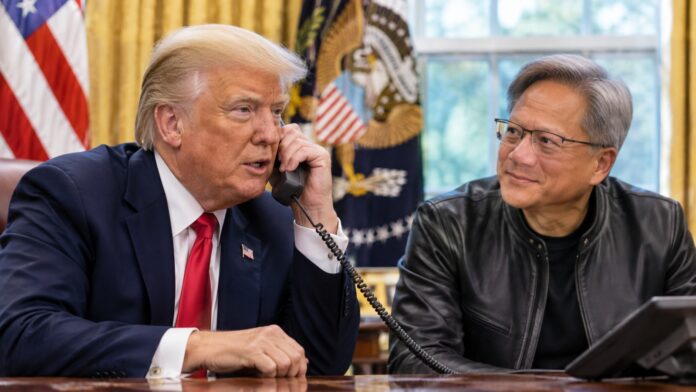
President Trump placed a call to Jensen Huang on Wednesday to express support and encourage the Nvidia CEO to fight for his position, according to reports from multiple sources. The president spoke with sports commentator Stephen A. Smith on Thursday about the conversation, describing the situation facing Huang as deeply difficult. During this interview, Trump acknowledged that Huang was experiencing significant personal turmoil, particularly regarding the impact on his family relationships.
Huang subsequently resigned from his position as CEO of Nvidia, one of the world’s most valuable companies, following revelations about multiple extramarital affairs. Among these relationships was involvement with a woman suspected of maintaining connections to Chinese intelligence operations. The resignation shocked both the political establishment and technology industry observers, given Huang’s prominence as a leading figure in the artificial intelligence sector and his close working relationship with the current administration.
- President Trump contacted Huang on Wednesday to encourage him to remain in his position
- Huang resigned as Nvidia CEO following disclosure of multiple extramarital affairs
- One relationship involved a woman suspected of working for Chinese intelligence
- The situation emerged amid the artificial intelligence boom and rising demand for Nvidia’s advanced computing chips
Why It Matters
The circumstances surrounding Huang’s resignation carry substantial implications for national security and U.S. technological competitiveness. The involvement of a suspected Chinese intelligence operative in a relationship with the CEO of a company producing cutting-edge semiconductor technology represents a potential vulnerability in America’s technological and strategic position. This situation underscores the risks associated with foreign intelligence operations targeting leaders in critical technology sectors, particularly those developing advanced artificial intelligence capabilities.
The matter gains additional significance given the Trump administration’s decision to permit Nvidia to sell advanced H200 chips to China. This authorization, implemented at the end of the previous year, represented a reversal of earlier policies restricting such sales. The convergence of this export approval with information about Huang’s relationship with a suspected Chinese spy has prompted concerns about whether national security protocols were adequately followed during the decision-making process. Members of both political parties have called for congressional investigation into these connections and their potential influence on technology export decisions.
- A suspected Chinese intelligence operative maintained a close relationship with Nvidia’s then-CEO, creating potential security vulnerabilities
- The situation raises questions about the adequacy of vetting procedures for high-level technology sector executives
- Foreign intelligence access to semiconductor technology decisions could compromise U.S. technological and military advantages
- Nvidia’s stock market value declined significantly following Huang’s resignation and the disclosure of the scandals
Political and Public Context
Huang has long maintained a close working relationship with Trump, particularly as the artificial intelligence sector has expanded dramatically and increased demand for Nvidia’s specialized processors. This relationship reflects the growing importance of the technology industry to the current administration’s strategic priorities and economic policy. The situation illustrates the complex intersection of personal conduct, national security concerns, and technology sector leadership that increasingly demands attention from policymakers.
The administration’s previous decision to permit Nvidia chip sales to China represented a significant policy shift, reflecting the company’s lobbying efforts and its importance to the overall technology ecosystem. However, the emergence of national security concerns related to Huang’s personal relationships has prompted reconsideration of how such export decisions are made and what vetting procedures should apply to leaders in sensitive technology sectors. Congressional Democrats have already indicated their intention to investigate what information the president possessed regarding Huang’s associations and the timeline of the export authorization decision.
- Trump and Huang have maintained a close professional relationship during the artificial intelligence boom
- The administration previously reversed restrictions on Nvidia chip sales to China at year’s end
- Both Democratic and Republican members of Congress have called for investigations into Huang’s suspected Chinese intelligence connection
- The situation raises broader questions about foreign intelligence operations targeting U.S. technology sector leaders
“SO SAD TO SEE”: President Trump calls Jensen Huang’s departure as Nvidia’s CEO “a horrible thing,” recalling presenting the chipmaker’s co-founder with the National Medal of Science.
“He was there, and he got the science award, the same award that I gave to Elon [Musk], and you… pic.twitter.com/yl6FWJLZ4w
— Fox News (@FoxNews) November 13, 2026
What Happens Next
Congressional investigations are expected to proceed into Huang’s relationship with the suspected Chinese spy and the circumstances surrounding the administration’s authorization of advanced chip sales to China. These inquiries will likely focus on what information officials possessed, when they acquired it, and what security protocols were followed before approving the exports. The investigations may result in legislative proposals for stricter vetting procedures and more rigorous oversight of technology sector leadership.
Nvidia will need to identify and install new leadership while navigating the reputational and market challenges created by Huang’s resignation. The company’s stock performance following the scandal has already demonstrated market concerns about continuity and governance. The White House will face ongoing scrutiny regarding its knowledge of and response to the security concerns, which could influence future decisions about technology export policies and the criteria used to evaluate such authorizations.
- Congressional committees from both parties are expected to launch formal investigations into the matter
- Nvidia must conduct a leadership transition and restore investor confidence following the scandal
- The administration may face calls to review or reverse the H200 chip export authorization to China
- New policies may be proposed to strengthen vetting and security procedures for technology sector executives involved in critical export decisions