Story Highlights
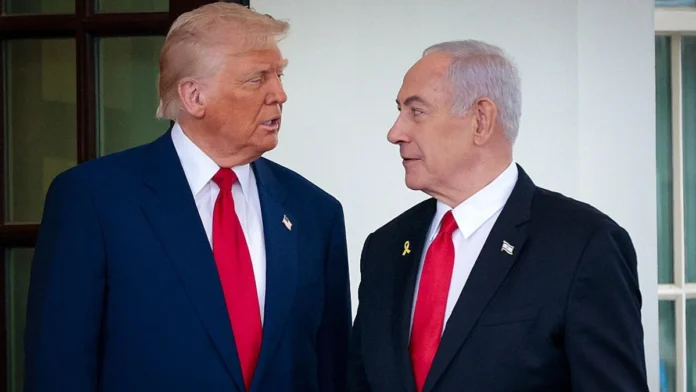
- President Donald Trump said he urged Israeli officials to accept a ceasefire with Hezbollah after renewed fighting threatened U.S.-Iran negotiations.
- The Lebanon flare-up briefly disrupted planned Switzerland talks over Iran’s nuclear program and the wider peace framework.
- The episode shows Trump trying to protect his Iran deal while maintaining America’s long-standing security relationship with Israel.
What Happened
President Donald Trump moved quickly to contain renewed fighting between Israel and Hezbollah after the violence threatened to derail the next phase of U.S.-Iran diplomacy.
The flare-up in Lebanon came shortly after the United States and Iran signed an interim memorandum aimed at ending direct hostilities, reopening the Strait of Hormuz and creating a 60-day window for nuclear and sanctions negotiations.
Iran briefly pulled back from planned talks in Switzerland after the Lebanon violence, arguing that Israeli operations could undermine the broader ceasefire framework.
- Trump said he personally urged Israeli officials to accept a ceasefire.
- The ceasefire took effect after a deadly exchange between Israel and Hezbollah.
- U.S.-Iran talks were rescheduled after the Lebanon situation stabilized.
Trump described the ceasefire as a positive development and suggested it helped preserve the diplomatic track with Tehran.
Vice President JD Vance also delivered a pointed message to Israeli critics of the Iran deal, warning that Israel should be careful about publicly attacking its strongest remaining ally.
That remark drew backlash in Israel but reflected the Trump administration’s growing frustration that continued operations in Lebanon could weaken the president’s broader regional strategy.
Israeli officials said they remained committed to defending their citizens from Hezbollah and reserved the right to respond to threats.
Lebanese officials, meanwhile, pushed for a broader and more durable ceasefire that would halt Israeli operations and reduce the risk of another escalation.
Why It Matters
The Lebanon ceasefire matters because Trump’s Iran agreement depends on more than Washington and Tehran keeping their promises.
The region includes multiple armed actors whose decisions can affect whether the larger settlement survives.
Hezbollah’s activity, Israel’s military response and Iran’s political calculations all have the potential to disrupt negotiations before they produce a final deal.
- Lebanon is now a key test of the Iran framework’s durability.
- Renewed fighting could give Tehran a reason to delay nuclear talks.
- Israeli restraint could help keep the 60-day negotiating window on track.
Trump’s intervention shows that the administration is willing to pressure even a close ally when broader American interests are at stake.
Supporters may view that as evidence of disciplined deal protection.
The president is not abandoning Israel’s security concerns, but he is signaling that military operations must not jeopardize a diplomatic framework intended to reduce the risk of a wider regional war.
The neutral concern is that Israel faces a real security threat from Hezbollah.
If Hezbollah uses a ceasefire to regroup or attack Israeli positions, Netanyahu’s government may argue that restraint is no longer practical.
Political and Public Context
Trump has long presented himself as strongly supportive of Israel, but his second-term Middle East strategy now requires a more complicated balance.
He wants Iran contained, Hormuz reopened, nuclear inspectors back inside Iran and regional fighting reduced.
That combination may require direct pressure on Israel, Iran, Hezbollah and Lebanon at the same time.
- Trump wants to protect the Iran deal without weakening Israel’s security.
- Vance is helping communicate that Israel should not undercut U.S. diplomacy.
- Iran is using Lebanon as a test of whether Washington can control regional escalation.
Republican hawks may be uneasy with any pressure on Israel, especially if Hezbollah continues attacks.
America First conservatives may support Trump’s effort to avoid another open-ended Middle East conflict and keep American attention focused on results.
Democrats are likely to support de-escalation while pressing for more transparency on the Iran agreement and the legal obligations created by the Lebanon provisions.
The political challenge for Trump is that every side wants something different.
Israel wants freedom to act against Hezbollah.
Iran wants guarantees that Israeli operations will not continue under the cover of a U.S.-Iran agreement.
Lebanon wants sovereignty and an end to cross-border strikes.
Trump’s task is keeping those demands from breaking the central deal he has already signed.
What Happens Next
The next test is whether the Israel-Hezbollah ceasefire continues to hold while U.S.-Iran negotiators work through nuclear and sanctions details in Switzerland.
Reuters reported that the ceasefire largely held after the latest escalation, but violations and distrust remained.
If the calm continues, the United States and Iran can focus on inspectors, frozen assets, sanctions relief and long-term limits on Iran’s nuclear program.
- Watch whether Hezbollah halts attacks across the border.
- Monitor whether Israel limits operations in southern Lebanon.
- Follow Switzerland talks on nuclear inspections and sanctions sequencing.
- Track whether Hormuz shipping continues recovering.
The Trump administration may also push for a more formal deconfliction mechanism involving the United States, Iran and Lebanon.
Such a mechanism could help prevent isolated incidents from escalating into a broader crisis that endangers the Iran agreement.
Israel has concerns about being excluded from any arrangement that affects its freedom of action near Lebanon.
That disagreement may become a major diplomatic challenge in the coming weeks.
For Trump, the strongest outcome would be a stable Lebanon ceasefire, continued U.S.-Iran talks and steady restoration of commercial traffic through Hormuz.
If Lebanon erupts again, the president may face renewed pressure to choose between defending Israeli military operations and preserving the diplomatic agreement he has made central to his foreign-policy record.
Sources
- Reuters: Lebanon Ceasefire Clears Way for U.S.-Iran Talks
- Reuters: Lebanon Ceasefire Largely Holds but Remains Fragile
- Reuters: U.S.-Iran Talks Make Progress After Lebanon Tensions
- The Guardian: Vance Warns Israeli Critics Over Attacks on Trump’s Iran Deal
- Axios: Israel Fears U.S.-Iran Diplomacy Limits Its Lebanon Operations