Story Highlights
- G7 leaders endorsed President Donald Trump’s U.S.-Iran agreement and said they are ready to help implement it.
- The same joint statement pledged stronger pressure on Russia’s war economy, including additional sanctions on oil and gas.
- The summit outcome gives Trump allied support on Iran while aligning Washington and Europe more closely on Ukraine.
What Happened
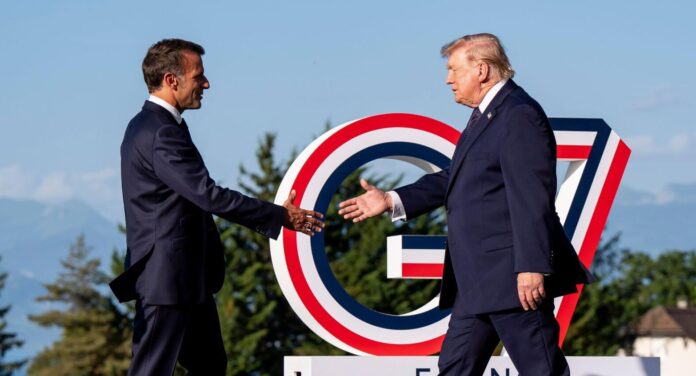
President Donald Trump left the G7 summit in Évian-les-Bains, France, with a joint statement that linked two of the world’s biggest crises: the U.S.-Iran peace framework and Russia’s war in Ukraine.
G7 leaders welcomed the U.S.-Iran agreement and described it as an opportunity to prevent Iran from acquiring a nuclear weapon while addressing regional and ballistic missile threats.
The statement also said the G7 is ready to contribute to implementation, giving Trump a multilateral endorsement for a deal his administration largely negotiated outside the traditional European-led process.
- The G7 praised the Iran breakthrough and Trump’s role in securing it.
- Leaders said the agreement could help stabilize the Middle East and global energy markets.
- The group also committed to intensifying pressure on Russia over Ukraine.
On Russia, the statement reaffirmed support for Ukraine’s sovereignty and territorial integrity.
G7 leaders said they would increase pressure on the Russian war economy and strengthen sanctions, including measures aimed at oil and gas revenues.
That language was significant because Trump had previously eased some pressure on Russian oil during the Iran conflict to prevent a broader energy shock.
With the Strait of Hormuz reopening under the Iran framework, Trump indicated that tougher Russia measures could again become practical.
Ukrainian President Volodymyr Zelenskyy attended the summit and said leaders were united in recognizing that Russia is not winning the war.
Why It Matters
The G7 statement matters because it turns Trump’s Iran agreement into more than a bilateral diplomatic achievement.
By winning public support from major allied economies, Trump strengthened the agreement’s international legitimacy and reduced the risk that European governments would remain on the sidelines.
That support could help with maritime security, nuclear verification, sanctions coordination and the restoration of stable shipping through the Strait of Hormuz.
- Allied support gives the Iran deal a broader diplomatic foundation.
- Energy stability makes tougher Russia sanctions easier to consider.
- Ukraine gains renewed attention after months of focus on the Middle East.
The Russia language also shows how the Iran breakthrough can reshape the Ukraine debate.
If more oil flows through Hormuz and energy markets stabilize, G7 countries may have more room to restrict Russian oil and gas revenue without creating the same price shock for consumers.
That gives Trump a stronger argument that peace through strength in the Middle East can create leverage in Europe.
The neutral concern is implementation.
The Iran agreement still requires detailed follow-through, including nuclear limits, sanctions sequencing and reliable access through Hormuz.
Russia sanctions also depend on enforcement, especially against shadow fleets, financial intermediaries and countries that help Moscow move energy exports around Western restrictions.
Political and Public Context
The summit outcome gives Trump an unusual diplomatic position.
He arrived at the G7 after months of tension with European allies over trade, Ukraine strategy and the Iran conflict.
He left with a joint statement that endorsed his Iran framework and aligned with his message that energy security, diplomacy and economic pressure must work together.
- Trump can present the Iran endorsement as allied validation of his pressure strategy.
- European leaders can argue they influenced the follow-on implementation process.
- Zelenskyy can point to renewed G7 support for stronger pressure on Moscow.
For Republicans, the statement gives Trump a foreign-policy win that combines military leverage with diplomatic results.
It also helps answer critics who said his approach to Iran was too unilateral or too risky for global markets.
For Democrats and Republican hawks, the next debate will focus on transparency.
They will want the administration to release more details about the Iran framework, including sanctions relief, nuclear verification and any private investment commitments tied to reconstruction.
On Ukraine, the political challenge is different.
Trump still wants European countries to carry a larger share of the military and financial burden, but the G7 statement shows he is willing to support tougher pressure on Russia when it fits a broader negotiating strategy.
What Happens Next
The next stage will determine whether the G7 statement produces concrete action or remains a diplomatic endorsement.
On Iran, allies may offer support for maritime security, energy stabilization and nuclear monitoring.
On Russia, governments will need to turn sanctions language into enforceable measures targeting oil, gas, banking and military supply chains.
- Watch whether G7 countries announce new Russia sanctions within days or weeks.
- Monitor commercial shipping through the Strait of Hormuz as the Iran deal is implemented.
- Follow whether European governments join implementation talks with Iran.
- Track additional air-defense commitments for Ukraine.
The official Iran agreement will remain under scrutiny until the full terms are clear.
Lawmakers will examine whether sanctions relief is tied to verified Iranian compliance and whether the agreement prevents Iran from moving toward a nuclear weapon.
Ukraine will press for faster weapons deliveries and stronger restrictions on Russian energy revenue.
Trump may use the G7 statement to argue that his administration has restored Western leverage on two fronts at once: de-escalating Iran while tightening the cost of Russia’s war.
For the president, the strongest outcome would be lower energy prices, a stable Iran ceasefire and a sanctions regime that pushes Moscow closer to negotiations.
For the G7, the challenge is turning rare unity into enforceable policy before either crisis changes direction again.