Story Highlights
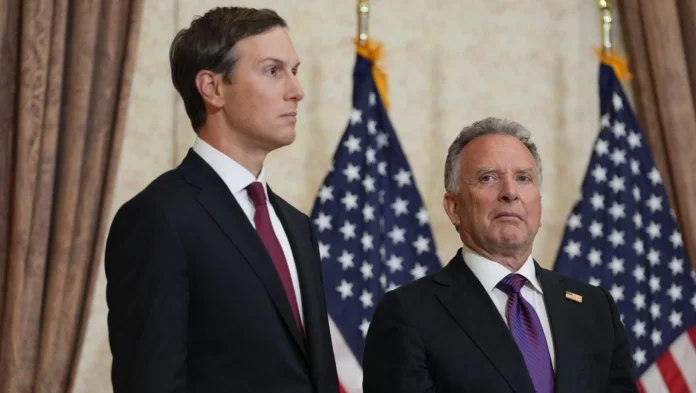
- Jared Kushner and Steve Witkoff met senior Qatari officials in Doha as U.S.-Iran diplomacy continued.
- Qatar said no direct meeting took place between American and Iranian officials during the visit.
- The talks remain focused on nuclear negotiations, frozen Iranian funds, and security around the Strait of Hormuz.
What Happened
Jared Kushner and U.S. Special Envoy Steve Witkoff met Qatari officials in Doha this week as the Trump administration continued efforts to keep Iran nuclear negotiations moving through regional mediators.
The meeting included Qatari Prime Minister Sheikh Mohammed bin Abdulrahman bin Jassim Al Thani, with discussions centered on regional security, the future of U.S.-Iran talks, and the fragile diplomatic track involving Tehran.
Qatar made clear that the American officials were in Doha to consult with mediators, not to hold direct talks with Iranian representatives.
- Kushner and Witkoff met Qatari leaders in Doha.
- No direct U.S.-Iran meeting was confirmed.
- Qatar and Oman remain central to the indirect diplomatic process.
The discussions come as Trump weighs how long to allow diplomacy to continue before deciding whether stronger military or economic pressure is needed.
U.S. officials have indicated that Trump is willing to let talks move beyond an August deadline if progress continues, while still keeping military options available in case Iran violates existing understandings.
Why It Matters
The Doha meeting shows that the Trump administration is still using diplomacy, mediation, and pressure together rather than moving immediately toward a larger confrontation with Iran.
For Trump, the indirect talks preserve leverage. Washington can continue pushing for a nuclear agreement while relying on Qatar and Oman to keep communication open with Tehran.
The lack of direct contact also shows how sensitive the negotiations remain. Even when both sides are discussing serious issues, they are still relying on intermediaries instead of sitting across the table.
- The process gives Trump room to pursue a deal without appearing weak on Iran.
- Indirect talks reduce political risk for both Washington and Tehran.
- Gulf mediators are trying to prevent another escalation around Hormuz.
The negotiations are important because any breakdown could affect energy markets, shipping lanes, and U.S. military posture across the Gulf.
The Strait of Hormuz remains a major concern, with Oman reportedly offering proposals to reduce tensions and manage security risks around one of the world’s most important oil routes.
Political and Public Context
Trump has long argued that diplomacy with Iran must be backed by strength, sanctions, and credible military options. The Doha meetings fit that approach by keeping talks alive while maintaining pressure on Tehran.
Kushner’s involvement also reflects Trump’s reliance on trusted advisers with experience in Middle East diplomacy. During Trump’s first term, Kushner played a major role in regional talks and the Abraham Accords.
Critics may question the informal role Kushner continues to play, but the administration is likely to frame his involvement as useful because of his established relationships in the Gulf.
For Qatar, hosting the meetings strengthens its role as a mediator at a time when Gulf states have a direct interest in avoiding renewed U.S.-Iran conflict.
- Trump is using trusted envoys and regional partners to keep talks moving.
- Qatar is positioning itself as a key channel between Washington and Tehran.
- The White House is balancing diplomacy with readiness to respond if talks fail.
The indirect format also gives Iran space to engage without appearing to concede publicly to direct U.S. pressure.
What Happens Next
The next phase will likely remain focused on indirect diplomacy through Qatar and Oman, with negotiators working through issues tied to Iran’s nuclear program, frozen funds, and security guarantees around the Strait of Hormuz.
The $6 billion in frozen Iranian assets remains a key part of the talks, with Qatar signaling that any release depends on progress in the broader negotiation process.
Trump may allow the August timeline to stretch if he believes the talks are producing results. But the administration is also keeping open the possibility of targeted action if Iran is seen as violating the ceasefire or nuclear framework.
For now, the Doha meetings suggest diplomacy is still active, but not yet advanced enough for direct U.S.-Iran engagement.