Story Highlights
- Federal Reserve Chairman Kevin Warsh held interest rates steady in his first major policy test.
- The decision frustrated President Donald Trump’s push for lower borrowing costs but reassured markets about inflation discipline.
- Several analysts now see a greater chance of rate hikes later this year if inflation remains stubborn.
What Happened
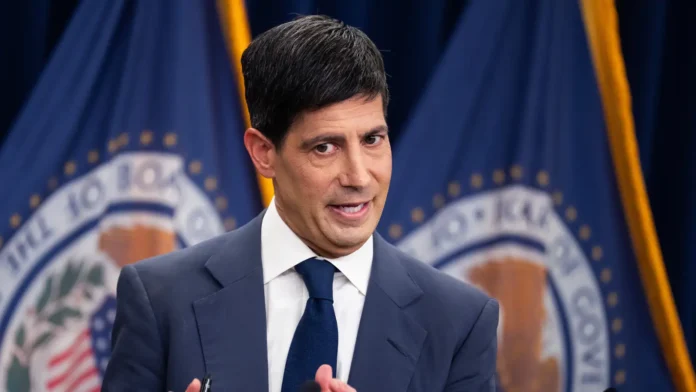
Federal Reserve Chairman Kevin Warsh kept interest rates unchanged at his first policy meeting leading the central bank, choosing caution over President Donald Trump’s calls for aggressive rate cuts.
The Fed left its benchmark rate in the 3.50% to 3.75% range, where it has remained since late last year.
The decision was unanimous and came with a clear message: inflation remains too high for the central bank to move quickly toward easier policy.
- The Fed held rates steady at 3.50% to 3.75%.
- Warsh did not deliver the immediate rate cut Trump had wanted.
- Fed officials signaled that inflation is still the dominant concern.
Warsh also changed the tone of the Fed’s public communication.
The policy statement was shorter and less explanatory than the statements issued under former Chairman Jerome Powell.
Warsh offered limited forward guidance, suggesting that the Fed will avoid promising future moves and instead respond to incoming inflation, jobs and market data.
That approach left investors with less verbal guidance but a clearer practical message: the new Fed chair is not ready to cut simply because the White House wants cheaper money.
Why It Matters
The decision matters because expectations around Fed policy are shifting.
Trump had argued that lower rates would support growth, reduce borrowing costs and ease pressure on consumers.
But Warsh’s first meeting showed that the Fed is more concerned about inflation staying above target than about delivering quick political relief.
- Borrowers may have to wait longer for cheaper loans.
- Markets must now price in the possibility that cuts are delayed.
- Some banks are even forecasting rate hikes later in 2026.
Reuters reported that Bank of America and Deutsche Bank now expect the Fed to raise rates later this year, citing resilient growth, persistent inflation and a more hawkish tone under Warsh.
That does not mean hikes are guaranteed.
It does mean investors are no longer treating Trump-backed rate cuts as the most likely near-term outcome.
For households, the practical effect is simple.
Mortgage rates, credit card rates, auto loans and business borrowing costs may stay elevated for longer.
For Trump, that complicates the economic message heading into the midterms.
Political and Public Context
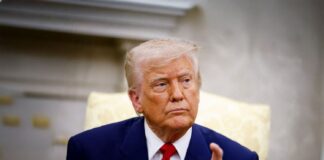
Warsh’s decision creates an awkward political moment for Trump.
The president selected Warsh after months of criticizing Powell and promising a Fed chair more open to lower rates.
But once in office, Warsh’s first major decision looked more like institutional caution than political loyalty.
- Trump wants rate cuts to support growth and affordability.
- Warsh wants to protect the Fed’s inflation-fighting credibility.
- Markets are watching whether the White House renews pressure on the central bank.
The White House can still argue that lower rates are needed.
Many Americans are struggling with housing costs, expensive credit and higher monthly payments.
But the Fed’s counterargument is that cutting too soon could allow inflation to become more entrenched.
That risk has grown more complicated because of tariffs, resilient consumer demand and recent Middle East energy shocks.
Chicago Fed President Austan Goolsbee said inflation remains the central problem, noting that labor markets are stable while price pressures are still moving the wrong way.
That gives Warsh cover to resist immediate political pressure.
Even if Trump continues pushing for cuts, the Fed can argue that inflation data does not yet justify them.
What Happens Next
The next few inflation reports will decide whether Warsh’s rate hold becomes the start of a longer pause or a bridge to future hikes.
If inflation cools meaningfully, the Fed may eventually regain room to cut.
If inflation remains above target, Warsh may face growing pressure from inside the central bank to keep policy tight or even raise rates.
- Watch the next CPI and PCE inflation reports.
- Monitor whether banks increase forecasts for 2026 rate hikes.
- Track Trump’s public response to Warsh’s first decision.
- Follow mortgage rates as markets adjust to the Fed’s tougher tone.
Markets are also watching the Fed’s communication style.
Warsh’s shorter statements may reduce confusion, but they could also leave investors guessing about the central bank’s reaction function.
That matters because markets often move not only on rate decisions but on how clearly the Fed explains what comes next.
For Trump, the best political outcome would be a quick inflation slowdown that allows Warsh to cut rates without appearing pressured.
For Warsh, the challenge is maintaining credibility with markets while managing a president who openly wants easier monetary policy.
For consumers, the immediate message is less favorable.
Rate relief is not arriving quickly, and the debate has shifted from “when will cuts begin?” to whether rates may need to stay higher for longer.