Story Highlights
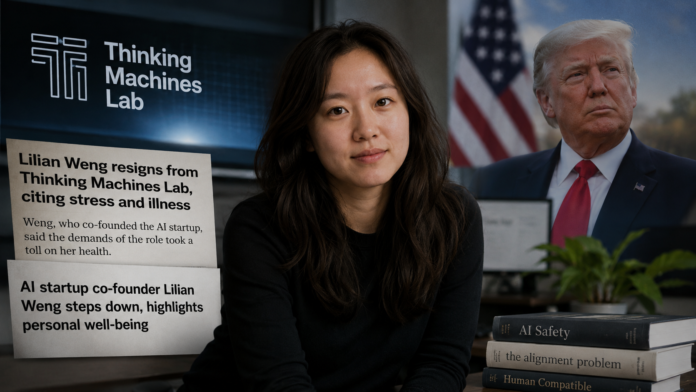
- Lilian Weng, co-founder of Thinking Machines Lab, has stepped down from her role, citing stress and illness connected to the demands of leading a high-profile AI startup.
- Her departure draws renewed attention to the intense mental and physical toll that startup leadership can place on executives in the fast-moving artificial intelligence sector.
- The resignation raises broader questions about sustainability, well-being, and the culture of relentless productivity that defines much of Silicon Valley and the broader tech industry.
- Weng’s exit is being widely discussed as a cautionary signal for investors, boards, and founders about the human cost of building companies at breakneck speed.
What Happened
Lilian Weng, a prominent figure in the artificial intelligence community and co-founder of Thinking Machines Lab, has announced her resignation from the company she helped build. According to reporting from Business Insider, Weng indicated that her decision to step away was directly tied to stress and illness she attributed to the pressures of operating within a demanding startup environment. Her departure marks a significant moment for Thinking Machines Lab, which had been seen as one of the more closely watched ventures in the competitive AI landscape.
Weng had previously built a strong reputation through her work in AI safety and research before transitioning into the startup world as a co-founder. Her decision to publicly connect her resignation to the mental and physical health challenges she experienced is considered notable in an industry where leaders often feel pressure to project resilience and invulnerability. By stepping back and citing personal well-being as the primary driver, she has opened a candid conversation about what it truly costs to lead a technology startup in today’s environment.
- Weng co-founded Thinking Machines Lab, a prominent AI-focused startup.
- Her resignation was attributed directly to stress and illness related to startup demands.
- The departure is considered significant given her prior reputation in AI safety research.
- Business Insider reported her decision to step down in July 2026.
Why It Matters
The resignation of a high-profile co-founder citing mental and physical health concerns sends a meaningful signal across the technology industry. Startup culture has long been defined by a work-hard, move-fast ethos that frequently places enormous pressure on founders, executives, and employees alike. When a respected leader with deep technical credentials steps away not due to strategic disagreement or business failure, but due to the personal toll the experience has taken, it forces a broader reckoning with the culture that has been normalized in tech circles for decades.
For investors, boards, and aspiring entrepreneurs, Weng’s departure is a reminder that burnout and health deterioration are real operational risks that can affect even the most capable and experienced leaders. The sustainability of startup culture is increasingly being scrutinized not just from an ethical standpoint but from a practical business perspective. Companies that push their founders and leadership teams past the breaking point risk losing irreplaceable talent and institutional knowledge at critical stages of growth.
- Burnout among startup founders is increasingly being recognized as a serious operational and human risk.
- The departure may prompt Thinking Machines Lab to reassess internal culture and leadership support structures.
- Investors and venture capital firms may face increased scrutiny over the conditions they create for portfolio company leaders.
- Other founders and executives in the AI sector may feel more empowered to speak openly about personal health challenges.
Political and Public Context
Weng’s decision arrives at a moment when the artificial intelligence industry is experiencing extraordinary growth, investment, and public scrutiny. Billions of dollars have poured into AI startups over the past several years, creating enormous competitive pressure for companies like Thinking Machines Lab to scale rapidly, attract talent, secure funding, and deliver results on compressed timelines. This environment, while commercially exciting, creates conditions that many researchers and mental health experts have identified as a recipe for chronic stress and health deterioration among leadership teams.
The broader conversation about mental health in the workplace has gained considerable momentum in recent years, crossing industries and organizational levels. While much of the early focus in this area centered on frontline workers and employees, attention has increasingly shifted to executives and founders who often lack the institutional support structures available to others in their organizations. Weng’s willingness to publicly name her health challenges as the reason for her resignation aligns with a slow but steady shift in how business culture regards vulnerability and self-care among leaders.
- The AI industry has experienced explosive investment growth, intensifying pressure on startup founders.
- Mental health advocacy in professional settings has grown significantly in recent years across multiple industries.
- High-profile executive health disclosures have become more common as cultural attitudes around vulnerability evolve.
- Thinking Machines Lab operates in a sector with dozens of well-funded competitors vying for talent and market position.
What Happens Next
The immediate question facing Thinking Machines Lab is how the company will manage the leadership transition following Weng’s departure. Co-founder exits at early-stage or growth-phase startups can be destabilizing, particularly when the departing individual has played a central role in shaping the company’s technical vision and culture. Stakeholders including investors, employees, and partners will be watching closely to see how the remaining leadership team responds and communicates its path forward.
More broadly, the episode is likely to contribute to ongoing conversations about founder support, board oversight, and the structures that startup ecosystems put in place to protect the health and effectiveness of the people who build companies. Whether this leads to meaningful change in how the AI industry operates remains to be seen, but Weng’s decision has undeniably elevated the visibility of these concerns at a time when the tech sector’s influence on the broader economy continues to grow.
- Thinking Machines Lab will need to address leadership continuity and communicate a clear transition plan.
- Industry observers will watch to see whether the company adjusts its internal culture in response to Weng’s departure.
- The resignation may prompt renewed calls for standardized well-being and mental health support frameworks for startup founders.
- Weng’s future role in the AI community, whether in research, advisory, or eventual new ventures, remains an open question.