Story Highlights
- A significant majority of House Democrats voted with Republicans to dismiss an impeachment effort against President Trump.
- The decision reflects a strategic focus on midterm elections over divisive political actions.
- Democratic leaders are prioritizing everyday issues for voters while navigating internal divisions.
- Rep. Al Green’s resolution highlighted fractures within the party regarding impeachment.
What Happened
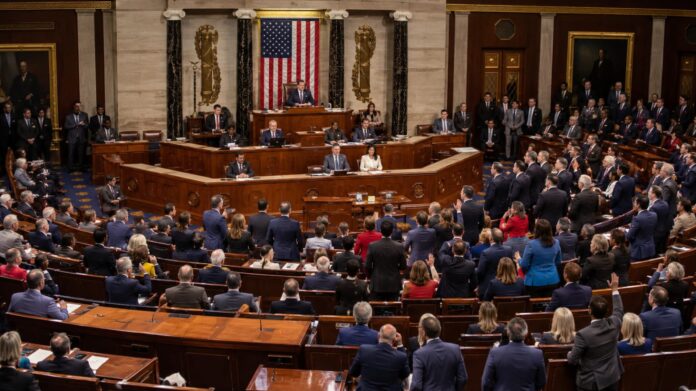
In a surprising turn of events, the House of Representatives witnessed a significant political maneuver as a vast majority of House Democrats sided with Republicans to quash an impeachment effort against President Trump. This decision came after Rep. Al Green, a Democrat from Texas, forced a vote on the impeachment resolution, which was tied to the actions of federal immigration officials that resulted in the deaths of two U.S. citizens earlier this year. The move to impeach the president, however, was met with resistance from many within the Democratic Party, who are increasingly focused on the upcoming midterm elections.
The House ultimately voted to table the impeachment measure, a procedural tactic that effectively removes the resolution from consideration without a direct vote on its merits. This decision underscores the party’s internal struggle as they balance the demands of their anti-Trump base with the need to appeal to moderate and independent voters. House Minority Leader Hakeem Jeffries, along with several other Democratic leaders, opted to vote ‘present’ on the resolution, a strategic choice that allowed them to sidestep a definitive stance on the impeachment issue.
- Rep. Al Green, D-Texas, initiated the impeachment vote.
- The House voted to table the impeachment resolution.
- House Minority Leader Hakeem Jeffries voted ‘present’ to avoid a direct stance.
- The impeachment effort was linked to the actions of federal immigration officials.
Why It Matters
This decision to block the impeachment effort is significant for several reasons. Firstly, it reflects a strategic pivot by House Democrats as they seek to regain control of Congress in the upcoming midterm elections. By prioritizing issues that resonate with everyday Americans, such as the high cost of living and economic stability, Democratic leaders are attempting to distance themselves from the divisive politics that have characterized recent years. This approach may help them appeal to a broader electorate, particularly moderates and independents who are weary of political infighting.
Moreover, the internal divisions within the Democratic Party are becoming increasingly apparent. While some members, like Rep. Al Green, are pushing for aggressive actions against the president, others are advocating for a more measured approach that focuses on legislative accomplishments rather than impeachment. This fracture could have long-term implications for the party’s unity and effectiveness as they navigate the complex political landscape leading up to the midterms.
- The decision may help Democrats appeal to moderate voters.
- Internal divisions could weaken the party’s overall effectiveness.
- Focusing on everyday issues may resonate more with the electorate.
- The outcome reflects a strategic shift in the Democratic Party’s approach.
Political and Public Context
The context surrounding this impeachment effort is crucial to understanding the broader political landscape. The Democratic Party has been grappling with the implications of impeachment since President Trump took office. Previous attempts to impeach him have often been met with resistance, not only from Republicans but also from within the Democratic ranks. The party’s leadership has largely avoided emphasizing impeachment as a priority, instead opting to focus on legislative achievements and addressing the concerns of their constituents.
Additionally, the political climate is charged with the upcoming midterm elections, where control of Congress is at stake. Many Democrats are acutely aware that pursuing impeachment could alienate voters who are more concerned with pressing issues such as inflation, healthcare, and job security. As a result, the decision to block the impeachment effort can be seen as a tactical move to maintain party unity and focus on winning back seats in Congress.
- Previous impeachment attempts have faced resistance from both parties.
- The political climate is charged with the upcoming midterm elections.
- Democratic leadership is focusing on legislative achievements.
- Concerns about voter alienation are influencing party strategy.
A majority of Democrats on Tuesday voted against rejecting an effort to impeach President Trump, bucking their leadership ahead of the midterms. https://t.co/25Ij7Erpbz
— The Washington Times (@WashTimes) September 15, 2026
What Happens Next
Looking ahead, the implications of this decision will likely shape the Democratic Party’s strategy as they approach the midterm elections. The focus on everyday issues may continue to dominate their messaging, as they seek to present themselves as the party of solutions rather than division. However, the internal divisions highlighted by this impeachment effort could pose challenges for party cohesion moving forward.
Furthermore, the question of whether further impeachment efforts will arise remains open. With figures like Rep. Al Green continuing to advocate for impeachment, the potential for renewed discussions on this topic could resurface, especially if new controversies arise. The Democratic leadership will need to navigate these waters carefully to maintain their focus on winning elections while addressing the concerns of their base.
- Democrats will likely continue to focus on everyday issues in their messaging.
- Internal divisions may challenge party cohesion in the future.
- Further impeachment discussions could arise depending on future events.
- The leadership will need to balance base demands with electoral strategy.