
Story Highlights
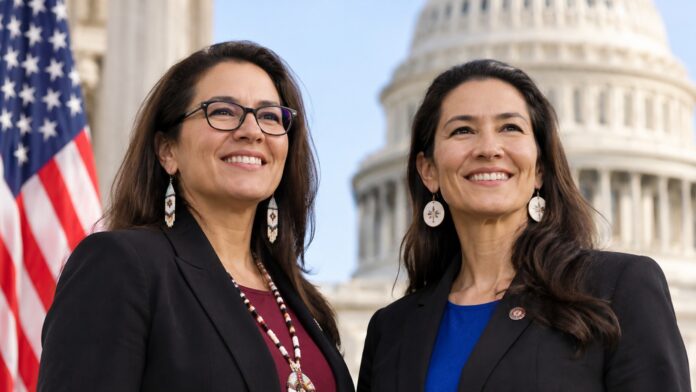
- Sen.-elect Peggy Flanagan and Sen.-elect Mary Peltola make history as the first Native American women in the U.S. Senate.
- Flanagan emphasizes the importance of representation for democracy.
- Several Indigenous candidates achieved significant victories in the recent elections.
- Flanagan and Peltola’s wins reflect a broader trend towards inclusivity in American politics.
What Happened
In a landmark moment for Indigenous representation in American politics, Sen.-elect Peggy Flanagan of Minnesota and Sen.-elect Mary Peltola of Alaska have made history as the first Native American women to be elected to the U.S. Senate. Their victories, celebrated widely, are seen as a significant step towards a more inclusive and representative democracy. Flanagan, in an interview with CNN’s Dana Bash on ‘State of the Union,’ expressed her belief that their presence in the Senate will lead to better outcomes for all Americans.
Flanagan stated, ‘It is about time that a Native American woman served in the U.S. Senate, and I think it’s important for our democracy that it accurately reflects the people it seeks to represent.’ This sentiment underscores the importance of representation in governance, particularly for marginalized communities. The election of both Flanagan and Peltola is not just a personal victory for them but a collective triumph for Indigenous peoples across the nation.
- Flanagan and Peltola are the first Native American women elected to the U.S. Senate.
- Peltola defeated incumbent Sen. Dan Sullivan in the recent elections.
- Flanagan is of Ojibwe and Irish descent, while Peltola is of Yup’ik and German American descent.
- Both women have a history of service within their communities.
Why It Matters
The significance of Flanagan and Peltola’s victories extends beyond their individual achievements. Their election represents a critical shift in the political landscape of the United States, where Indigenous voices have historically been underrepresented. Flanagan articulated that having an Alaska Native woman and a Native American woman serving in the Senate ‘makes our capital look a little bit more like America.’ This statement reflects a growing recognition that the diversity of the American populace must be mirrored in its political institutions.
Moreover, their presence in the Senate is expected to bring attention to issues that disproportionately affect Indigenous communities, such as land rights, healthcare, and education. Flanagan’s and Peltola’s backgrounds and experiences will likely inform their legislative priorities, leading to more comprehensive and equitable policies. Their victories also inspire future generations of Indigenous leaders, demonstrating that representation is possible and necessary.
- Increased visibility for Indigenous issues in the Senate.
- Potential for more equitable policies affecting Indigenous communities.
- Inspiration for future Indigenous candidates to pursue political office.
- Strengthening of democratic values through diverse representation.
Political and Public Context
The election of Flanagan and Peltola is part of a broader trend towards increased Indigenous representation in American politics. In the recent midterm elections, several Indigenous candidates achieved significant victories at various levels of government. For instance, Crystalyne Curley became the first woman to be elected president of the Navajo Nation, leading the largest reservation in the country. Additionally, Reps. Sharice Davids, Tom Cole, and Josh Brecheen were all reelected, further solidifying Indigenous representation in the House of Representatives.
Historically, Indigenous peoples have faced numerous barriers to political participation, including systemic discrimination and a lack of resources. However, the recent successes of Indigenous candidates indicate a shift in this narrative. The election of former Interior Secretary Deb Haaland as New Mexico’s first Native American governor also highlights the growing recognition of Indigenous leadership in state and federal government. These developments signal a potential turning point in the political landscape, where Indigenous voices are increasingly heard and valued.
- Crystalyne Curley elected as the first woman president of the Navajo Nation.
- Reps. Sharice Davids, Tom Cole, and Josh Brecheen reelected to Congress.
- Deb Haaland serves as New Mexico’s first Native American governor.
- Historical barriers to Indigenous political participation are being challenged.
Flanagan says wins made by her, Peltola 'makes our capital look a little bit more like America' – The Hill https://t.co/8lFjGJrEYz
— O (@O19928734) November 22, 2026
What Happens Next
Looking ahead, the election of Flanagan and Peltola raises several important questions about the future of Indigenous representation in American politics. Their tenure in the Senate will be closely watched, as constituents and advocates alike will be eager to see how they address the pressing issues facing Indigenous communities. The potential for collaboration between Flanagan and Peltola could lead to impactful legislation that prioritizes the needs of their constituents.
Moreover, their success may encourage more Indigenous individuals to run for office, fostering a new generation of leaders who can advocate for their communities. As the political landscape continues to evolve, the importance of representation will remain a central theme in discussions about democracy and governance in the United States. The ongoing dialogue about inclusivity and representation will be crucial as these leaders navigate their roles in the Senate.
- Monitoring of Flanagan and Peltola’s legislative actions in the Senate.
- Encouragement for more Indigenous candidates to enter politics.
- Potential collaborations between Indigenous leaders to address common issues.
- Continued advocacy for policies that support Indigenous communities.