
Story Highlights
- Sen.-elect Abdul El-Sayed pitched universal healthcare branded as ‘Trumpcare’ with mock golden cards.
- President responds positively to proposal, expressing openness to bipartisan healthcare solutions.
- El-Sayed invites collaboration with Senate Democratic leaders on reform.
- Potential for significant healthcare reforms when Democrats take control of Congress in January.
What Happened
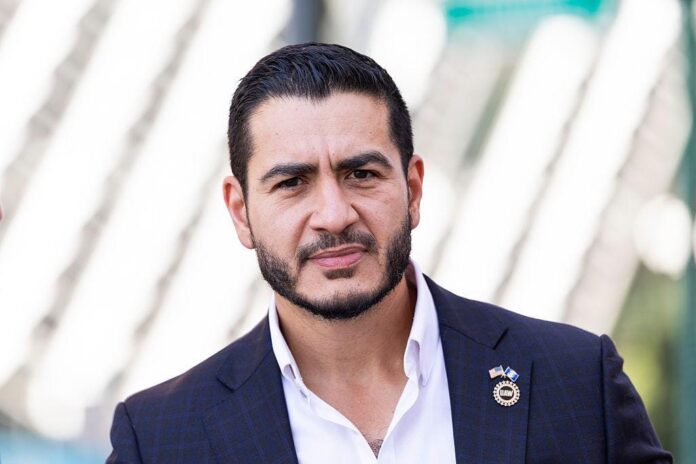
In a surprising political moment, Sen.-elect Abdul El-Sayed, a progressive Michigan Democrat and former public health official, pitched a universal healthcare proposal branded as ‘Trumpcare’ by posting on X. The proposal aimed to guarantee healthcare for every American from cradle to grave. El-Sayed’s post included mock images of golden ‘Trumpcare’ cards, an homage to the president’s favorite color, as part of his Medicare for All campaign messaging.
The proposal caught significant attention when President Donald Trump reposted El-Sayed’s message on Truth Social without commentary on Saturday. However, in a phone interview with Fox News earlier that day, Trump expressed genuine interest in healthcare reform, stating the government could ‘do tremendous things on healthcare’ after Democrats take control of Congress in January. Trump emphasized the potential for bipartisan collaboration, noting that both parties have good and bad points on healthcare policy.
- El-Sayed posted ‘Trumpcare’ proposal on X with golden card images.
- Trump reposted the message on Truth Social Saturday.
- Trump told Fox News the government could achieve ‘tremendous things’ on healthcare through bipartisan efforts.
- El-Sayed responded by inviting Trump to collaborate with Senate leaders Sanders, Warren, Van Hollen, and Wyden.
Why It Matters
This exchange represents a notable shift in the typically contentious healthcare debate. Healthcare has historically divided the parties along ideological lines, with Republicans generally opposing universal coverage programs and Democrats championing them. The willingness of the incoming president to engage constructively with a progressive Democrat’s healthcare proposal signals potential movement toward bipartisan solutions that could benefit millions of Americans currently facing healthcare access and affordability challenges.
El-Sayed’s branding strategy of calling the initiative ‘Trumpcare’ was designed to bridge ideological divides by associating the proposal with the president. This clever political maneuver attempts to make universal healthcare more palatable to conservative audiences and Trump supporters. The proposal combines progressive healthcare ideals with a conservative marketing approach, potentially broadening appeal beyond traditional Democratic voters.
The significance extends beyond healthcare policy itself. Bipartisan cooperation on such a major issue could reshape the legislative tone for the new Congress and demonstrate that Democrats and Republicans can find common ground on complex domestic problems.
- Potential for breaking the partisan gridlock that has blocked comprehensive healthcare reform for decades.
- Millions of uninsured and underinsured Americans could benefit from guaranteed coverage.
- El-Sayed’s public health background lends credibility and expertise to the proposal.
- Successful collaboration could establish precedent for bipartisan work on other major issues in the new Congress.
Political and Public Context
The timing of this proposal coincides with significant shifts in congressional power dynamics. Democrats are set to take control of Congress in January, giving them the legislative leverage to advance healthcare initiatives. El-Sayed’s status as a newly elected senator positions him as a rising voice within the Democratic Party on healthcare policy.
El-Sayed’s background as a former public health official enhances his credibility as a healthcare advocate. His previous work in the field provides substantive expertise that distinguishes his proposal from purely ideological arguments. The use of mock ‘Trumpcare’ cards served as an effective marketing strategy that garnered media attention and underscored the proposal’s central messaging.
The president has indicated openness to bipartisan work while simultaneously emphasizing his veto power over Democratic legislation. This delicate balance reflects the complex political landscape where both collaboration and political leverage remain relevant considerations for the incoming administration.
- Democrats control Congress beginning in January with significant legislative authority.
- El-Sayed’s public health expertise provides substantive foundation for healthcare proposals.
- Mock golden cards served as strategic marketing that referenced the president’s aesthetic preferences.
- President has emphasized both willingness to collaborate and retention of veto authority over congressional legislation.
Trump’s Social Media Post Fuels Questions About Potential Medicare-For-All Support #HuffingtonPost https://t.co/kkyukFbHoC
— #TuckFrump (@realTuckFrumper) November 22, 2026
What Happens Next
El-Sayed explicitly invited the president to discuss healthcare reform, stating he is ‘ready to work alongside leaders in the Senate’ including Senators Bernie Sanders, Elizabeth Warren, Ron Wyden, and Van Hollen. The next steps depend on whether the president will engage substantively with these Democratic leaders to explore healthcare solutions.
Potential outcomes include formation of bipartisan committees to study healthcare reform options, preliminary discussions between the president’s advisors and Democratic leaders about policy parameters, and public discourse regarding the specific components any compromise healthcare plan might include. The proposal’s success will depend on both parties’ genuine commitment to finding middle ground rather than pursuing partisan advantage.
The public will likely monitor developments closely, with healthcare advocacy groups and industry stakeholders paying particular attention to any concrete legislative proposals or negotiations that emerge from these initial discussions.
- El-Sayed awaits direct communication from the president about collaboration on healthcare reform.
- Potential formation of bipartisan healthcare working groups in the new Congress.
- Advocacy groups and healthcare industry stakeholders monitoring developments for policy implications.
- Open questions remain about specific policy mechanisms and coverage models any compromise proposal would include.