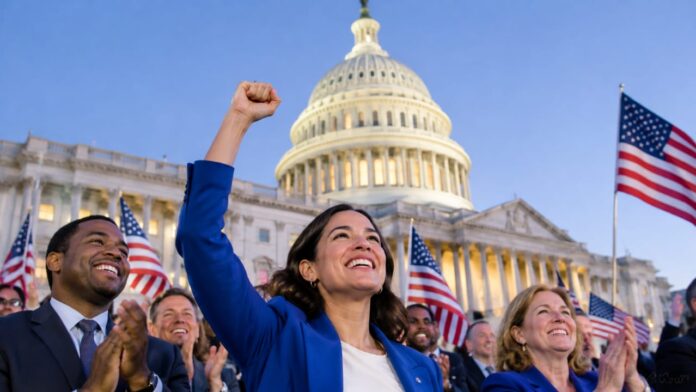
Story Highlights
- Democrats have regained control of the Senate following the recent midterm elections held on November 4, 2026.
- This shift poses significant challenges to President Trump’s legislative agenda and policy initiatives.
- Key victories in battleground states including Arizona, Georgia, and Pennsylvania were decisive in determining the outcome.
- High voter turnout, particularly among younger demographics, reflected growing engagement on healthcare, inflation, and social justice issues.
What Happened
In a significant turn of events during the recent midterm elections, Democrats have successfully regained control of the Senate, marking a major shift in the political landscape of the United States. This development comes as a direct challenge to President Trump’s agenda, which has been characterized by a focus on economic growth, national security, and immigration reform. The elections, held on November 4, 2026, saw Democrats capitalizing on voter discontent and effectively mobilizing support in key battleground states across the nation.
The results indicate a growing divide in the electorate, with many voters expressing frustration over various issues, including healthcare, inflation, and social justice concerns. The Democratic Party’s ability to harness these sentiments proved highly effective, leading to victories in several critical Senate races that had been competitive heading into election day. As a result, the balance of power in the Senate has shifted, fundamentally complicating the president’s efforts to advance his policy initiatives and maintain legislative momentum.
- Democrats won key Senate seats in Arizona, Georgia, and Pennsylvania during the November 4, 2026 elections.
- High voter turnout was reported, particularly among younger demographics and diverse communities.
- President Trump campaigned vigorously for Republican candidates but faced significant challenges in several districts and regions.
- The election results were widely characterized as a referendum on Trump’s presidency, policies, and overall leadership.
Why It Matters
The implications of the Democrats regaining control of the Senate are profound and far-reaching for the entire nation. With this newfound power, Democrats are now poised to challenge many of the initiatives that President Trump has championed since taking office. This includes potential roadblocks to his economic policies, judicial appointments, and foreign relations strategies that the administration has pursued aggressively. The Senate’s control allows Democrats to set the legislative agenda, which could lead to significant changes in areas such as healthcare reform, climate policy, and taxation structures.
Moreover, this shift in power could embolden Democrats to pursue more progressive policies, which may not align with the president’s vision for the country. The potential for increased partisan conflict is substantial, as both parties will likely dig in their heels on key issues and refuse to compromise easily. This could lead to legislative gridlock, making it difficult for the administration to achieve its goals and implement the transformative agenda it has outlined to voters and supporters.
- Democrats may push for expanded healthcare access, public option initiatives, and comprehensive reforms to the existing system.
- Increased potential for greater scrutiny of Trump’s administration decisions, policies, and appointments through committee investigations.
- Legislative gridlock could hinder economic recovery efforts and delay critical infrastructure investment projects.
- Trump’s judicial appointments, including Supreme Court selections, may face significantly greater opposition and delay in Senate confirmation processes.
Political and Public Context
The recent election results did not occur in a vacuum; they are part of a larger narrative of shifting political dynamics throughout the United States. Over the past few years, the country has witnessed significant changes in voter behavior, particularly among younger and more diverse populations. These groups have increasingly leaned Democratic, driven by deep concerns over social issues, climate change, economic inequality, and access to quality education and healthcare services.
Additionally, the political landscape has been substantially shaped by the ongoing impact of the COVID-19 pandemic, which has fundamentally altered priorities for millions of American voters. Economic recovery, public health response, and education policy have become central issues influencing how individuals cast their ballots. The Democrats’ ability to connect with these voter concerns has been a key factor in their electoral success and the momentum they have built heading into future electoral cycles.
- Voter turnout among young people aged 18-35 reached record highs in the recent midterm elections.
- Democrats have focused intensively on grassroots organizing and community mobilization efforts in target districts.
- Key issues such as climate change, healthcare access, and economic inequality have driven voter engagement and participation.
- The political landscape has shifted significantly since the 2020 presidential elections and previous midterm cycles.
Democrats Win Senate Control in a Major Blow to Trump #Time https://t.co/gktPcgGmjX
— #TuckFrump (@realTuckFrumper) November 4, 2026
What Happens Next
Looking ahead, the future of President Trump’s legislative agenda hangs in the balance as Democrats take control of the Senate and shape its priorities. The administration will need to navigate a considerably more challenging legislative environment, where bipartisan cooperation may become increasingly rare and difficult to achieve. The president’s ability to implement his policies will ultimately depend on his administration’s strategic approach to working with a divided Congress and finding common ground where possible.
In the coming months and years, it will be crucial for the White House to identify specific areas of potential compromise with Senate Democrats while simultaneously rallying continued support among Republican lawmakers in both chambers. The administration may need to pivot its focus to issues that resonate across party lines, such as infrastructure investment, national security threats, or job creation initiatives, to secure meaningful legislative victories. The next two years will be defined by these negotiations and the administration’s ability to adapt its strategy to this new political reality.
- Trump’s administration will likely prioritize identifying bipartisan initiatives to advance selected elements of its broader agenda.
- Increased focus on grassroots support, public engagement, and direct voter communication is expected to grow substantially.
- Potential for significant policy battles over healthcare reform, taxation, climate policy, and Supreme Court nominations looms.
- Future elections in 2028 and beyond will be critical in determining the long-term balance of power in Washington.